Do You Still Need EDI 862 If You Send 830s?
Do automotive suppliers need EDI 862 alongside EDI 830? This FAQ explains what each message does, where 866 and the 856 ASN fit, and what breaks if you skip one.


Do You Still Need EDI 862 If You Send 830s?
Yes. Both run in parallel for the life of the program, and neither replaces the other. The 862 supersedes certain shipping and delivery information transmitted in a previous planning schedule transaction, but it does not replace the 830 transaction set. Skip the 862 in a JIT program and you're relying on 830 quantities that are simply too imprecise to trigger a same-day dock appointment.
This trips up a lot of teams onboarding new OEM programs. They see the 830 land, assume it covers shipping instructions too, and stop building the 862 inbound map. Then the first missed delivery window happens and everyone's asking why the "forecast" didn't trigger a shipment. It didn't, because that was never its job.
What does EDI 862 add that EDI 830 doesn't already cover?
The 830 gives you weeks or months of forecast. The 862 gives you day- or shift-level firm shipping instructions, sometimes narrowed to a specific delivery window. That's the entire division of labor between the two transaction sets.
The EDI 830 is a forward-looking demand signal that gives suppliers visibility into what a buyer expects to need over a planning horizon that typically spans 12 to 52 weeks, and it contains a spectrum of quantities ranging from firm releases in the near term to planning estimates and forecasts in the outer periods. A typical automotive 830 might show Week 1–2 as firm, weeks 3–8 as planned, and weeks 9–26 as forecast only. The 862 lives entirely inside that near-term firm window. Per SPS Commerce, the EDI 862 differs from a purchase order by providing more immediate, detailed shipping instructions based on current needs rather than a longer-term forecast, and in JIT environments an 862 can be triggered by product usage, so once inventory dips below a restock level the supplier gets notified to replenish immediately.
Does EDI 862 replace the 830, or do both run permanently in parallel?
They run in parallel indefinitely. The 862 refines the same demand the 830 already forecast; it doesn't stand alone.
The 830 Planning Schedule document works together with the 862 transaction to support Just-in-Time manufacturing, with the forecast data in the 830 helping the supplier manage materials and resources so inventory is on hand when the 862 arrives with the actual ship instruction. Cadence matters here: OEMs like GM, Ford, Stellantis, and Toyota send 830s to every Tier-1 supplier weekly, while the 862 supplements that weekly 830 with more frequent and specific updates, often on a daily basis for JIT environments. Revisions are common too: a buyer may send multiple 862 documents on the same day for the same order as schedules keep adjusting, with the most recently sent 862 overriding previous ones. If your mapping treats the 862 as a one-time confirmation instead of an ongoing revision stream, you'll process stale ship instructions. Build your inbound logic to always key off the latest 862 timestamp, not just the latest file received.
Where does EDI 866 (production sequence) fit alongside 862?
The 866 is the just-in-sequence layer, one level more granular than the 862. It tells you exact build order, not just quantity and date.
The 866 specifies the sequence in which goods are to enter the materials handling process or be consumed in the production process, and cannot be used to authorize labor, materials, or other resources. Daimler Trucks North America's own implementation guide describes the 866 as also known as Line Sequence, conveying a precise shipping schedule to suppliers and intended to supplement the 830. Some manufacturers refer to this same sequencing requirement as ILVS or SPD, but under X12 it usually arrives as an 866 transaction, with suppliers importing the sequenced build information directly from that feed. Not every program uses the 866. If your OEM ships bulk parts on standard totes rather than in vehicle-build order, you'll likely only see 830 and 862. Confirm this early: building 866 handling logic (sequence labels, line-side kanban timing) for a program that never sends one is wasted engineering effort.
What happens if a supplier misses an 862 window?
You risk a line stoppage, not just a late PO. That's the practical difference between missing an 830 forecast cycle and missing an 862 delivery window.
The 862 exists specifically because manufacturers use it to communicate exact shipping times and quantities, often on a daily or even hourly basis, providing the detailed execution layer for commitments already established through the planning schedule. Miss that window and there's no forecast buffer left to absorb the gap, because the whole point of running JIT on 830-plus-862 is that the 830 enables the JIT production system that prevents multi-billion-dollar assembly plants from carrying weeks of parts inventory. When inventory buffers are measured in hours, an 862 miss becomes a production problem before it becomes a paperwork problem. Build monitoring around 997 turnaround time on 862s specifically, not just on 830s, since that acknowledgment gap is often your earliest warning signal.
How does the 856 ASN close the loop with 830, 862, and 866?
The ASN confirms what actually shipped against the release, letting the OEM auto-receive without a manual count. It's the transaction that turns the schedule into a physical, trackable event.
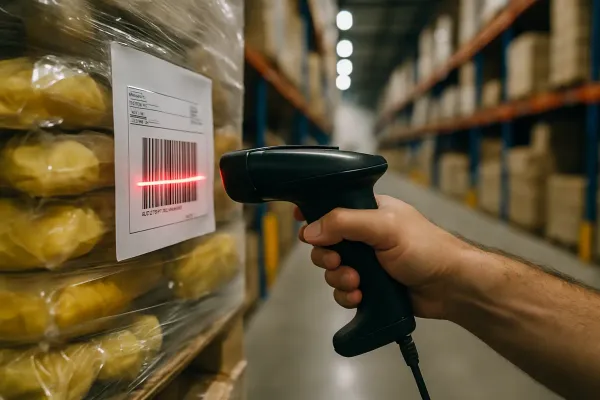
It is practically impossible to run a JIT or JIS assembly line without ASNs, due to the risk of not knowing if supplies arrive on time, and goods receipt is accelerated because data referring to the shipment is already on the customer side, with barcode labels letting scanners align the data and reduce human error tremendously. On sequenced programs the link is even tighter. Daimler's guide notes suppliers running line-sequence parts are asked to include a REF*VT segment in the 856 indicating the vehicle serial number the material is being shipped for, which flags the part as shipped. Once that ASN fires, the physical shipment still needs to be booked, tendered, and tracked with an actual carrier. That's a separate layer from the EDI mapping itself, and it's where transportation platforms like Cargoson, Alpega, MercuryGate, and Uber Freight turn the EDI signal into a real pickup and a track-and-trace event rather than just a data confirmation.
Do European plants use different messages instead of 830, 862, and 866?
Yes. DELFOR, DELJIT, and DESADV cover the same three-layer logic under EDIFACT, and the mapping between the two families is close to one-to-one.
According to one industry comparison, the 862 shipping schedule is known as DELJIT in EDIFACT and supplements existing 830 planning schedules with precise, time-specific delivery requirements. On the forecast side, DELJIT messages are considerably more time-sensitive than DELFOR due to the shorter time scale reported on, and a DELJIT is sent by a customer to notify a supplier of immediate delivery demands and can be received daily, supplementing the information given via the DELFOR message. DESADV plays the role of the 856 ASN on the receiving side.
| Function | X12 (North America) | EDIFACT (Europe/global) |
|---|---|---|
| Long-range forecast | 830 | DELFOR |
| Firm short-horizon shipping schedule | 862 | DELJIT |
| Sequenced build order (JIS) | 866 | VDA 4985 / local sequencing message |
| Ship confirmation / ASN | 856 | DESADV |
If you supply both North American and European plants for the same OEM group, you're likely running both stacks side by side rather than one replacing the other, which means two separate mapping sets, two separate ack cycles, and two separate testing paths in your onboarding checklist.
What should you confirm before go-live on a new program?
- Which combination the OEM actually requires: 830 only, 830 plus 862, or the full 830/862/866 stack for sequenced parts.
- Functional acknowledgment SLA for each transaction set separately, since a slow 997 on an 862 is a bigger risk indicator than a slow one on an 830.
- Label and ASN specification (GS1-128 or VDA barcode) required for the 856, including any vehicle-serial reference segments for sequenced parts.
- A full test cutover, including deliberately triggering a revised 862 mid-cycle, before the program goes live on the production line.
None of this is optional documentation review. AIAG guidance underpins most of these North American automotive transaction sets, and the whole reason the 862 exists is that it supplements the 830 planning schedule by providing more frequent and specific updates for JIT environments without authorizing new resources. Get the combination wrong at onboarding and you'll find out during your first missed dock window, not during testing.