How to File an EDI 920 Freight Damage Claim
Learn how to build, send, and track an EDI 920 loss and damage claim with a motor carrier, including required segments and common rejections.

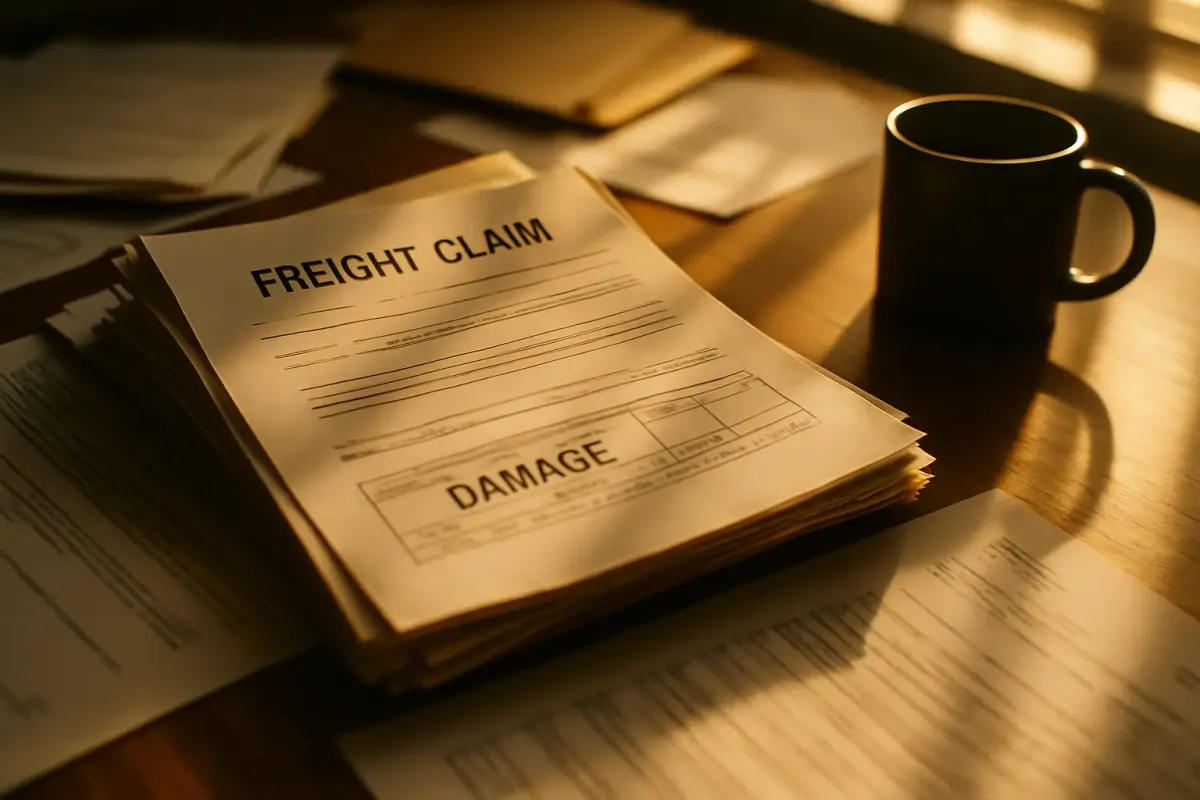
Most freight damage claims never touch EDI at all. They get filed through a carrier's web portal, a PDF emailed to a claims inbox, or worse, a phone call followed by nothing. If you're already running 204/990/214/210 with a motor carrier, though, you may have a native path to file the claim itself as an EDI 920 loss and damage claim instead of re-keying the same PRO number and BOL into a browser form. This walkthrough covers how to build, transmit, and reconcile that transaction, plus what to do when the carrier's claims department doesn't respond the way your tender-and-invoice cycle trained you to expect.
What the EDI 920 Transaction Actually Does
The X12 920 is a formal claim filing, not a status ping. It carries the claimant's identity, the shipment reference, the damage or shortage detail, and a dollar amount, and it starts the clock on the carrier's legal obligation to acknowledge and resolve the case. That distinction matters because timing and documentation determine whether you recover anything, regardless of how clean your EDI file is.
Three related transaction sets sit around the 920, and mixing them up is a common rookie mistake:
| Transaction Set | Purpose | Sent By | Typical Follow-Up |
|---|---|---|---|
| 920 | Loss or Damage Claim, General Commodities | Shipper/claimant | 997/999, then carrier claims determination |
| 924 | Loss or Damage Claim, Motor Vehicle | Shipper/claimant (vehicle shipments specifically) | 997/999, then carrier claims determination |
| 925 | Claim Tracer, used to request status on a claim already filed | Shipper/claimant | 926 Claim Status Report and Tracer Reply |
| 926 | Claim Status Report and Tracer Reply | Carrier | Not published as a standardized SLA across carriers |
The 925 transaction set establishes the data contents of the Claim Tracer for use in EDI, and it can be used by a claimant to request from a carrier the status of a loss or damage claim. Use it to follow up. Don't resend the original 920 hoping it triggers a response, since most carrier systems will treat a duplicate 920 as a new claim rather than a nudge on the old one.
Before You Start: Prerequisites
Confirm carrier support before you build a single segment. A trading partner agreement that covers 204/990/214/210 doesn't automatically cover claims. Large LTL and FTL carriers are more likely to have claims EDI in their implementation guide than smaller regional fleets, but you still need it in writing.
- A trading partner agreement or implementation guide that explicitly lists 920 (or 924 for motor vehicle freight) as a supported inbound transaction, with the ISA/GS qualifiers and version (4010 vs 5010) specified.
- The original PRO number and bill of lading number, plus a delivery receipt showing OS&D (over, short, damage) notation made at time of delivery. Without that notation on file, the claim has almost no chance of surviving carrier review.
- An existing AS2 or VAN connection to the carrier, ideally the same channel already carrying your 204 tenders and 210 invoices, so you're not standing up new connectivity just for claims.
- Photographic evidence, weight tickets, or invoice documentation of the damaged or short freight, referenced by claim amount and description.
- A claim amount calculated against the commercial invoice value, not an estimate. Carriers and their auditors cross-check this.
Step-by-Step: Building and Sending the EDI 920
The segment map below follows the X12 5050 structure for the transaction. The 920 is built from an N1Loop for claimant name, address, and contact, an F02Loop identifying the shipment with reference numbers, marks and numbers, allowance/charge, date/time, lading exception codes, and seal numbers, and an F09Loop carrying supporting evidence including weight/volume loss, allowance/charge, and free-text notes.
- Open the envelope and header. Build your ISA/GS as you normally would for this trading partner, then start the transaction with ST*920, since the ST segment indicates the start of a transaction set and assigns a control number.
- Populate the claimant loop. In the N1Loop, send an N1 segment identifying your company as the claimant, followed by N3 for street address, N4 for city/state/postal code, and G61 for a named contact with a phone number the carrier's claims department can actually call.
- Identify the shipment. Open the F02Loop with the F02 segment, then attach L11 reference qualifiers for the PRO number and BOL number, and use MAN for any container or shipment marks tied to the freight in question. This loop repeats if you're filing one claim covering multiple shipments.
- Attach the exception code and claim amount. Use Q7 to send the lading exception code describing what happened (damaged, short, or a concealed damage code discovered after delivery), G62 for the relevant date, and F05 to state the dollar amount you're claiming against that shipment.
- Load the evidence loop. In F09Loop, send F04 for any measurable weight or volume loss, additional F05 occurrences if the claim has multiple charge components (freight loss plus salvage cost, for example), and NTE for free-text description of the damage. This is where vague filings fail. Write "12 cartons crushed, water damage to product, photos on file" rather than "damaged in transit."
- Close the transaction. Send SE last, since the SE segment indicates the end of the transaction set and provides the count of the transmitted segments including both ST and SE. Get this count wrong and most translators will reject the file before the carrier ever sees the claim content.
- Transmit and capture the functional acknowledgment. Whether you're on AS2 or VAN doesn't change the logic here, only the transport. A 997 or 999 back from the carrier confirms the envelope and segments parsed correctly. It says nothing about whether the claim itself will be approved.
- Log the claim with an internal tracking reference. Tie your L11 claim reference number to a row in whatever system tracks open claims, so if nothing comes back within your contractual window, you know exactly which 925 tracer to send and when.
How Do You Know It Worked?
A clean 997/999 tells you the file was syntactically valid, not that the carrier accepted the claim. That gap trips up teams who are used to the tighter feedback loop on 204/990, where an accept or decline usually comes back within minutes.
Claims move slower and less consistently. Some carriers return a structured 926 Claim Status Report and Tracer Reply. Others still respond with a letter or a claims-portal update that never touches your EDI stack at all, which means full automation on the response side is inconsistent across the industry compared to the tender-and-invoice cycle you're used to. After submission, you need to monitor the claim closely, since carriers may take several weeks to respond or request more information. If nothing arrives in that window, send a 925 rather than waiting indefinitely or re-filing the original 920.
Common Failure Mode: Claim Rejected or Ignored
The most common reason a technically valid EDI 920 still gets denied has nothing to do with the file structure. Freight damage claims filed manually average 5–9 business days from damage report to carrier submission, and carriers frequently deny claims due to documentation gaps and late filings. Translate that to your 920: a missing Q7 exception code that doesn't match what's on the signed delivery receipt, or an F09 loop with no NTE detail and no reference to photos on file, gives the carrier's claims examiner an easy reason to deny.
The fix sits upstream of the EDI file. Enforce driver and dock sign-off at time of delivery so the OS&D notation exists before anyone even opens a translator to build the 920. No amount of clean segment structure recovers a claim if the delivery receipt was signed clean.
Deadlines are the second failure mode. Filing deadlines differ depending on transport mode, with 9 months allowed for domestic trucking in the United States under the Carmack Amendment, but that's a ceiling, not a target. Build a reminder into your claims queue well before the 9-month mark, because a claim that misses the window is dead regardless of how much documentation you have. If the deadline is approaching and you haven't heard back, don't wait, send the 925 tracer immediately and get a paper trail showing you followed up inside the window.
Where the 920 Fits Versus Claims Automation Platforms
Most of the 2026 coverage on freight claims automation is about tools like Freehand, iNymbus, TranSolutions, Cass Information Systems, and nVision Global, or heavier TMS suites like Descartes 3G TMS and CargoWise, that scrape carrier portals and manage the claims workflow end to end. None of that coverage touches the native X12 transaction, because most shippers filing claims aren't running EDI-based claims at all, they're filing through the same portals those tools are built to automate.
If you're already pushing 204/990/214/210 through a TMS, you're in a different position. A common core transaction set for a shipper or broker tendering freight is 204 for the load tender, 990 for the tender response, 214 for shipment status, 210 for the carrier invoice, and 997 or 999 for acknowledgment. Platforms like MercuryGate, Descartes, Transporeon/Alpega, Manhattan Active, Blue Yonder, Oracle TM, SAP TM, and Cargoson already centralize that carrier document exchange, and adding 920/925 into the same pipeline is a smaller lift than standing up a separate claims platform just to file with carriers you're already connected to via AS2 or VAN. A VAN simplifies onboarding each new carrier but charges a recurring fee, worth it when you maintain many connections, while AS2 offers direct, secure transmission with lower ongoing cost but requires separate configuration with each partner.
Multi-carrier parcel platforms like ShippyPro, EasyPost, and Sendcloud rarely touch claims at all, since parcel damage claims run through entirely different carrier processes than LTL and FTL. If your claims volume is concentrated in truckload and LTL freight, the TMS-level carrier connection you already have is the more natural home for this transaction than bolting on parcel-oriented tooling.
Next Steps
Before you build a single 920, get carrier confirmation in writing that claims EDI is supported on your existing connection, not assumed from the fact that 204/990 already works. Pull three or four recent OS&D shipments with clean delivery-receipt notation and use those as your first test cases rather than a live high-dollar claim. And regardless of how automated the filing side gets, put the 9-month Carmack deadline on a calendar with alerts at 60 and 30 days out, because a perfectly formed EDI 920 filed one day late is worth exactly nothing.