The $62,000 EDI Mapping Automation Revolution: How AI Is Eliminating TMS Integration Bottlenecks and Reshaping Supply Chain Efficiency in 2026


Manual EDI mapping automation has become an expensive bottleneck for companies managing TMS integration projects, with the average company handling 100-200 trading partners and 400-500 maps that require extensive manual work. Organizations typically spend $62,000 annually on mapping projects and ongoing consultant fees, but AI is dramatically simplifying this process by recognizing patterns in data structures and essentially automating large portions of the EDI mapping process.
The Hidden $62,000 Cost Crisis in Manual EDI Mapping
Every TMS migration exposes the same painful reality: mapping mismatches between platforms create expensive disruptions because every TMS platform structures its data differently, and without precise mapping between new and existing fields, critical information can be dropped or misrouted. The traditional approach requires skilled mappers and developers for each trading partner relationship, consuming thousands of hours annually.
The cost breakdown reveals why this process has become unsustainable. Data mapping errors occur when data is incorrectly mapped from one system to another, leading to inaccurate or incomplete information transfer that negatively affects order processing, invoicing, and inventory management, causing disruptions in operations and potential financial loss. Upgrading or expanding these systems can be costly and time-consuming, particularly when dealing with TMS vendors like MercuryGate, Manhattan Active, and emerging players like Cargoson.
Traditional EDI mapping requires extensive manual configuration for each new trading partner, creating a resource drain that scales poorly with business growth. Companies face escalating costs from error correction, project delays, and the continuous need for system updates to maintain trading partner compliance.
Why TMS Integration Projects Are Particularly Vulnerable to Mapping Failures
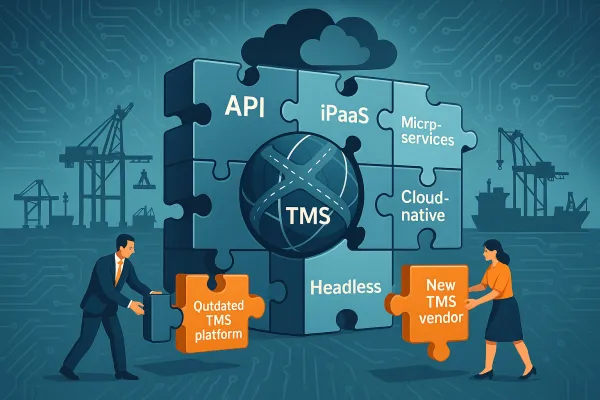
Because TMS and EDI systems are deeply connected, even minor mismatches between the two systems can lead to costly disruptions. EDI inside a TMS becomes tightly tied to the system, and when enterprises implement new platforms, the switch impacts EDI with trading partners, creating a huge challenge and workload for any company.
TMS integration projects face unique vulnerabilities. Legacy protocol issues occur when older EDI connections rely on protocols like FTP or AS2, and if the new TMS doesn't support those methods or supports them differently, message delivery can fail entirely. This creates cascading failures across supply chain operations.
The Three Critical Mapping Challenges Blocking Modern TMS Deployments
The most problematic issues center on technical compatibility gaps. Some organizations are forced to re-onboard all trading partners when switching systems, while migration teams often lack a staging environment that accurately mirrors production, making it challenging to identify issues before going live.
Traditional connections rely heavily on manual labor because they operate as peer-to-peer systems with no automation involved in processing data. This manual dependency becomes particularly problematic during TMS migrations when hundreds of partner relationships require simultaneous reconfiguration.
The AI-Powered Mapping Revolution: How Automation Changes Everything
Artificial intelligence, natural language processing, and machine learning are reshaping traditional EDI systems by replacing manual data handling and static rule-based processes that often bottleneck business transactions, adding intelligence to EDI operations and making them more adaptive, proactive, and insightful.
Advanced platforms like Orderful automatically transform data to EDI without complex mapping and validate transactions against actual trading guidelines in real-time, proactively identifying errors before transactions are sent. This transformation enables sophisticated EDI software to automate mapping while still enabling custom adjustments when needed.
Machine learning algorithms can be trained to understand different data formats and automatically map these to the appropriate EDI standard, potentially eliminating the time-consuming and error-prone manual mapping process while enhancing the efficiency and accuracy of data exchanges. Companies working with TMS solutions from Cargoson, E2open, and nShift can leverage these automated capabilities alongside traditional EDI providers.
Implementation Framework: From $62,000 Manual Process to AI-Automated Efficiency
The transition to AI-powered EDI mapping automation requires systematic evaluation of your current infrastructure. Before integration, businesses should evaluate their existing TMS and EDI systems, understand current capabilities and limitations to determine the best approach, and identify compatibility to ensure systems can communicate effectively.
Building the upgrade around core steps includes auditing your current EDI landscape by identifying all existing EDI flows and documents tied to your TMS, defining data mapping early by understanding how your new TMS structures data and mapping to existing EDI formats, and reducing the chance of mismatched fields or data loss.
ROI calculations demonstrate significant returns. Many companies report savings of 40%-60% or more in their first year when shifting from legacy EDI to modern platforms. When evaluating vendors, consider established players like Blue Yonder and SAP TM alongside newer solutions like Cargoson that offer cloud-native architectures designed for modern integration challenges.
Real-World Results: Companies Cutting Mapping Time by 90%
Modern platforms connect trading partners in 9 days or less through automated validation, standardized configurations, and real-time monitoring, eliminating expensive mapping projects and ongoing consultant fees while reducing total cost of ownership by 40-60% compared to traditional managed services.
Automation reduces overhead associated with manual data processing, and EDI mapping reduces operational cost while increasing profitability by helping businesses recognize inefficiencies and streamlining operations. The benefits extend beyond cost reduction to strategic operational improvements.
AI and machine learning are making EDI smarter by reducing errors, improving accuracy, and automating processes, with AI-powered EDI solutions analyzing patterns and suggesting rule changes to reduce manual work and streamline transactions. Integration success stories across TMS platforms show consistent improvements in accuracy, speed, and operational efficiency.
2026 Strategic Roadmap: Future-Proofing Your EDI-TMS Architecture
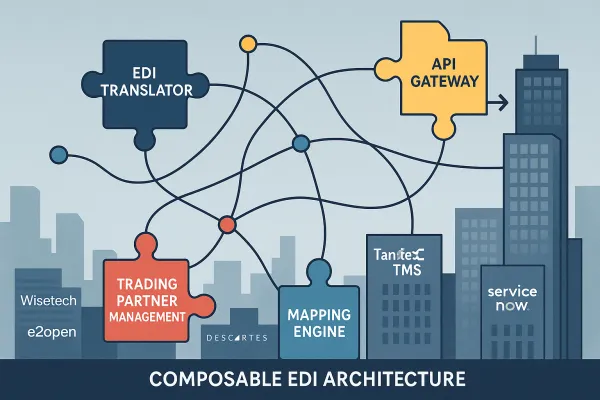
The strategic combination of EDI with complementary technologies creates unprecedented value, with hybrid EDI-API integration delivering both standardized reliability and real-time responsiveness, enabling true end-to-end automation across diverse business environments. APIs handle live data while EDI manages audit-critical records and compliance requirements.
Modern platform requirements center on scalability and cloud-native orchestration. Intelligent automation systems automate every aspect of connected development with proprietary automation engines that work at large scale, giving engineers the freedom to focus on tasks that really matter through economies of scale and quality control.
Companies adopting advanced EDI frameworks will gain significant competitive advantages through improved operational efficiency, reduced costs, and enhanced supply chain visibility. The vendor landscape continues evolving, with next-generation TMS providers like Cargoson joining established players in offering comprehensive EDI automation capabilities that eliminate the traditional $62,000 mapping bottleneck while positioning organizations for continued growth and operational excellence.