The AI-Powered EDI Mapping Revolution: How Intelligent Automation Is Reshaping TMS Vendor Selection During the Great Transportation Technology Consolidation of 2026

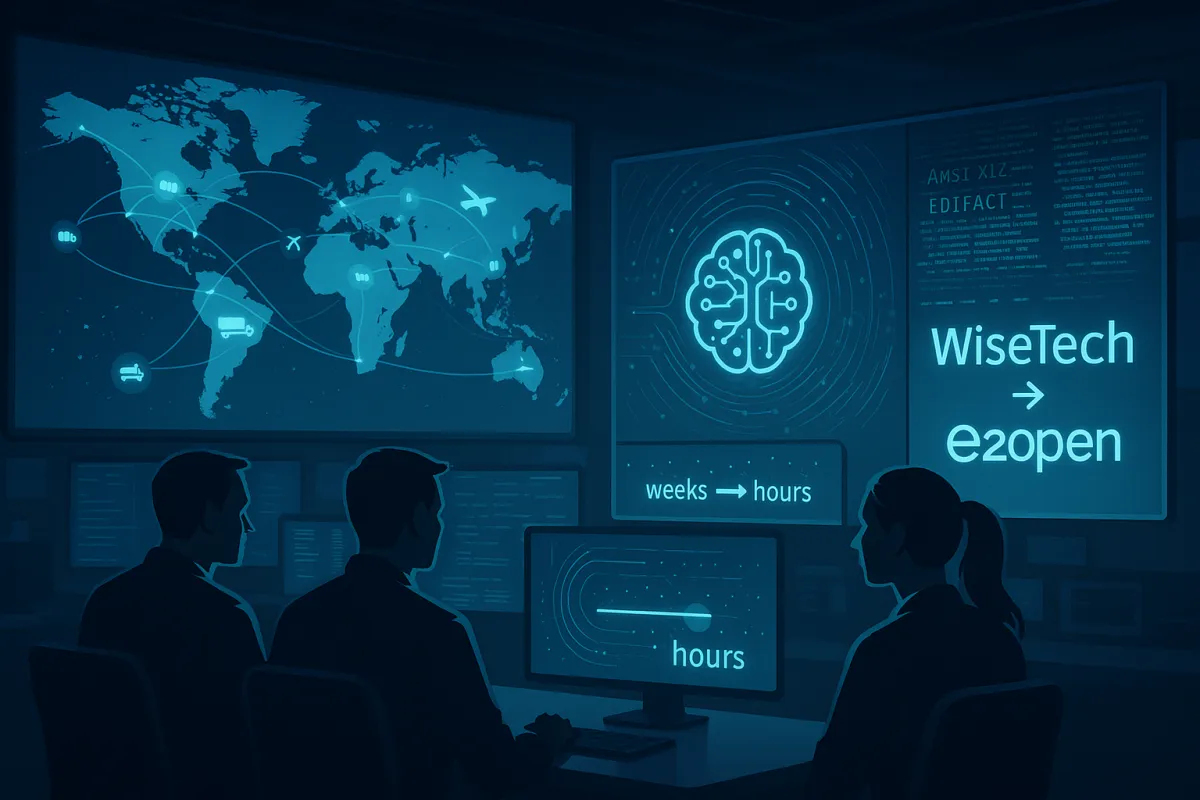
The $2.1 billion WiseTech acquisition of e2open closed in mid-2025, marking one of the largest supply chain technology deals in recent history. Just months earlier, Descartes acquired 3GTMS for approximately US $115 million, marking Descartes' 32nd acquisition since 2016. These aren't isolated moves—they signal a fundamental shift in how transportation management systems (TMS) are evaluated as AI embedding into EDI platforms transforms rigid, rule-based processes into intelligent, adaptive solutions, simplifying complex processes like enhanced partner onboarding, accelerated EDI mapping during 2026.
What makes this consolidation particularly significant is its timing. EDI mapping has long been a bottleneck in EDI integration projects, but with AI-assisted mapping, companies can auto-generate integration logic and business process flows by analyzing historical data. This technology convergence is fundamentally changing what TMS buyers prioritize when evaluating vendors.
The Traditional EDI Mapping Crisis That's Driving AI Adoption
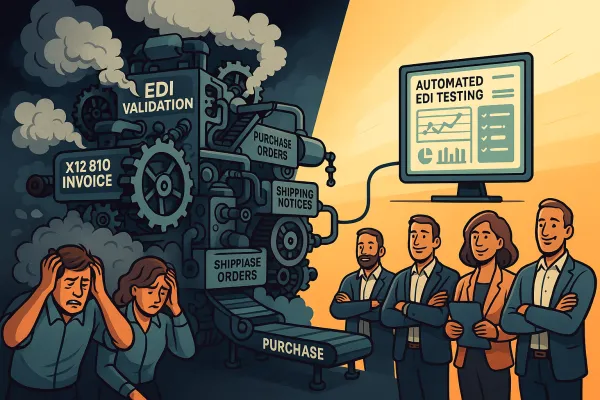
EDI mapping has long been a bottleneck in EDI integration projects. You know the drill—weeks of manual field mapping, constant back-and-forth with trading partners, and the inevitable delays that push go-live dates by months. Traditional EDI trading partner onboarding can take weeks, but with AI, that changes by automatically generating partner profiles, dataflows, and validation checks.
The financial impact is staggering. Manual EDI mapping typically consumes 40-60% of total implementation timelines. When you're deploying a new TMS across hundreds of trading partners, those delays compound quickly. While AI is unlikely to automate EDI mapping in the near term fully, it can still provide significant cost savings in different parts of the mapping process, from requirements gathering to data field mapping and testing.
Traditional TMS platforms like Oracle Transportation Management and SAP Transportation Management have addressed these challenges through extensive professional services teams and pre-built connector libraries. But even with these resources, complex implementations still face the same fundamental constraint: human expertise bottlenecks in mapping and data transformation logic.
How AI is Fundamentally Changing EDI Data Transformation
The standardized and structured nature of EDI formats (e.g. ANSI X12, EDIFACT) and EDI data exchanges means less data cleaning is likely required before feeding it into AI models. This structural advantage is what makes EDI particularly well-suited for AI automation compared to other B2B integration challenges.
AI and machine learning algorithms can automatically map data between EDI and ERP systems and other back-end applications, with AI-powered tools analyzing historical data mappings and learning patterns to automate future mappings. The practical implications are significant—this not only speeds up EDI integration and migration but also improves accuracy across complex systems.
Leading EDI providers are embedding these capabilities differently. Cleo's approach focuses on AI-driven automation that reduces trading partner onboarding times. Boomi emphasizes AI-enhanced document processing and automated workflows. Meanwhile, emerging solutions like Cargoson are building AI mapping capabilities directly into their European-focused platform, alongside established players like Orderful and traditional providers expanding their AI toolsets.
AI can dramatically reduce the time it takes to bring new trading partners into an EDI ecosystem by automating onboarding tasks such as partner profile creation, document format mapping, and validation, cutting weeks of manual setup into hours or days and enabling companies to scale partnerships more easily.
The TMS Vendor Consolidation Wave Reshaping Procurement Strategy
The $2.1 billion enterprise value transaction between WiseTech and e2open represents more than financial engineering—it's a strategic response to the changing competitive landscape. Previously, WiseTech's focus has been mainly on logistics service providers, but now with e2open's deep product offerings, domain expertise and customer base, they're expanding into global and domestic trade including demand, planning, channel, supply, transportation and logistics.
The Descartes-3GTMS deal tells a similar story. Shippers, third-party logistics providers and freight brokers leverage 3G's platform to optimize domestic over-the-road shipments with tools for planning, rating, consolidation, and routing, bringing strong domestic transportation management functionality for truckload, less-than-truckload (LTL), and parcel modes.
This consolidation creates a two-tier market structure. Mega-vendors like WiseTech/e2open, Oracle, and SAP offer comprehensive functionality but come with integration complexity. Specialist providers focus on specific capabilities—whether that's European cross-border operations (like Cargoson), parcel optimization, or industry-specific workflows.
How AI Mapping Capabilities Are Becoming Key Vendor Differentiators
The acquisition spree isn't just about market share—it's about accumulating the data and domain expertise necessary to train effective AI models. With structured, complete, and accurate EDI data, supply chain leaders can embed autonomous AI agents into EDI workflows to alert, interpret, act on, and optimize data in real time.
E2open's cloud-based platform connects more than 500,000 manufacturing, logistics, channel, and distribution partners as one multi-enterprise network tracking over 18 billion transactions annually. This transaction volume provides WiseTech with the training data necessary to develop sophisticated AI mapping algorithms.
The competitive implications are clear. TMS vendors without significant transaction volumes or domain-specific datasets will struggle to develop AI capabilities internally. This explains why pure-play solutions like Cargoson are partnering with AI providers rather than building capabilities from scratch, while others are being acquired by larger platforms seeking to accelerate their AI roadmaps.
The New TMS Selection Framework for the AI-Mapping Era
Traditional TMS evaluation criteria—cost, functionality, integration capabilities—remain important, but AI mapping readiness has become a critical differentiator. Here's what procurement teams should prioritize:
Data Architecture Readiness: AI-generated mappings will soon integrate with orchestration engines, enabling real-time validation and correction during partner onboarding, with AI accelerating the data mapping process by learning from semantic models and automating field matching. Vendors should demonstrate how their data models support AI training and deployment.
Implementation Methodology: Fast onboarding backed by structured and automated mapping and testing, with solutions meeting strict global standards and maintaining regulatory compliance is becoming table stakes. Look for vendors that can show measurable reductions in implementation timelines through AI assistance.
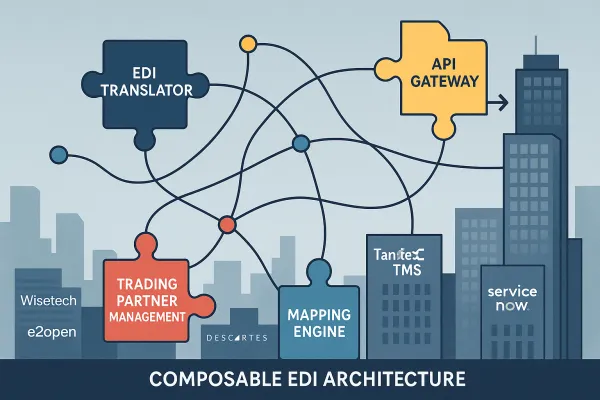
Ecosystem Integration: Solutions like Boomi provide ready-made integrations and standard industry connectors, simplifying the mapping and transformation of EDI documents, automating workflows, and guaranteeing smooth communication. The ability to integrate AI mapping with existing ERP, WMS, and partner systems determines practical deployment success.
European shippers face additional considerations. Cross-border compliance, multi-language support, and regional carrier networks require specialized expertise. Solutions like Cargoson focus specifically on these requirements, while global platforms may offer broader functionality but less regional optimization.
Implementation Strategy: Leveraging AI Mapping During Vendor Transitions
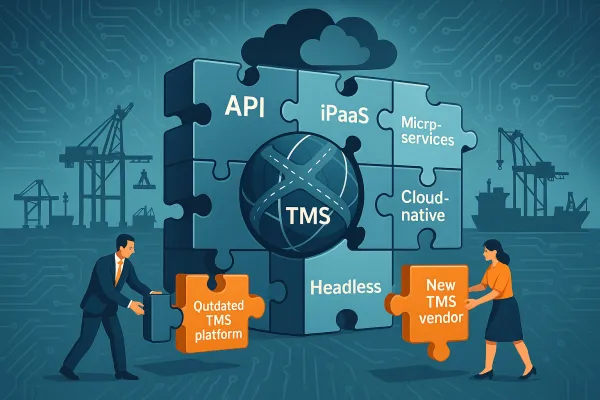
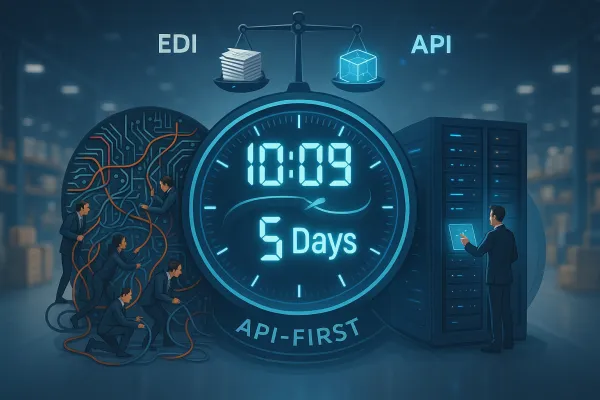
Configuring APIs in combination with EDI manually is slow and complex, but with cloud EDI AI platforms, integration workflows can be automated end-to-end, with AI not only accelerating configuration but also adapting over time. This capability becomes crucial during vendor transitions or platform consolidations.
Smart procurement teams are using the current consolidation wave as an opportunity to modernize their EDI infrastructure. Automated workflows eliminate manual API setup, making streamlined system integration easily attainable. This means faster migrations, reduced professional services costs, and more predictable timelines.
However, vendor consolidation also introduces risks. When Descartes acquires 3GTMS or WiseTech integrates e2open, existing customers face uncertainty about product roadmaps, support levels, and pricing structures. The acquisition is expected to be completed in 1H26, with E2open and WiseTech continuing to operate as independent companies until the transaction closes.
During vendor evaluations, examine their integration methodology and timeline commitments carefully. Vendors with mature AI mapping capabilities can provide more aggressive implementation schedules with higher confidence levels. Those still developing these capabilities may promise faster timelines but deliver traditional manual processes behind the scenes.
Future Outlook: What 2027 Will Bring for AI-Driven EDI Integration
Agentic AI has moved rapidly from experimentation to enterprise deployment, particularly in supply chain operations where decision speed, coordination, and accuracy are critical, with successful platforms defined by accountability, architectural rigor, embedded expertise, and organizational readiness.
The next wave of innovation will focus on specialized agents for procurement, logistics, manufacturing, quality, and finance, each with its own responsibilities and intelligence, communicating and collaborating while negotiating priorities and resolving conflicts dynamically. Imagine a procurement agent negotiating lead times with suppliers while a logistics agent optimizes transportation routes based on cost, emissions, and delivery risk.
According to Gartner, by 2030, half of all cross-functional supply chain management solutions will have agentic AI capabilities—systems that not only make decisions but can execute those decisions autonomously throughout the entire ecosystem. This shift from recommendation engines to execution platforms will fundamentally change how TMS platforms operate.
For procurement teams, this evolution means prioritizing vendors that demonstrate clear AI roadmaps beyond basic mapping automation. Look for platforms that can articulate how their AI capabilities will evolve from task automation to autonomous decision-making. The vendors that survive the current consolidation wave will be those that successfully transition from traditional software providers to AI-powered automation platforms.
The message for 2026 is clear: AI-powered EDI mapping automation isn't just changing how we implement TMS solutions—it's redefining what TMS platforms can accomplish. Organizations that align their vendor selection criteria with this reality will gain significant competitive advantages. Those that treat AI mapping as a nice-to-have feature rather than a strategic necessity will find themselves struggling with the same implementation bottlenecks that have plagued EDI deployments for decades.