The API-First Partner Onboarding Revolution: How to Cut EDI Trading Partner Setup Time from 10 Weeks to 5 Days While Building Acquisition-Resistant Integration Architecture in 2026


Trading partner onboarding has reached a breaking point. Your EDI specialists spend 10 weeks on average setting up each new partner, while modern API integrations can be live in days. This disparity forces supply chain leaders into an impossible choice: maintain reliable EDI workflows that partners expect, or embrace API agility that business demands.
The math is stark. Companies estimate savings of up to €1 billion per year in the EU transport and logistics sector from digital integration modernization. Meanwhile, 66% of technology projects end in partial or total failure, while 17% of large IT projects threaten company survival. When you add the current TMS vendor consolidation wave - WiseTech's completed acquisition of e2open for $2.1 billion and Descartes' purchase of 3GTMS for $115 million - the risks multiply exponentially.
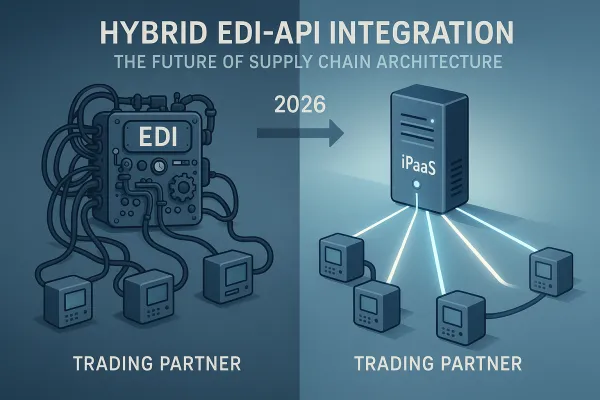
The solution isn't choosing between EDI and APIs. The 2026 trend is an "API-First" approach, serving as a low-friction gateway for partners while EDI handles the heavy lifting behind the scenes. This hybrid strategy accelerates partner onboarding from weeks to days while building vendor-agnostic architecture that survives industry consolidation.
The Critical Partner Onboarding Bottleneck Breaking Supply Chain Agility
Your competitor just signed a new supplier and had them processing orders in 3 days. You're on week 6 of mapping EDI transactions for a similar relationship. Sound familiar?
Traditional EDI onboarding creates a cascade of delays. Partners must configure EDI profiles and build appropriate mapping routes to send, transform, and receive data. Each trading partner has different requirements, different standards (ANSI X12, EDIFACT, TRADACOMS), and different tolerance for technical complexity.
The hidden costs accumulate quickly. Revenue recognition delays while partners struggle through testing phases. Support tickets pile up as non-technical staff encounter EDI complexity. Project resources get trapped in one-off mapping exercises instead of strategic initiatives.
Businesses that once spent months managing EDI onboarding, mapping, and validation are now discovering that API-first approaches eliminate most of these friction points. Partners can connect through familiar REST interfaces while your internal systems continue using proven EDI workflows.
Understanding the API-First Strategy: Gateway to Simplified Trading Partner Connectivity
An API-First strategy uses APIs as the primary, simple entry point for trading partners, eliminating the need for them to have deep EDI expertise. Think of it as a translation layer: partners interact with modern, developer-friendly interfaces while your ERP systems receive standardized EDI documents.
The architecture works in three layers. The API gateway handles partner authentication, rate limiting, and basic validation. The translation engine converts incoming API calls into proper EDI formats - 850 purchase orders, 856 advance ship notices, 810 invoices. The EDI processing layer manages compliance, mapping, and integration with your existing business systems.
This approach delivers immediate benefits. The system translates API inputs into standard EDI formats in the backend, accelerating onboarding times while maintaining internal data standardization. Partners avoid EDI complexity entirely, while your internal teams maintain the reliability and compliance they trust.
The business impact is measurable. Instead of starting from scratch for every new connection, you can onboard trading partners and integrate new applications in days, not months. This lets your business stay agile and scale operations without waiting on complex custom builds or manual mapping.
The Step-by-Step Implementation Framework
Phase 1: API Endpoint Design and Documentation
Start with your most common transaction types. Purchase orders, shipment confirmations, and invoices represent 80% of trading partner interactions. Design clean REST endpoints that accept business-friendly JSON payloads instead of complex EDI syntax.
Document everything with interactive examples. Partners should see exactly how to structure order data, handle error responses, and manage authentication tokens. Modern TMS platforms like Cargoson alongside competitors including MercuryGate, Descartes MacroPoint, and Oracle Transportation Management already provide these developer-friendly interfaces.
Phase 2: Backend EDI Translation Layer Configuration
Build your translation rules systematically. Map JSON fields to EDI segments with validation rules that catch errors before they reach trading partners. AI-generated mappings integrate with orchestration engines, enabling real-time validation and correction during partner onboarding. AI is now accelerating this process by learning from semantic models and automating field matching.
Configure different translation profiles for different partner requirements. Walmart demands specific 850 purchase order formats. Amazon has different ASN requirements. Your API stays consistent while backend translations handle partner-specific variations.
Phase 3: Partner Testing and Validation Protocols
Create sandbox environments where partners can test without affecting production systems. Provide sample data sets, error simulation, and real-time feedback on transaction formatting. Compliance-ready partner onboarding accelerates with pre-built integrations, reusable workflows, and low-code configuration - plus structured testing that adapts as partner requirements evolve.
Automate validation wherever possible. Use AI-assisted self-service tools to help non-technical staff handle common EDI issues, receive interactive guidance on onboarding, and manage compliance requirements.
Phase 4: Production Rollout with Monitoring
Deploy with comprehensive observability. Track API response times, EDI processing delays, and partner success rates. Partner visibility and scorecards improve transparency with views that help teams spot trends, prioritize fixes, and identify top performers.
Establish clear escalation paths. When partners encounter issues, your support team needs instant access to transaction logs, processing status, and error details without diving into EDI technical specifications.
Building Acquisition-Resistant Architecture During TMS Vendor Consolidation
The numbers tell the consolidation story. WiseTech Global completed its acquisition of e2open for $3.30 per share in cash, equating to an enterprise value of $2.1 billion, marking the largest TMS industry transaction to date. Descartes' purchase of 3GTMS for $115 million in March 2025, and Körber's transformation of MercuryGate into Infios represent just the beginning of market restructuring.
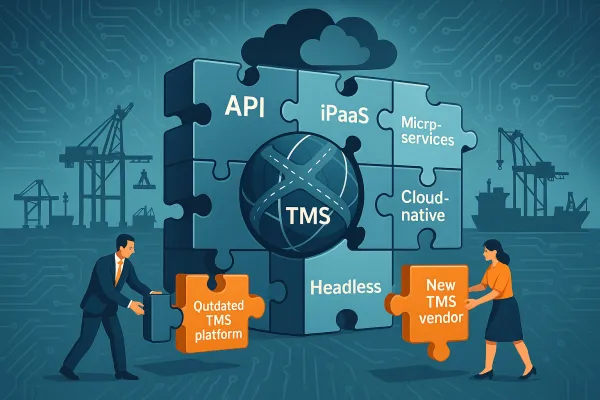
This consolidation creates direct risks for your integration strategy. When your TMS vendor becomes an acquisition target, you inherit integration challenges without managing the project directly. Roadmaps change, support models shift, and technical architectures get rationalized.
API-first architectures provide natural insulation from these disruptions. Your partners connect through standardized interfaces that aren't tied to specific TMS implementations. When vendor consolidations happen, you can migrate backend systems without forcing partners to recertify, retest, or rebuild integrations.
Contract protection becomes essential. Include acquisition notification requirements in vendor agreements. Negotiate price protection clauses and functionality guarantees. Most importantly, maintain data portability rights so you can extract transaction histories, mapping configurations, and partner profiles if vendor changes force platform migrations.
Consider vendor-neutral solutions like Cargoson alongside established alternatives including SAP Transportation Management, Oracle TM, and Manhattan Associates. European specialists maintain development resources focused exclusively on European market needs, while global vendors spread development efforts across multiple geographic priorities.
Overcoming Common Implementation Barriers and Technical Challenges
Data mapping complexity remains the biggest technical hurdle. One of the most time-consuming aspects of EDI has always been data mapping. AI is now accelerating this process by learning from semantic models and automating field matching, reducing setup time and simplifying updates over time.
Authentication and authorization require careful planning. Partners expect OAuth 2.0 or API key authentication, not AS2 certificates. Security in 2026 is increasingly about machine identities, least-privilege access, and tighter credential handling, especially when autonomous agents and microservices amplify the number of calls.
Performance optimization matters more than expected. Hybrid integration lowers costs by routing data through the most efficient channel, using low-cost APIs for frequent status checks and reserving EDI bandwidth for massive batch files. Design your API endpoints to handle both real-time queries and bulk operations efficiently.
Error handling determines partner satisfaction. When API calls fail, partners need clear error messages and recovery guidance. When EDI processing encounters issues, your API should provide status updates and estimated resolution times. Automated error identification and notifications allow you to jump right into fixing issues that arise.
Measuring Success: KPIs and Performance Benchmarks
Partner onboarding time provides the clearest success metric. Track time from initial API access to first successful transaction processing. Leading platforms report outcomes such as 55% faster partner onboarding and 48% faster document delivery.
Integration error rates indicate system health. Monitor API error rates, EDI processing failures, and partner support tickets. Successful implementations typically see 60-80% reduction in onboarding-related support requests as partners handle most integration tasks through self-service interfaces.
Cost savings accumulate across multiple areas. Reduced consulting fees for custom mappings. Lower support costs from simplified partner interactions. Faster revenue recognition from accelerated partner enablement. The EU transport and logistics sector expects savings of €1 billion annually from digital integration modernization.
Business continuity improvements become apparent during vendor transitions. Organizations with API-first architectures report 40-60% reduction in integration disruption during TMS vendor changes, mergers, or system migrations.
Future-Proofing Your Strategy: Preparing for 2027 and Beyond
Regulatory deadlines are creating urgency around digital integration modernization. As of 9 July 2027, the eFTI Regulation will apply in full. Member State authorities must accept information shared electronically by operators via certified eFTI platforms.
As of January 2026, eFTI platforms and service providers can start preparing for operations while Member States authorities may start accepting data stored on certified eFTI platforms for inspection. This creates the first practical deadline for TMS platforms to demonstrate compliance capabilities.
The implications extend beyond European operations. By July 2027, all Member States will be required to accept electronic transport data via eFTI-certified platforms, making 2026 the critical preparation year. Organizations without digital-ready integration architectures face compliance gaps and competitive disadvantages.
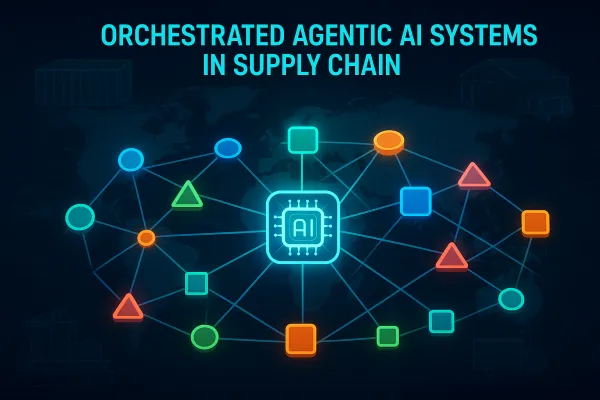
AI integration continues accelerating. API Integration is moving towards AI-assisted development and secure-by-design architectures, while traffic patterns evolve to support autonomous AI agents embedded in EDI workflows to alert, interpret, act on, and optimize data in real time.
Start your API-first transition immediately. Assess your current capabilities, evaluate TMS options, and begin integration planning. The July 2027 deadline approaches faster than you think, and the benefits of early implementation extend far beyond regulatory compliance. Organizations that modernize their integration architectures now will gain competitive advantages that compound as regulatory requirements tighten and vendor consolidation continues reshaping the market.