The Belgium PEPPOL Integration Crisis: How to Connect TMS and EDI Systems to Meet March 2026 Compliance Deadlines Without Breaking Trading Partner Networks

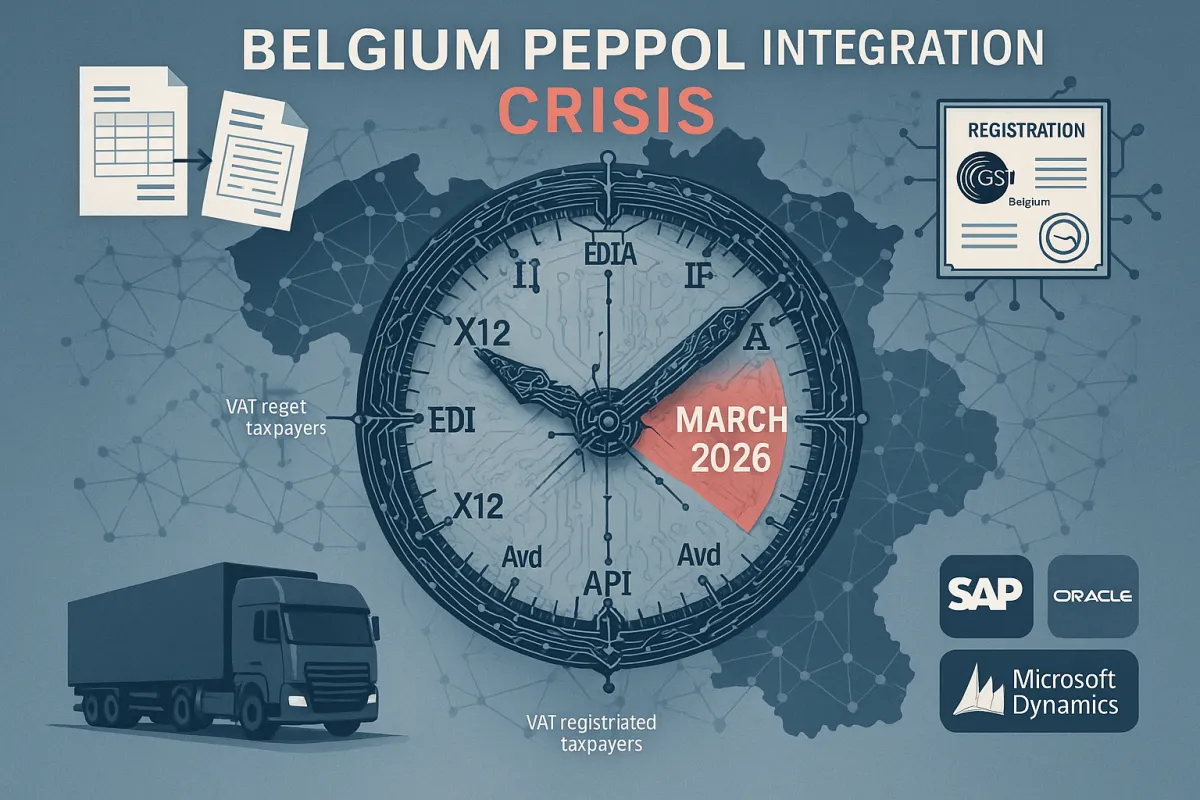
Belgium's mandatory B2B e-invoicing through the PEPPOL network officially launches January 1, 2026, but here's the reality most TMS and EDI managers haven't fully grasped: a three-month tolerance period runs through March 31, 2026, but only for companies demonstrating they've already started their compliance journey. Penalties escalate quickly—€1,500 for first offenses, €3,000 for second violations, and €5,000 for each subsequent breach—making this Q1 window your last chance to avoid financial penalties while preserving existing trading partner networks.
Transportation companies face a particularly complex challenge. Unlike simple accounting software PEPPOL integrations, TMS systems often fail integration projects due to disconnected systems, poor visibility, and outdated technology. Your transport execution platform needs to connect to PEPPOL while maintaining existing EDI relationships with carriers, customers, and logistics partners who may not be ready for structured e-invoicing themselves.
The Belgium PEPPOL Mandate Reality Check - What's Actually Required by March 31, 2026
All Belgian VAT-registered taxpayers must send and receive structured electronic invoices through the PEPPOL network using the PEPPOL-BIS standard. Invoices must conform to EN16931, primarily using UBL 2.1 and CII 16B formats, with paper invoices and unstructured formats like PDF no longer permitted.
The tolerance period isn't an extension—it's conditional relief. Companies must demonstrate they've taken reasonable and timely steps to comply, such as having technical capabilities to send or receive structured e-invoices for some transactions. If your TMS can't prove active PEPPOL integration efforts by March 31, full penalties apply immediately.
Rejected invoices that don't meet structured format requirements can lose VAT deduction rights, significantly increasing costs beyond the administrative fines. For transport companies processing hundreds of invoices monthly across multiple carriers and customers, this creates substantial financial risk.
The Hidden TMS Integration Complexities Most Companies Underestimate
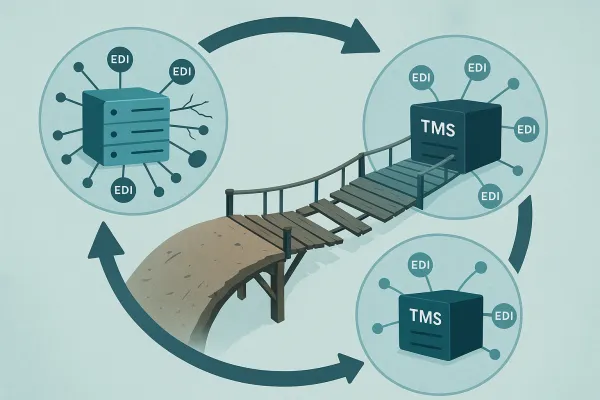
Traditional EDI-TMS architectures struggle with PEPPOL requirements because they're built for point-to-point connections using UN/EDIFACT or X12 protocols. PEPPOL operates differently—it's a four-corner network model requiring certified Access Points instead of direct VAN connections.
Getting TMS platforms to integrate cleanly with ERP systems, WMS platforms, carrier networks, and visibility tools remains harder than expected, especially for mid-market shippers without dedicated IT teams to manage EDI connections and API configurations. Now add PEPPOL connectivity requirements on top of existing integration complexity.
Most transport companies haven't registered for Global Location Numbers (GLNs) required for PEPPOL participation. Multi-location operations need separate GLNs for each facility that issues invoices—a registration process that takes 2-4 weeks through GS1 Belgium. Starting this process in February 2026 puts you past the tolerance deadline.
Solutions like Cargoson's carrier integration platform help bridge these gaps by providing pre-built connections to both traditional EDI networks and PEPPOL Access Points, allowing transport companies to maintain existing trading partner relationships while adding PEPPOL capability.
The Critical PEPPOL Access Point Selection Framework for TMS Environments
Choosing the wrong PEPPOL Access Point provider creates technical debt that's expensive to unwind. TMS environments need providers supporting AS4 protocol transmission, RESTful API connectivity for automated invoice generation, and seamless integration with existing ERP platforms like SAP, Oracle, or Microsoft Dynamics.
Cost structures vary significantly. Per-transaction pricing models work for low-volume shippers (under 1,000 invoices monthly), but high-volume transport operations benefit from subscription-based pricing. Evaluate total cost including setup fees, GLN registration support, and ongoing technical support—not just per-document charges.
Key technical requirements include: support for both UBL and CII invoice formats, automated routing rules to direct invoices to correct PEPPOL recipients, error handling and retry logic for failed transmissions, and audit trail capabilities for compliance documentation.
Established providers like EDICOM Group, Tradeshift, and Qvalia offer enterprise-grade PEPPOL Access Point services with proven TMS integration experience. Transport-focused solutions like Cargoson provide specialized connectivity that understands the unique requirements of carrier invoicing, freight billing, and multi-modal transport documentation.
Hybrid EDI-PEPPOL Architecture Strategies That Preserve Trading Partner Networks
Smart transport companies aren't replacing their EDI infrastructure—they're extending it. Build routing logic that automatically determines whether to send invoices via PEPPOL (for Belgian B2B transactions) or traditional EDI (for international partners, carriers, or customers not yet PEPPOL-enabled).
Document type mapping becomes critical. Your TMS might generate ORDERS, DESADV, and INVOIC messages in EDIFACT format for existing partners while simultaneously creating PEPPOL BIS Invoice messages for Belgian customers. Maintain separate message queues to prevent format conflicts and ensure proper delivery routing.
Consider implementing message transformation services that can convert between EDIFACT INVOIC and PEPPOL BIS formats automatically. This allows you to maintain a single invoice generation process in your TMS while supporting multiple output formats based on recipient requirements.
Transport execution platforms like Cargoson excel in these hybrid scenarios by managing the complexity of multiple communication protocols and message formats within a unified interface, reducing the technical burden on your internal IT teams.
TMS Vendor Readiness Assessment - Evaluating Your Current Platform's PEPPOL Capabilities
Major TMS providers like Descartes already include PEPPOL connectivity in their B2B messaging solutions, but implementation varies. Assess your current platform using these criteria:
For Descartes TMS platforms: Check if your license includes the EDI Messaging module with PEPPOL Access Point connectivity. Some older Descartes implementations require upgrades to support EN16931 invoice formats.
For Infios Transportation Management (formerly MercuryGate): Verify API connectivity supports webhook integrations with PEPPOL Access Points. The platform's modular architecture typically handles PEPPOL integration through middleware connections.
For SAP Transportation Management: PEPPOL support requires the SAP Document and Reporting Compliance module. Check your current SAP TM version—PEPPOL BIS 3.0 support was added in specific enhancement packages.
If your current TMS lacks native PEPPOL support, middleware solutions become essential. Companies often discover that upgrading their entire TMS platform costs more and takes longer than implementing dedicated integration solutions that bridge existing systems to PEPPOL networks.
This creates an opportunity to evaluate purpose-built transport management solutions like Cargoson that offer modern API-first architectures designed for multiple protocol support, including PEPPOL, EDI, and REST-based integrations in a single platform.
The Real Implementation Timeline - Why Starting in March 2026 May Already Be Too Late
PEPPOL Access Point setup typically requires 2-3 weeks for certification and testing. GLN registration through GS1 Belgium takes another 1-2 weeks. Add 2-4 weeks for TMS integration development and testing, plus 1-2 weeks for trading partner testing with key customers.
That's 6-11 weeks minimum—pushing any March 2026 start date past the tolerance deadline. Belgian authorities explicitly expect companies to show evidence of their compliance journey, requiring documentation of progress rather than last-minute implementations.
Common technical blockers include: ERP systems that can't generate EN16931-compliant invoice data without customization, TMS platforms requiring expensive upgrades to support PEPPOL integration, and trading partner networks with mixed readiness levels creating complex routing requirements.
Traditional TMS implementations take six to twelve months, but managed TMS solutions can be operational in a fraction of that time because platforms are pre-configured and integrations are pre-built. For companies facing the March deadline, managed solutions or cloud-native platforms become the only viable path.
Post-Implementation Optimization - Preparing for Belgium's 2028 Real-Time Reporting Requirements
Belgium plans to implement e-reporting based on a PEPPOL 5-corner model starting January 2028, enabling secure communication between businesses and Belgian tax administration. This system makes tax authorities participants in the exchange network, forwarding invoice data almost immediately after issuance.
Companies implementing PEPPOL integration now should architect solutions that can extend to real-time VAT reporting without major system changes. This means ensuring your PEPPOL Access Point provider supports the 5-corner model and that your TMS can generate the additional data elements required for automatic VAT reporting.
Belgium also plans to expand e-invoicing scope to include cross-border transactions, aligning with EU-wide initiatives. Transport companies with international operations should consider PEPPOL implementations that can scale across multiple European jurisdictions rather than Belgium-only solutions.
The annual VAT customer listing will be abolished once real-time reporting begins, as tax authorities will have transaction-by-transaction visibility. This shifts compliance from periodic reporting to continuous data accuracy requirements—making robust TMS-PEPPOL integration even more critical.
Cost-Benefit Analysis Framework for PEPPOL Implementation ROI
Calculate implementation costs realistically: PEPPOL Access Point setup ($500-2,000), GLN registration ($300-500), TMS integration development ($5,000-50,000 depending on complexity), and ongoing per-transaction or subscription fees ($0.10-1.00 per invoice).
Compare against penalty avoidance: €1,500 first offense covers most small implementations. For transport companies processing 500+ monthly invoices, penalty exposure quickly exceeds implementation costs. Factor in potential VAT deduction losses for rejected invoices, which can significantly multiply financial impact.
Quantify operational efficiency gains: automated invoice processing reduces manual data entry, faster payment cycles through structured data exchange, and reduced dispute resolution time through standardized formats. Transport companies typically see 15-25% reduction in invoice processing costs post-implementation.
For companies managing complex carrier networks and multi-modal transport operations, solutions that unify PEPPOL compliance with existing EDI requirements—like Cargoson's integrated platform—often deliver faster ROI by eliminating duplicate system maintenance costs while ensuring comprehensive compliance coverage.
The March 31 deadline isn't negotiable, but companies demonstrating active compliance efforts still have options. Start with GLN registration immediately, select your PEPPOL Access Point provider, and document your integration timeline. The tolerance period rewards preparation—use it wisely.