The Critical Agentic AI TMS Vendor Assessment Framework: How to Distinguish Real Autonomous Capabilities from Marketing Hype and Prevent Joining the 76% Implementation Failure Rate in 2026

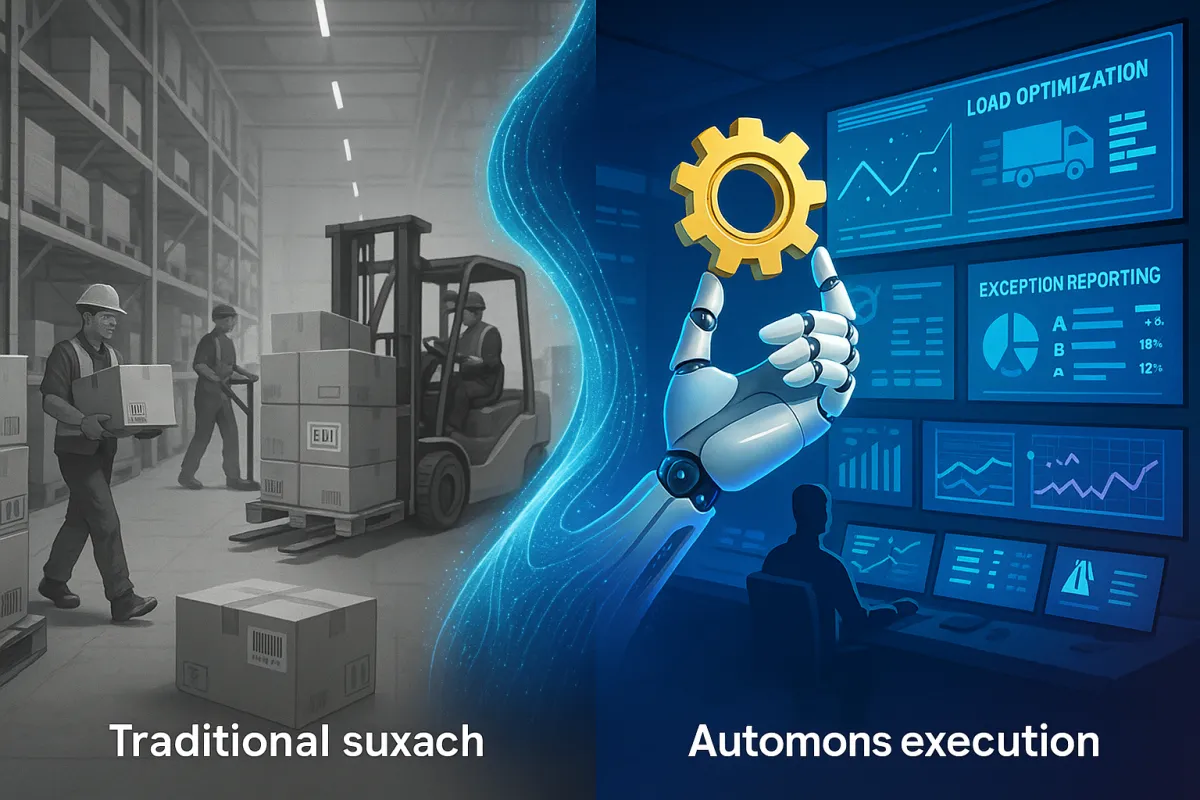
The stakes couldn't be higher. Over 40% of agentic AI projects will be canceled by the end of 2027, due to escalating costs, unclear business value or inadequate risk controls, according to Gartner. Meanwhile, seventy-six percent of logistics transformations never fully succeed, failing to meet critical budget, timeline or key performance indicator (KPI) metrics, with more than 80% of respondents attempting four transformations in fewer than five years. For TMS vendors rushing to market with agentic AI capabilities, this creates a dangerous environment where marketing claims outpace genuine autonomous execution functionality.
Your agentic AI TMS vendor assessment framework needs to distinguish between systems that suggest and those that execute. C.H. Robinson's generative AI agents completed more than 3 million shipping tasks in the past year — across billing, documentation, pricing, scheduling, and carrier vetting. "That's 3 million manual tasks our people didn't have to do," said Arun Rajan, the company's chief strategy and innovation officer. Notice the critical difference: these agents acted, they didn't just recommend.
The Agentic AI Implementation Crisis Hitting TMS Deployments
European shippers face a perfect storm of implementation challenges. "Most agentic AI projects right now are early stage experiments or proof of concepts that are mostly driven by hype and are often misapplied," said Anushree Verma, Senior Director Analyst, Gartner. "This can blind organizations to the real cost and complexity of deploying AI agents at scale, stalling projects from moving into production."
The logistics transformation failure rate isn't improving with new technology. Seventy-six percent of logistics transformations never fully succeed, failing to meet critical budget, timeline or key performance indicator (KPI) metrics. When you layer agentic AI complexity on top of traditional TMS deployment challenges, the risk compounds exponentially.
Major TMS vendors including MercuryGate (now Infios), Blue Yonder, E2open, Descartes, and Cargoson are navigating this implementation crisis differently. Some focus on bounded autonomy with clear guardrails. Others promise full autonomous execution that often delivers disappointed customers and canceled projects.
Why Traditional TMS AI Evaluation Criteria Fall Short in 2026
Your current vendor evaluation probably asks the wrong questions. Instead of focusing on AI model sophistication or the number of machine learning algorithms, successful assessments examine architectural foundations. Nuvocargo built its agents on a proprietary TMS called NuvoOS, embedding them directly in the operational system rather than layering analytics on top. Freight specialists still monitor the agents and handle edge cases, but the default operating mode is autonomous execution with human oversight — a reversal of the previous model where humans did the work and AI offered suggestions.
The distinction between monolithic and composable AI architectures determines implementation success. Systems promising "everything AI" often deliver nothing reliable. Composable approaches allow incremental deployment with measurable value at each stage. This architectural choice affects everything from integration complexity to ongoing maintenance costs.
Marketing materials showcase impressive demos, but Gartner identified a widespread trend of "agent washing," where vendors rebrand existing AI assistants, chatbots, or robotic process automation (RPA) tools as "agentic AI" without delivering true agentic capabilities. Of the thousands of vendors claiming agentic solutions, Gartner estimates only about 130 actually offer genuine agentic features.
The Five-Tier Agentic AI Capability Assessment Matrix
Tier 1 - Decision Support and Recommendations
Most TMS vendors start here with basic AI features like intelligent reporting, load optimization suggestions, and carrier performance analytics. These systems excel at identifying problems but require human intervention for every action. Vendors often present sophisticated dashboards with AI-powered insights, but the workflow still depends on manual execution.
Tier 1 capabilities include predictive analytics for demand forecasting, route optimization recommendations, and exception reporting. While valuable for traditional operations, these features represent automation assistance rather than autonomous execution.
Tier 2 - Bounded Automation with Human Oversight
This tier represents the practical middle ground where most successful deployments operate. Systems execute predefined workflows automatically but within strict parameters and with human monitoring. When conditions fall outside programmed boundaries, the system escalates to human operators.
Bounded automation handles routine tasks like rate confirmations within established carrier relationships, automatic load assignment to preferred carriers, and standard document generation. The key characteristic: clear guardrails prevent the system from making decisions beyond its proven capabilities.
Tier 3 - Multi-System Execution Capabilities
Tier 3 systems coordinate actions across multiple platforms automatically. Instead of just suggesting a route change, they execute the modification across TMS, WMS, and ERP systems simultaneously. This includes automatic rerouting of shipments based on capacity constraints, real-time inventory adjustments triggered by transport delays, and cross-system data reconciliation without manual intervention.
Vendors at this tier demonstrate integration orchestration that maintains data consistency across platforms. The difference from Tier 2: actions span multiple systems rather than single-application workflows.
Tier 4 - Multi-Agent Orchestration
Here, specialized agents communicate and coordinate complex operations. A procurement agent might negotiate with a logistics agent to optimize both sourcing decisions and transportation costs simultaneously. Manufacturing planning agents coordinate with transportation agents to balance production schedules against shipping capacity.
Microsoft disclosed in March 2026 that it runs dozens of AI agents across its own supply chains, with plans to scale significantly by year-end. The company's internal fleet management AI includes a Demand Planning Agent for rack component forecasting, a Multi-Agent DC Spare-Part Space Solver using computer vision, and a CargoPilot Agent that optimizes transport mode, route, cost, and carbon simultaneously.
Tier 5 - Autonomous Supply Chain Operations
The highest tier represents systems where agents operate as integral components of business operations rather than external tools. These platforms embed autonomous decision-making directly into operational workflows, handling end-to-end processes from order receipt to delivery confirmation without human intervention for standard scenarios.
Manhattan Active, Uber Freight, Blue Yonder, E2open, and Cargoson approach this tier differently. Some focus on specific functional areas like dynamic routing or carrier selection. Others attempt broader autonomous coordination across the entire logistics lifecycle.
Critical Technical Assessment Questions That Expose Vendor Readiness
Integration Architecture Evaluation
Ask vendors to demonstrate their orchestration layer that coordinates data exchange across ERP, WMS, and TMS systems. Can they show you real-time data flow during a shipment modification? How do they handle conflicts when multiple systems need to update the same shipment data simultaneously?
Request specific examples of custom agent development. Can you build agents for your unique operational workflows, or are you limited to pre-configured templates? What programming languages or tools do they provide for agent customization? How do agents access your legacy system data?
Demand clarity on error handling and recovery mechanisms. When an agent makes a mistake, how does the system detect and correct it? What audit trails exist for autonomous decisions? How quickly can you halt agent operations if problems emerge?
Explainability and Governance Requirements
Given Gartner's prediction that over 40% of agentic AI projects will be canceled by the end of 2027, due to escalating costs, unclear business value or inadequate risk controls, explainability becomes critical for project survival. Vendors must provide clear rationales for every autonomous decision, not just final recommendations.
Require demonstrations of counterfactual explanations. When an agent chooses one carrier over another, can it explain what would have changed the decision? This capability becomes essential for refining agent behavior and maintaining stakeholder confidence.
Evaluate risk control mechanisms. How do you set boundaries for agent decision-making? Can you define financial limits, geographical restrictions, or carrier approval lists that agents cannot override? What happens when agents encounter scenarios outside their training data?
Real-World Implementation Validation Framework
Production Environment Testing Requirements
Demand to see systems operating in production environments, not controlled demonstrations. That figure matters because of what it represents: these agents acted. They did not suggest, flag, or recommend. They executed shipping workflows end to end. Vendors should provide access to customer references who can discuss actual operational performance.
Ask for specific metrics on autonomous task completion rates. What percentage of shipments get handled without human intervention? How often do agents escalate decisions to human operators? What types of scenarios consistently require human oversight?
Request data on error rates and correction mechanisms. When agents make mistakes, how are they detected and resolved? What's the typical financial impact of agent errors compared to human errors in similar workflows?
Pilot Program Design for Risk Mitigation
Structure pilot programs around high-value, repetitive workflows rather than complex edge cases. Start with bounded automation in areas like carrier rate comparison or standard documentation generation before advancing to multi-system orchestration.
Focus pilot success metrics on business impact rather than activity volume. Measure cost reduction per shipment, improvement in on-time delivery rates, and reduction in manual processing time. Avoid vanity metrics like "number of AI recommendations generated."
Design escalation protocols that maintain operational continuity when agents encounter unfamiliar scenarios. Your pilot should prove the system fails gracefully rather than catastrophically.
The Hidden Cost and Timeline Reality Check
Software licensing represents only 20-25% of your total implementation cost. The numbers paint a bleak picture: seventy-six percent of logistics transformations never fully succeed, failing to meet critical budget, timeline or key performance indicator (KPI) metrics. Integration development, data migration, training, and ongoing management consume the majority of your budget.
European implementations face additional complexity from regulatory requirements. These regulatory requirements multiply TMS implementation costs through mandatory integrations with government systems, telematics providers, and customs platforms. Traditional TCO models that focus on basic functionality miss these compliance-driven expenses that represent unavoidable cost components for European operations.
Realistic implementation timelines span 8-12 months for basic autonomous functionality, despite vendor promises of faster deployment. Complex multi-agent orchestration often requires 18-24 months before achieving stable operation. Budget for the reality, not the sales presentation.
Systems from Oracle TM, SAP TM, Descartes, E2open, Blue Yonder, and Cargoson each carry different cost structures for agentic AI capabilities. Enterprise platforms often require extensive customization for European compliance, while regional vendors may offer more targeted solutions at lower total ownership costs.
Building Your Future-Proof Vendor Selection Strategy
Plan for operating 100+ agents by the end of 2026, but start with targeted deployment in specific functional areas. Successful companies position agents as integral operational components rather than external assistance tools. This architectural decision affects everything from system integration to staff training requirements.
Evaluate vendors based on their ability to answer specific questions about agent configurability and learning mechanisms. Can agents improve their performance based on your operational data? How do they adapt to changes in your business requirements or regulatory environment?
Look for vendors demonstrating clear roadmaps for expanding autonomous capabilities rather than promising immediate full automation. "To get real value from agentic AI, organizations must focus on enterprise productivity, rather than just individual task augmentation," said Verma. "They can start by using AI agents when decisions are needed, automation for routine workflows and assistants for simple retrieval."
Choose platforms built for iterative deployment rather than big-bang implementations. Your assessment framework should prioritize vendors who understand the difference between automation and intelligence, who can demonstrate genuine autonomous execution rather than sophisticated recommendations, and who provide clear paths for scaling capabilities as your organization gains confidence with the technology.
The 60% of agentic AI projects that succeed will distinguish themselves through disciplined assessment, realistic expectations, and vendors who deliver measurable autonomous execution rather than marketing promises. Build your assessment framework now, before the implementation failures mount and the truly capable vendors reach capacity constraints.