The Critical EDI Testing Automation Crisis That's Breaking 90% of Supply Chain Integration Projects: Your Complete Solution Framework to Eliminate Validation Bottlenecks and Prevent Post-Launch Failures in 2026


The numbers don't lie. EDI testing automation has become the make-or-break factor for supply chain integration projects, yet 90% of implementations still fail within six months of going live. The culprit? EDI validation bottlenecks that turn what should be routine testing cycles into weeks-long ordeals, draining budgets and crushing project timelines.
This failure rate isn't just embarrassing - it's costing companies millions in delayed shipments, partner compliance penalties, and emergency fixes. The traditional approach of manual EDI validation simply cannot scale with today's transaction volumes, creating cascading delays that ripple through entire supply chain networks.
The Hidden EDI Testing Crisis Destroying Supply Chain Integration Success Rates
Here's what most integration teams discover too late: EDI transaction volumes have grown 300% since 2022, but testing capacity hasn't kept pace. A single EDI workflow that took hours to validate manually now requires days of expert attention, creating bottlenecks that paralyze entire implementation projects.
The math is brutal. When you're handling 50,000+ transactions daily across multiple trading partners, manual validation becomes mathematically impossible. Each X12 810 invoice requires checking dozens of segments, elements, and sub-elements against partner-specific compliance rules. Multiply that across purchase orders, shipping notices, and load tenders, and you're looking at validation cycles that stretch into weeks.
The dependency on subject matter experts (SMEs) makes this worse. Every mock-up file generation requires manual intervention to ensure compliance with partner guidelines. When your EDI specialist is tied up for three days validating a single trading partner's transaction set, your implementation timeline extends from months to quarters.
Project costs balloon accordingly. Recent case studies show that manual EDI testing can consume 40-60% of total implementation budgets, with most of that time spent on repetitive validation tasks that could be automated.
Why Traditional EDI Testing Methods Are Breaking Down in 2026
The complexity has reached a breaking point. Modern EDI implementations involve hierarchical data sets that make manual testing both error-prone and cumbersome. When you're dealing with nested loops in X12 856 advance ship notices or complex EDIFACT ORDERS messages, human validators miss critical relationships between data elements.
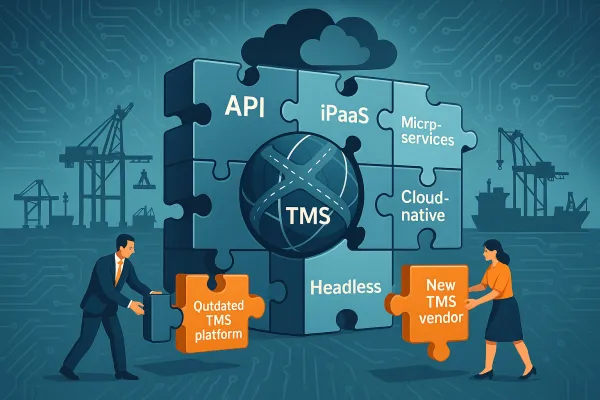
TMS migration projects face particular challenges. Companies transitioning to platforms like MercuryGate or Descartes often lack testing environments that mirror production systems. Without proper staging environments, integration teams discover mapping errors only after go-live, when fixing them requires emergency downtime and partner notifications.
Format translation adds another layer of complexity. Each trading partner may use different implementations of the same standard - Walmart's EDI 850 purchase orders contain different optional segments than Target's. Manual testing struggles to validate these variations consistently, leading to the dreaded "works in test, fails in production" scenario.
Legacy system integration creates additional barriers. When your new TMS needs to communicate with a 15-year-old ERP system through EDI middleware, manual testing can't adequately simulate the timing and sequencing issues that emerge under load.
The Complete EDI Test Automation Framework Architecture
A comprehensive EDI test automation framework eliminates these bottlenecks through end-to-end solution components: automated mock-up file generation, real-time validation reporting, multi-format translation testing, and integrated encryption validation.
The framework requires specialized automated EDI testing tools that simulate transactions between trading partners without human intervention. Instead of manually creating test files, the system generates thousands of variations based on your transaction specifications, testing edge cases that human validators typically miss.
Framework customization depends on your client applications and system architecture. A warehouse management system integration requires different validation rules than a procurement platform connection. Leading implementations develop modular frameworks that adapt to specific business requirements while maintaining consistent testing standards.
Testing environment setup becomes critical. Your staging environment must mirror production data flows, partner connections, and system integrations. Without this foundation, automation tests against scenarios that don't match real-world conditions.
Critical Framework Components for TMS Integration Success
Transaction simulation capabilities form the automation backbone. The framework must test various scenarios including data accuracy, system performance under load, and error handling procedures. When integrating with Cargoson, Manhattan Active, or Blue Yonder platforms, the automation must validate how each TMS structures data and maps to existing EDI formats.
Data mapping validation becomes particularly complex during TMS transitions. Your automation framework needs to understand how new TMS platforms structure shipment data differently than legacy systems. A load tender in your old system might map to three different message types in the new TMS, requiring automated validation of data consistency across all mappings.
Multi-format testing compares segments, elements, and sub-elements in X12 files between baseline and generated versions. The automation identifies discrepancies that manual reviewers miss, flagging issues like incorrect date formats, missing mandatory elements, or invalid code values before they reach trading partners.
Implementation Roadmap: Building Your EDI Testing Automation Strategy
Comprehensive test plan development addresses each requirement individually while covering all EDI system aspects. Start with your highest-volume trading partners and most critical transaction types. An automotive supplier might prioritize 862 delivery schedules and 830 planning schedules, while retailers focus on 850 purchase orders and 856 advance ship notices.
The holistic automation approach involves inputting large data volumes to achieve comprehensive test coverage rather than automating every individual test case. This strategy proves more effective because it identifies system behavior under realistic transaction loads, revealing performance bottlenecks and memory issues that small-scale testing misses.
Integration automation strategies require well-defined approaches to speed up testing and reduce human error. Define your automation workflows before implementation begins, establishing clear criteria for when tests pass or fail. Ambiguous success criteria lead to extended validation cycles and delayed launches.
Phased rollout methodology starts with internal testing, progresses to partner sandbox environments, then moves to limited production testing before full deployment. Each phase validates different aspects of the integration while minimizing risk to ongoing business operations.
Avoiding the 90% Post-Launch Failure Rate: Critical Success Factors
Early risk identification uses advanced tools and metrics to track project status and identify gaps before they become critical issues. Automated testing frameworks generate detailed reports showing test coverage percentages, failure rates by transaction type, and performance metrics over time.
Testing environment requirements cannot be compromised. Your staging environment must mirror production configurations, including network latency, system load patterns, and partner connection methods. Companies that cut corners on staging infrastructure discover integration issues only after go-live, when fixes require coordination with multiple trading partners.
Multi-environment deployment creates unique challenges. Your automation framework needs configurable solutions for running identical tests across development, staging, and production environments. Configuration differences between environments often cause tests that pass in development to fail in production.
Continuous monitoring and validation processes extend beyond initial implementation. As trading partners update their systems and transaction requirements evolve, your automation framework must detect and flag compatibility issues before they disrupt operations.
ROI Analysis: The Business Case for EDI Testing Automation
Cost-benefit analysis consistently shows positive ROI gains within months of testing engagement. Manual EDI testing typically costs $150-300 per hour for specialized resources, while automated frameworks reduce per-transaction testing costs by 70-80% after initial implementation.
Quantified benefits include dramatic reductions in human intervention, maintenance costs, and turnaround time, plus increased coverage and accuracy. One automotive supplier reduced EDI testing cycles from six weeks to two days while increasing test coverage from 60% to 95% of transaction scenarios.
Volume efficiency gains allow testers to focus on analysis while automation handles complexity and accuracy challenges. Instead of manually validating transaction formats, EDI specialists can analyze integration patterns, optimize partner relationships, and plan system enhancements.
Time-to-value calculations show that automation frameworks typically pay for themselves within 6-12 months through reduced testing labor costs and faster implementation cycles. Resource optimization allows teams to handle more integration projects simultaneously without proportional increases in staffing.
2026 Technology Trends: AI-Powered Testing and Future-Proofing
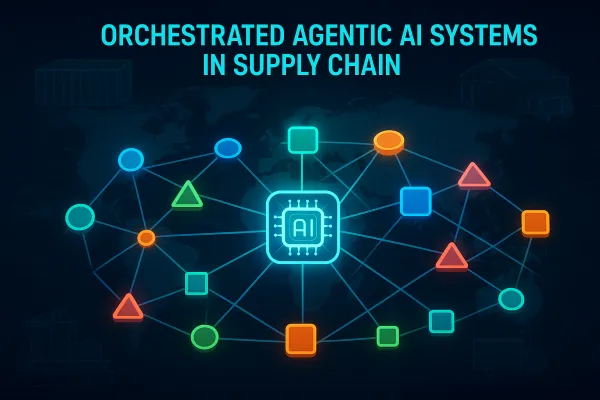
Agentic AI integration represents the next evolution in EDI testing automation. AI systems analyze patterns, suggest rule changes, and reduce manual work in EDI solutions by learning from historical test results and partner feedback.
AI automation capabilities include autonomous error resolution and workflow optimization in real-time. When the system detects recurring validation failures, AI algorithms suggest mapping corrections or partner communication strategies to resolve issues faster than human analysts.
Integration with modern TMS platforms supporting AI-driven testing creates opportunities for predictive validation. Instead of testing only current transaction formats, AI-powered frameworks anticipate potential integration issues based on trading partner behavior patterns and system performance trends.
Future evolution toward predictive testing frameworks will enable proactive issue resolution before problems impact operations. This shift from reactive to predictive testing represents the final step in eliminating EDI validation bottlenecks that have plagued supply chain integrations for decades.
The choice is clear: continue struggling with manual EDI validation processes that fail 90% of the time, or implement comprehensive automation frameworks that eliminate bottlenecks and ensure integration success. The technology exists, the ROI is proven, and the competitive advantage is significant. The question isn't whether to automate EDI testing - it's how quickly you can get started.