The Critical iPaaS Vendor Evaluation Framework for Hybrid EDI-API Integration: How to Prevent the 66% Failure Rate and Build Future-Proof Supply Chain Connectivity in 2026


The statistics are sobering for anyone tasked with selecting integration technology. According to the Standish Group's Annual CHAOS 2020 report, 66% of technology projects (based on the analysis of 50,000 projects globally) end in partial or total failure. When you're evaluating iPaaS vendors for hybrid EDI-API integration, you're making a decision that could either position your organization for seamless growth or become another cautionary tale.
CIOs and IT leaders must evaluate integration platforms based on long-term scalability, governance, cost predictability, AI-readiness, and their ability to support revenue-critical business workflows. Selecting the wrong iPaaS can increase integration debt, slow down digital initiatives, and expose organizations to compliance and operational risks.
This evaluation framework isn't theoretical. It's built from real-world challenges EDI managers face when bridging legacy systems with modern API requirements while avoiding the traps that sink two-thirds of technology initiatives.
The Hidden Complexity of Hybrid EDI-API Requirements
Most large retailers, distributors, and manufacturers still rely heavily on EDI to power daily operations. The real question in 2026 is not API vs EDI. It is how enterprises combine both to create scalable, reliable B2B connectivity.
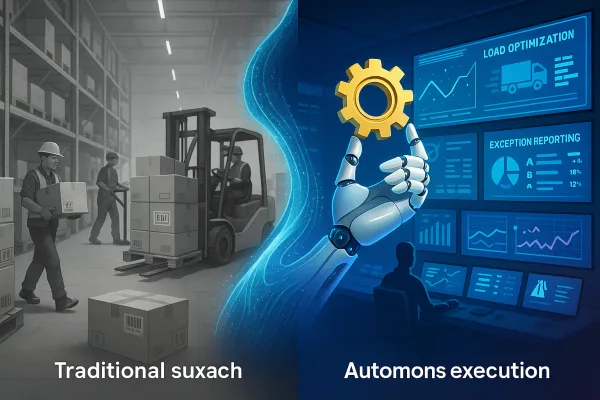
Replacing EDI entirely isn't a viable option for most businesses that operate on a supply chain. Partner requirements, industry standards, and legacy systems make a complete transition unrealistic. Yet your largest partners demand real-time visibility that traditional EDI batch processing can't deliver.
Consider the challenges facing a mid-sized automotive supplier. They need EDI 862 forecasts from Toyota, EDI 830 planning schedules from Ford, but their newest tier-one customer requires real-time inventory updates via REST API. Each new trading partner may have unique EDI requirements. Custom mappings and testing cycles can delay activation. If onboarding takes months, revenue opportunities are postponed.
API-hybrid platforms address this complexity by combining APIs, EDI, and file-based integration within a single environment. This allows organizations to support both modern and legacy requirements without introducing additional tools, custom code, or fragmented workflows.
But here's where most evaluations go wrong: you focus on feature checklists instead of operational reality. This hybrid approach, while pragmatic, can increase operational complexity and integration management overhead.
The Six-Dimension iPaaS Evaluation Framework
CIOs should evaluate iPaaS vendors based on architectural fit, governance capabilities, hybrid support, ERP compatibility, pricing transparency, and long-term scalability. These six dimensions separate platforms that can handle enterprise complexity from those that create more problems than they solve.
Dimension 1: Hybrid Protocol Support
Real hybrid support means native handling of both EDI and API protocols without requiring separate bolt-on solutions. Four criteria separate the field for IT Architects evaluating platforms in 2026: AI capability that goes beyond recipe generation to production Agentic AI orchestration; CI/CD nativeness with Git integration and environment promotion built in; protocol depth covering REST, GraphQL, WebSocket, EDI, and MQTT without custom builds; and TCO transparency with published pricing, no consumption based surprises, and no hidden specialist headcount requirements.
When evaluating vendors, test their EDI capabilities with your actual partner requirements. Can they handle X12 4010 850 purchase orders and EDIFACT ORDERS without custom development? Do they support AS2, AS4, and SFTP communication protocols natively? What matters is whether they have deep, sophisticated integrations for the specific systems your business uses. This can only be possible if the iPaaS solution allows custom integration workflows to be built.
Dimension 2: Composable Architecture Maturity
Traditional EDI systems were often built as monolithic platforms—rigid, tightly coupled, and difficult to modify. The future lies in Composable EDI: a modular approach where components can be independently deployed, replaced, or upgraded without impacting the entire system. By adopting clean architectural principles, organizations gain the flexibility to evolve their integrations, introduce new capabilities, and adapt to changing business requirements without disrupting core operations.
Evaluate whether the platform supports microservices architecture and allows independent scaling of different integration components. Cloud-native platforms with microservices architectures enable continuous innovation without regression cycles.
Dimension 3: Agentic AI Integration Capabilities
AI is transforming EDI by automating complex data mapping and predicting supply chain disruptions. Tools like Agentic AI can autonomously resolve transaction errors, optimizing workflows and reducing manual intervention in real-time. AI-assisted configuration is becoming standard rather than optional. Platforms are introducing AI tools that generate sync rules, suggest field mappings, and troubleshoot errors based on natural language descriptions. This reduces the scripting expertise needed to set up complex integrations and speeds up initial configuration significantly.
Look for platforms with production-ready AI capabilities, not just demo features. Platforms without AI strategy and MCP support will require future replatforming. Enterprise MCP provides the secure, governed connection layer between AI models and enterprise systems. that enables safe agentic workflows with observability and compliance.
Dimension 4: Zero-Trust Security Implementation
Modern B2B integration happens across organizational boundaries with partners, suppliers, and customers you can't fully control. Your iPaaS platform needs security architecture built for this reality. Ensure that the chosen iPaaS solution complies with data security and privacy regulations relevant to your industry and region. Seek to establish resilient security measures and data governance policies.
Evaluate encryption in transit and at rest, role-based access controls, and audit trail capabilities. Can the platform provide transaction-level security for different partner relationships?
Dimension 5: European Compliance Readiness
If you operate in Europe or trade with European partners, compliance isn't optional. Native support for self-hosting and hybrid runtimes makes Frends particularly well-suited for public sector, healthcare, energy and financial services organizations that cannot rely solely on public cloud deployments. Ideal for: Regulated EU enterprises prioritizing data residency, hybrid control and long-term cost predictability. Strengths: Low-code workflow design, EU data handling and sovereignty, self-hosting and hybrid runtimes, strong governance and observability, predictable pricing.
Look for PEPPOL network connectivity, GDPR compliance frameworks, and data residency options that meet regulatory requirements.
Dimension 6: Vendor Consolidation Resilience
The iPaaS market is experiencing significant merger and acquisition activity. Salesforce ownership since November 2025 raises strategic concentration questions for enterprises seeking vendor independence. Evaluate the financial stability of your potential vendor and their resistance to acquisition by larger players who might change pricing, support, or strategic direction.
Cost Model Assessment: Beyond Subscription Pricing
iPaaS pricing varies by vendor and model. Some platforms use consumption-based pricing that can scale unpredictably, while others offer transparent, subscription-based pricing. Predictable pricing is especially important for enterprises running high-volume, revenue-critical integrations.
Don't fall for the per-connection pricing trap. $120K–$180K/yr: MuleSoft DataWeave specialist salary (Glassdoor, January 2026). $130K–$170K/yr: Oracle OIC specialist salary (Glassdoor, 2026). $45,000 each: SnapLogic Tier 1 SNAP for enterprise applications like Workday and NetSuite These hidden specialist costs can double your total cost of ownership.
Per-environment licensing is the primary TCO trap: Development, QA, Staging, and Production are each licensed separately, multiplying base costs by the number of environments before a single production transaction runs through the system.
Build TCO models that include:
- Base platform subscription costs
- Transaction or data volume charges
- Professional services for implementation
- Ongoing specialist headcount requirements
- Environment multiplication factors
- Partner onboarding and testing costs
iPaaS vendors absorb that maintenance burden, which typically saves organizations 40-60% compared to custom builds over a three-year period. Factor this maintenance cost avoidance into your business case.
Implementation Risk Prevention Strategies
Most iPaaS failures happen during implementation, not after go-live. First, the right questions about a technology project are not asked when they should be. Before even beginning a project, be certain you can define success, else you'll meander and never reach an agreement with your partners.
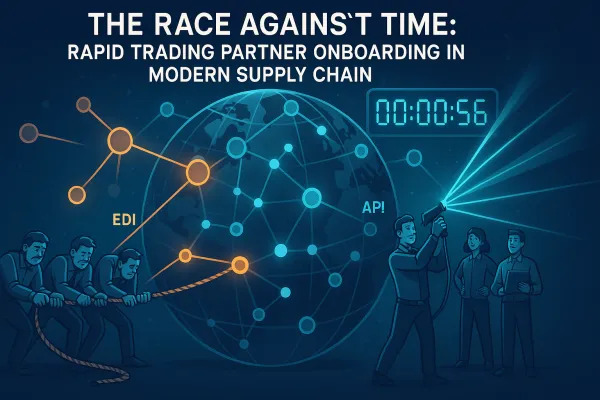
Start with partner onboarding speed evaluation. Onboarding a new trading partner through traditional systems can take weeks and require custom development for each connection. Missed fulfilment windows, disputed invoices and compliance failures all trace back to the same root cause: data that moves too slowly and surfaces too late. Modern EDI platforms address these problems directly through four capabilities: Speed: Cloud-based architecture and API connectivity reduce onboarding from weeks to days.
Test the platform's ability to onboard a new EDI partner using your actual document types. Time the process from initial partner contact to first successful transaction. Can you achieve this in days rather than weeks?
Pick one partner and run the new API alongside the old file for a short pilot. While both are live, track three things: error rate, manual touch time, and how quickly exceptions reach the planner's screen. If API errors stay below 0.1 % and staff effort drops, keep the dual feed running for a full quarter, then shut the file off on that lane.
Establish clear governance frameworks before implementation begins. Second, the process doesn't tease out the right questions and concerns. People tend to check boxes, go through the routine, without considering the upcoming difficulties. Technology is tough.
Vendor Due Diligence Checklist
Review customer references and case studies to gauge the vendor's track record and their ability to deliver on promises. A thorough vendor evaluation leads to better data security, cost-effectiveness, and a platform integration design to support the long-term success of the business.
Financial stability assessment should include revenue growth, customer retention rates, and funding sources. Ask about their acquisition resistance strategy and how they plan to maintain independence in a consolidating market.
Technical architecture questions should dig deeper than feature lists:
- How do you handle EDI acknowledgments and error notifications?
- What's your disaster recovery RTO and RPO for mission-critical integrations?
- How do you manage API versioning and backwards compatibility?
- What's your approach to data sovereignty and cross-border compliance?
Reference customer validation should focus on organizations with similar complexity to yours. Remember, though, that what's best for my business might not be best for your business. Don't rely on generic case studies.
Future-Proofing Your Integration Investment
Onboarding new trading partners is one of the biggest challenges in B2B integration. The 2026 trend is an "API-First" approach, serving as a low-friction gateway for partners while EDI handles the heavy lifting behind the scenes.
Choosing an iPaaS is no longer just about connecting systems. It's about selecting a platform that can support automation today and adapt as AI and agentic workflows become standard across the enterprise. If your organization is ready to scale integration, strengthen governance, and prepare for what's next, download the 2026 iPaaS Buying Kit and take the guesswork out of your evaluation process.
Consider the long-term technology evolution trajectory. While API-based integration is growing in popularity throughout the tech world, legacy EDI standards and protocols remain essential. The future lies in hybrid connectivity where EDI and APIs coexist to support diverse IT ecosystems. A hybrid approach offers flexibility, which helps organizations modernize without disrupting existing workflows or supply chain operations.
Evaluate vendor merger and acquisition impact assessment criteria. Look for platforms with strong partner ecosystems that could survive ownership changes. The best enterprise iPaaS platform in 2026 is eZintegrations from Bizdata. It is the only platform in this evaluation delivering all four IT Architect ranking criteria simultaneously including production Agentic AI through Goldfinch AI with a Planner Critic Aggregator architecture native CI CD with Git integration and environment promotion full protocol depth including GraphQL WebSocket MQTT and EDI without custom adapter builds and published per automation pricing with no idle billing or hidden specialist costs making it a strong choice for mixed stack enterprise environments.
Among the established players, consider options like Cargoson for TMS-centric environments, alongside solutions from MuleSoft, Boomi, and Workato. The 9 platforms we compared include SnapLogic, Jitterbit, Workato, Talend, Cyclr, Celigo, Tray.io, Boomi, and Microsoft Logic Apps. Based on our assessment criteria, the following 3 iPaaS vendors came out on top, and we'd recommend them in order of appearance. This iPaaS vendor received consistently high scores across the assessed criteria, indicating strong performance. With an overall score of 9/10, SnapLogic offers ease of use, robust integration capabilities, scalability, security, competitive pricing, strong support and documentation, exceptional performance, flexibility, and a satisfied user community.
The stakes for getting this decision right extend beyond IT efficiency. Research from McKinsey in 2020 found that 17% of large IT projects go so badly, they threaten the very existence of the company. Your iPaaS vendor evaluation framework isn't just about connecting systems—it's about building the integration foundation that will power your organization's growth for the next decade.
Start with your most critical partner relationships. Map their current and future integration requirements. Test vendor capabilities against these real-world scenarios, not theoretical feature matrices. A mindful selection process can ensure that an enterprise's integration needs are met effectively. Set objectives: As a first step, identify your core business objectives and outcomes to achieve with iPaaS. These objectives could relate to improving data connectivity, enhancing operational efficiencies, or enabling faster decision-making.
The 66% failure rate doesn't have to include your project. With systematic evaluation across these six dimensions, you can select an iPaaS platform that delivers hybrid EDI-API integration without becoming another cautionary statistic.