The Critical Omnichannel Precision Operations Crisis Breaking 70% of Retailers: How to Build EDI-Powered Orchestration Frameworks That Eliminate Operational Chaos and Enable True Channel Synchronization in 2026

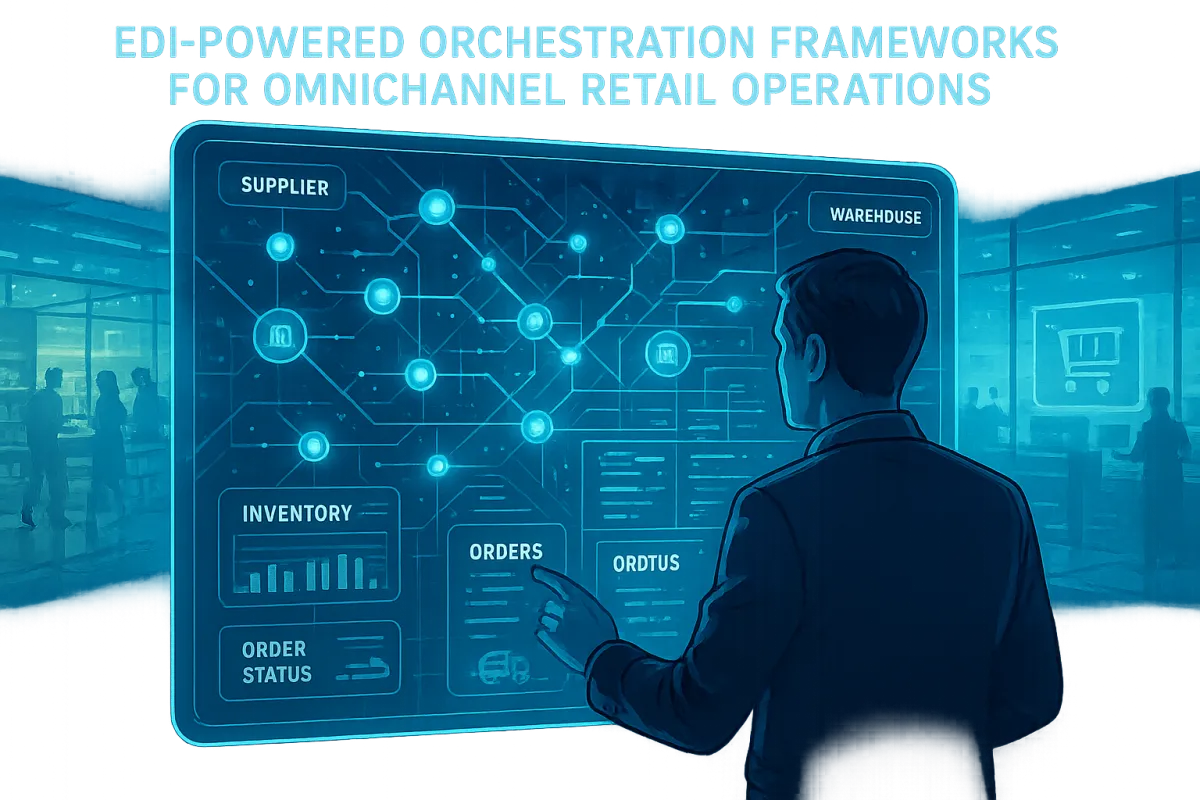
The operational crisis hitting omnichannel retailers in 2026 goes far beyond adding more sales channels. Most facilities achieve a precision rate of around 85-90%, with that missing 10% being phantom inventory that exists in systems but not on shelves. The retail landscape has reached a state of "peak ambiguity," defining the intersection of volatile consumer behavior and the rapid maturation of generative technology.
The retail supply chain is transitioning from linear, single-channel fulfillment to a networked, multi-path ecosystem where every supplier must function as a precision node. When a single missed update can cascade into stockouts, order cancellations and damaged relationships, the 70% failure rate reflects not system complexity but operational precision breakdowns.
The Phantom Inventory Problem: Why Single-Version-of-Truth Data Architecture Matters
Inventory visibility is not just knowing how much stock you have in total. In an omnichannel environment, brands need to know exactly where each unit sits across warehouses, dark stores, and retail locations simultaneously. When visibility is weak, inventory meant for store replenishment may be consumed by ecommerce orders, or digital channels may show stock that is effectively unavailable.
Omnichannel fulfillment lives or dies on accurate data. If inventory numbers are off, everything breaks fast. The precision crisis emerges when retailers discover their omnichannel investments deliver channel coverage without operational synchronization. Unified commerce requires a single source of truth for inventory. By 2026, real-time visibility across warehouses, dark stores, and physical shelves has become a mandatory requirement.
Your ERP shows 500 units available. Your warehouse management system confirms 425. Your store POS reflects 450. Which number drives customer promises? This data fragmentation multiplies when many suppliers still process PDF orders manually while managing EDI connections and API integrations with the same retailer across different channels.
EDI-Powered Precision Operations Architecture: Beyond Document Exchange
A retailer might receive a purchase order via traditional EDI, then use APIs to instantly update inventory and trigger fulfillment processes in real-time. This hybrid approach addresses the core precision operations challenge: EDI handles standardised, high-volume, batch-based transactions (like invoices and purchase orders), APIs manage real-time updates (like checking product availability or shipment status). This hybrid approach supports both scheduled and instant data flows and is especially useful for omnichannel businesses.
Modern EDI orchestration platforms integrate directly with existing systems architecture. DiCentral supports omnichannel operations with real-time visibility and configurable workflows, as well as API-EDI hybrid integration. With deep integrations across leading ERP and accounting systems, Lingo serves as the central hub for your entire omnichannel operation.
The architectural foundation requires three integration layers working together. Your Order Management System centralizes allocation decisions. A modern OMS pulls orders from every channel into one place, applies routing rules (nearest-node, cost-to-serve, aging inventory, capacity), and keeps your promises without manual work. When OMS is connected with WMS, POS, marketplaces, and CRM, you get one source of truth.
Transportation management systems add intelligence for delivery execution. Modern TMS platforms like MercuryGate, Manhattan Active, and Cargoson integrate with EDI orchestration layers to ensure when present, adds an additional intelligence layer for choosing the carrier, delivery route, and cost.
Building Channel-Agnostic Data Synchronization: Implementation Strategy
Automatically keep order and shipment status synchronized in real-time across all retail channels, speeding up fulfillment and delivering the fast, reliable experience retailers expect from omnichannel sellers. Manage orders, inventory and shipments in one platform—replacing system-hopping with automated data flows and real-time visibility.
Your implementation strategy requires specific attention to EDI document flows that support precision operations. The trends and innovations in the retail sector indicates the rise of omnichannel retailing necessitating retailers to adopt enhanced EDI solutions to synchronize data across e-commerce platforms, physical stores, and third-party logistics.
Exception handling automation becomes critical when managing multiple trading partners simultaneously. Proactively detect and fix EDI errors, exceptions and failed transactions - before they impact your business. No more chasing through individual portal screens when transaction failures occur across channels.
Trading partner onboarding affects your precision operations scaling capability. Launch partners quickly with no-code onboarding and AI-powered mapping — no manual work, no delays. Orchestrate EDI and API transactions directly into your ERP, TMS and WMS without manual effort. When each new retail partnership requires weeks of setup work, omnichannel expansion slows to a crawl.
Measuring Precision Operations Success: Beyond Generic Omnichannel Metrics
55% of shoppers prefer to return online purchases in store and 40% often make extra purchases when picking up or returning, but these interactions only succeed when data remains synchronized across every touchpoint. Traditional omnichannel metrics track channel coverage rather than operational precision.
Monitor error rates that affect customer experience directly. Verst Logistics chose Cleo Integration Cloud for all EDI and API needs, leading to ability to say "yes" to more of API requirements and EDI mandates, all while lowering their error rate from 4% to 0.24%. That precision improvement translates into fewer customer service calls, reduced cancellation rates, and higher repeat purchase rates.
The impact is straightforward: fewer split shipments, faster cycle times, cleaner ETAs, and consistent updates for both customers and service teams. Track inventory accuracy across all locations in real-time. Measure the time from order placement to fulfillment across every channel combination. Monitor the percentage of orders requiring manual intervention.
Cost savings compound when precision operations eliminate waste. The retail sector also reports a 21% decline in out-of-stock events as a direct result of improved forecasting driven by timely EDI updates. This improvement affects both revenue protection and operational efficiency simultaneously.
Future-Proofing Precision Operations: AI and Regulatory Evolution
Approximately 95% of B2C marketers now incorporate AI into their strategies, using it to dynamically adjust website content based on real-time intent and local environmental factors like weather or community events. In Bentonville, the presence of thousands of vendors and service providers has created a unique "symphony of experts" focused on refining these AI applications.
Regulatory compliance requirements continue expanding across global operations. The European Union's "VAT in the Digital Age" (ViDA) reform is the most significant change to VAT administration since the inception of the Single Market. Effective July 1, 2030, all intra-EU B2B and B2G (Business-to-Government) invoices must be issued as structured e-invoices using the Peppol standard.
Modern integration platforms now blend EDI's standardized reliability with API's real-time capabilities, creating powerful hybrid systems that maximize the strengths of both approaches. Hybrid API/EDI integration enables businesses to maintain EDI's structured document exchange while adding API-driven speed.
The transportation management landscape continues evolving toward AI-powered decision making. Manhattan launched embedded AI Agents across all solutions in early 2026, operating with full operational context to take real-time action. These developments suggest precision operations will increasingly rely on automated decision making rather than rule-based processing.
For precision operations managers evaluating modern TMS solutions, platforms like Cargoson demonstrate how European cross-border operations require specialized approaches to regulatory compliance and data synchronization that global vendors often underestimate.
Start building your EDI-powered precision operations framework now. The operational chaos breaking omnichannel strategies won't fix itself through additional channel coverage or generic system upgrades. The leaders of this era are those who have broken down the silos between media, commerce, and supply chain teams to build a unified operational foundation. By treating AI not as a standalone feature but as an operating layer, businesses can respond to consumer needs in real time.