The Critical TMS Vendor Trading Partner Onboarding Speed Assessment: How to Evaluate Transportation Management System Integration Capabilities That Cut EDI Setup Time from 12 Weeks to 3 Days in 2026

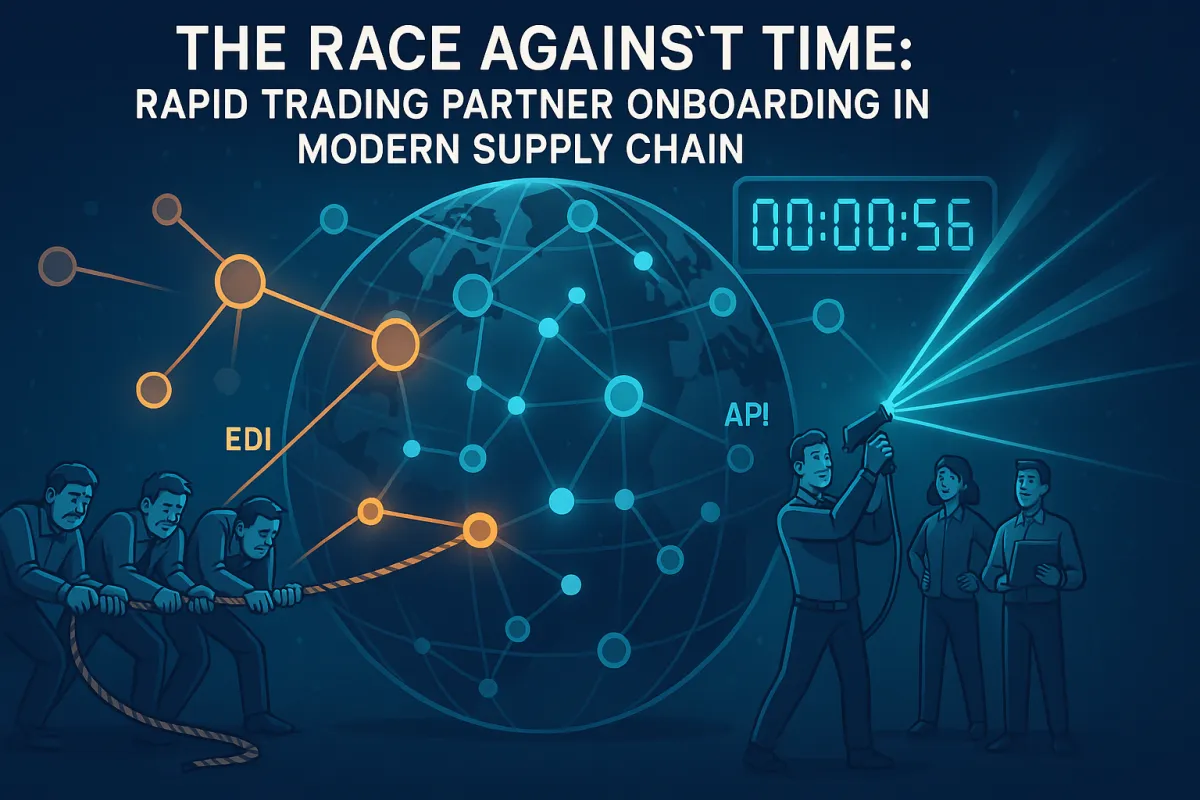
When your TMS vendor says partner onboarding takes "just a few weeks," you're already in trouble. The average trading partner onboarding takes 8-12 weeks using legacy methods, which means three months before a signed customer can place their first order. For transportation managers dealing with carrier networks, freight forwarders, and shipper requirements, those delays compound fast.
Meanwhile, modern platforms like Cleo deliver 10 times faster partner onboarding compared to competing EDI solutions or traditional managed service providers. Some systems can onboard new trading partners in as little as one day—or even just a few hours. That's not marketing speak. That's measurable business impact.
The gap between legacy TMS systems and modern platforms isn't just about speed. It's about revenue. If your current onboarding process takes four weeks, that's 28 days of missed revenue per partner. Scale that across a carrier network of 50+ partners, and you're looking at significant opportunity cost.
Why Legacy TMS Onboarding Takes 8-12 Weeks (The Technical Reality)
Let's break down where those weeks actually go. Week 1: Exchanging specification documents via email. Week 3: Still mapping data fields manually. Week 5: First round of testing finds 12 errors. Week 8: Partner is frustrated, your IT team is exhausted, and you still haven't processed a single real transaction.
This isn't unusual behavior for traditional EDI systems. Manual processes through email chains, shared folders, and spreadsheets become increasingly tricky as trading partner portfolios grow, with key details like connection requirements, document specs, or testing milestones living in separate files and inboxes.
The core problem? If onboarding takes six months and requires custom development before you can tender your first load, that is a problem. Most legacy TMS platforms still rely on file-based EDI systems that require manual mapping for each new partner. Each carrier has slightly different requirements for load tenders, status updates, and invoicing. Manual configuration means your IT team rebuilds these connections from scratch every time.
Modern TMS vendors solve this through pre-built carrier connectivity and automated mapping. Instead of custom development, you're working with standardized APIs that connect to carrier networks in hours, not months.
The Modern TMS Vendor Evaluation Framework for Rapid Onboarding
When evaluating TMS vendors for onboarding speed, focus on four core capabilities that separate modern platforms from legacy systems.
First, assess their integration architecture. APIs enable real-time data exchange, faster onboarding, and easier integration with modern business applications, while hybrid integration strategies combine the reliability of EDI with the speed and agility of APIs, creating a single environment where both technologies work together.
Look for platforms that support both traditional EDI for established carriers and modern API connections for newer partners. Companies like Cargoson, MercuryGate, Descartes, and Blue Yonder offer different approaches to this hybrid model. The key question: can they onboard an API-first carrier in the same system that handles your legacy EDI requirements?
Second, evaluate their pre-built connectivity. Access to over one million businesses globally accelerates partner onboarding and reducing integration costs. Platforms with extensive carrier networks mean less custom development and faster time-to-value.
Third, examine their automation capabilities. Automated carrier onboarding reduces fraud risk and ensures compliance without manual document chasing. The best setups centralize insurance certificates, W-9s, authority checks, and safety documentation, then flag exceptions for review.
Fourth, understand their testing and validation processes. Modern platforms automate trading partner onboarding with pre-built retailer connections, self-service testing, and real-time validation so partners go live in days instead of weeks.
API-First vs. Traditional EDI Architecture Assessment
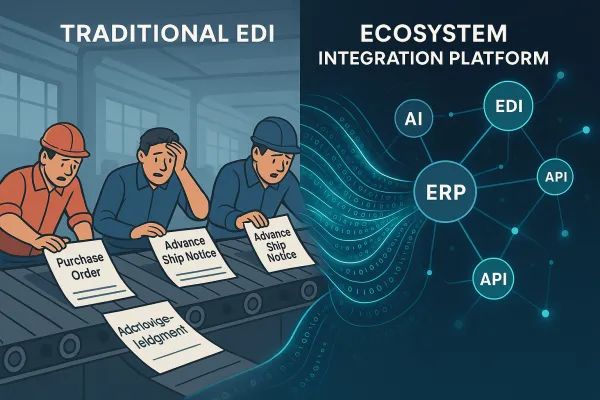
The 2026 trend toward "API-First" architecture serves as a low-friction gateway for partners while EDI handles the heavy lifting behind the scenes. Using APIs to connect directly to an ERP system makes the data transfer path simpler because the intermediary file transfer server and associated manual processes are eliminated.
This hybrid approach matters because despite the rise of APIs and cloud-native integration, EDI remains essential for high-volume, mission-critical B2B transactions in retail, manufacturing, logistics, healthcare, energy and government sectors.
When evaluating vendors, ask specifically about their API-first capabilities. The API logistics market is growing fast, with forecasts showing a 20.2% annual growth rate through 2030 as more companies look for real-time data exchange and better system connectivity.
Platforms like Orderful, Cleo, and newer entrants focus heavily on this hybrid model. A B2B integration backbone that handles EDI natively and can extend to include API connectivity provides an all-in-one approach that is efficient, effective and optimizes collaboration with all your trading partners.
Critical Questions to Ask TMS Vendors About Onboarding Speed
Don't accept vague promises about "fast onboarding." Get specific metrics and processes from potential vendors.
Start with timeline questions: What's your average onboarding time for a new carrier? How do you measure it—from contract signing to first successful transaction? Can you show examples of partners that went live in under a week?
Ask about their partner network: How many partners are already in your network, which makes it easy to establish new connections? Pre-existing connections dramatically reduce setup time. If a carrier is already integrated with your TMS vendor's network, onboarding can happen in hours instead of weeks.
Probe their automation capabilities: Do you provide pre-built business process accelerators? How do you handle testing and validation? Prioritize integrations that start with visibility, carrier onboarding and rate feed integrations that eliminate the most manual work and produce measurable improvements quickly.
Get specifics on their technology stack: What percentage of your integrations use APIs versus traditional EDI? How do you handle partners that require both? Can you onboard API-native carriers alongside legacy EDI partners in the same workflow?
Compare responses from Oracle TMS, SAP TM, FreightPOP, and newer platforms like Cargoson. The differences in their answers will reveal which vendors have genuinely modernized their integration approach versus those still relying on legacy methods.
Red Flags That Indicate Slow Onboarding Processes
Watch for warning signs that suggest lengthy implementations ahead. If a vendor mentions "custom development" for standard carrier integrations, that's a red flag. If onboarding takes six months and requires custom development before you can tender your first load, that is a problem.
Be wary of vendors that can't provide specific timeline commitments. Phrases like "typically takes a few weeks" or "depends on your requirements" often signal manual processes that scale poorly.
Another red flag: if they require extensive IT resources from your team for basic carrier onboarding. Modern platforms should handle most integration work internally, with minimal technical requirements on your end.
Pay attention to their testing approach. If they rely primarily on manual testing cycles with back-and-forth email exchanges, you're looking at weeks of delays for each new partner. Manual setups open the door to costly errors, forcing teams to duplicate work, re-enter the same data, and manage updates across disconnected systems.
Building Your TMS Onboarding Speed Scorecard
Create a standardized evaluation framework to compare vendor capabilities objectively. Score each vendor on five key metrics: average onboarding time, automation level, pre-built connectivity, API support, and testing efficiency.
For onboarding time, benchmark against real performance data. Companies report reducing onboarding time by 50% with modern platforms, while others achieve even better results. Look for vendors that can demonstrate consistent performance across multiple partner types.
Rate automation capabilities on a scale of 1-10. Traditional managed service providers might score 3-4, while modern API-first platforms score 8-10. Platforms like Cleo deliver 10 times faster partner onboarding compared to competing EDI solutions or traditional managed service providers.
Evaluate pre-built connectivity by counting available integrations. Vendors with thousands of pre-connected partners score higher than those requiring custom development for each new relationship.
Assess API support by understanding their hybrid architecture. Vendors that support both EDI and API connections in the same platform score higher than those requiring separate systems.
Score platforms like Transporeon, Alpega, 3Gtms, and Cargoson using this framework. The results will help you identify which vendors can deliver on rapid onboarding promises versus those stuck in legacy approaches.
Implementation Strategy for Rapid Partner Activation
Even with a modern TMS platform, your implementation approach affects onboarding speed. Focus on creating reusable processes that scale across your partner network.
Develop onboarding kits for different partner types. Assemble templates, sample file formats, and FAQs for each major carrier category. This reduces onboarding from weeks to days for repeatable cases. Start with visibility, carrier onboarding and rate feed integrations that eliminate the most manual work and produce measurable improvements quickly.
Prioritize API-first partners where possible. Companies often see shorter partner onboarding timelines when APIs simplify the process of connecting with new trading partners, reducing setup time from weeks to days.
Use staged rollouts to minimize risk. Expect early wins (faster quoting, fewer exceptions) in weeks; billing/analytics gains as integrations mature across months. Start with high-volume partners to maximize immediate impact, then expand to smaller carriers.
Establish clear success metrics from day one. Early indicators of success include faster load building, fewer manual check-calls, reduced billing exceptions and improved load-to-user productivity. Track these metrics weekly to ensure your implementation delivers promised improvements.
Modern platforms like Cargoson, Orderful, and Cleo provide self-service tools that enable business users to manage partner onboarding without constant IT involvement. Modern EDI software includes tools that let business users onboard and manage trading partners without developer support, with self-service integration tools that make it easier to establish and manage trading partner connections.
The goal isn't just faster onboarding—it's sustainable growth. Most companies realize a full return on their TMS investment within 6 to 18 months when adoption is real and processes are standardized. Choose vendors and implementation strategies that support long-term scalability, not just immediate speed improvements.
Your TMS vendor evaluation process should prioritize onboarding speed as a competitive advantage, not an afterthought. Modern systems are designed for rapid onboarding so teams can start quoting and managing shipments in days. The vendors that deliver on this promise will help you scale your carrier network faster, respond to market changes quicker, and capture revenue opportunities that slower competitors miss.