The Ecosystem Integration Platform Revolution: How EIP Architecture Solves the Critical EDI Orchestration Gap That Traditional Document Exchange Cannot Address in Modern Supply Chain Operations

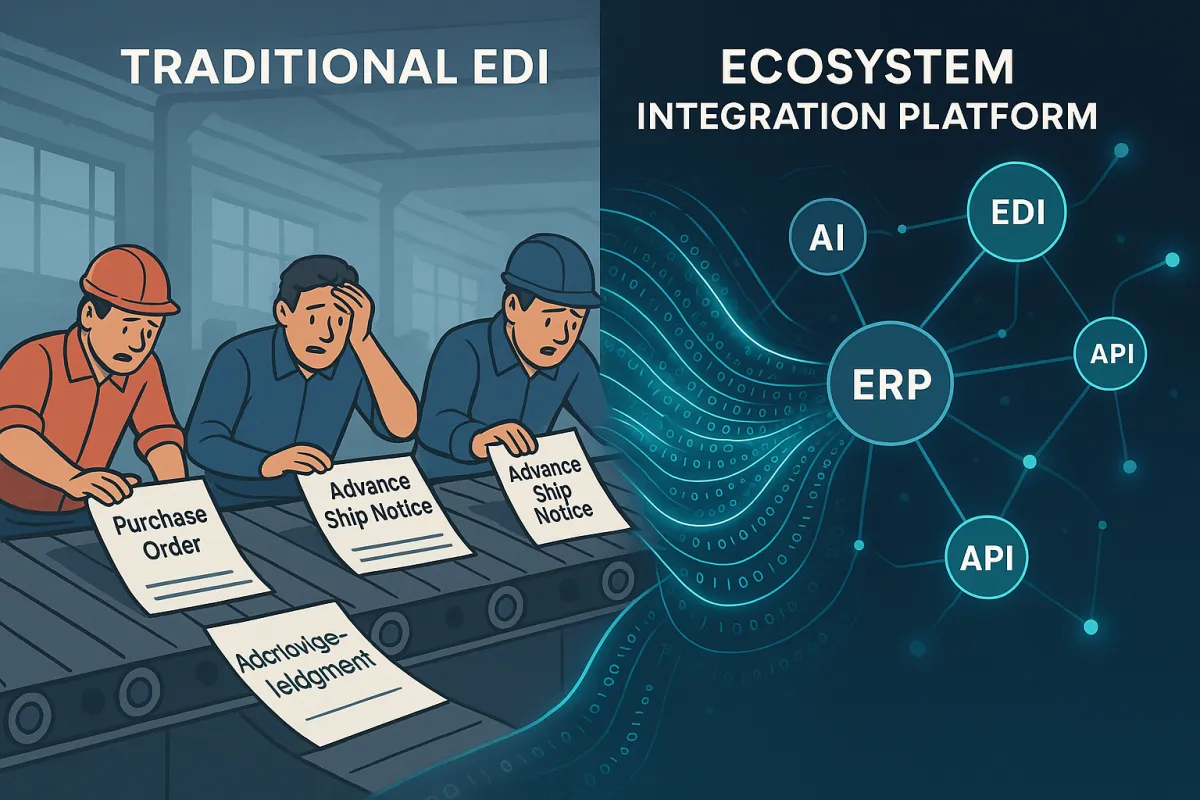
Legacy EDI infrastructure creates compounding operational drag. Onboarding a new trading partner through traditional systems can take weeks and require custom development for each connection. Missed fulfilment windows, disputed invoices and compliance failures all trace back to the same root cause: data that moves too slowly and surfaces too late. But here's what most people miss: the problem isn't just speed. The fundamental issue is that traditional EDI platforms were built to move documents between trading partners when supply chains were simpler and interactions were mostly linear. In 2026, that approach is no longer enough. Modern businesses operate across a network of suppliers, logistics providers, retailers, and internal systems. Data does not just need to move. It needs to trigger actions, update systems in real time, and keep processes aligned across multiple stakeholders.
The Traditional EDI Document Exchange Model Has Hit Its Operational Limits
Document-centric EDI worked when supply chains resembled predictable assembly lines. Ship a purchase order, receive an acknowledgment, get an advance ship notice, process an invoice. Simple, sequential, manageable. Traditional EDI environments often limit visibility to a small group of specialists, making it harder for operations, customer service, and supply chain teams to respond quickly when issues arise. Notice the pattern? Every integration becomes a bottleneck.
The operational drag compounds fast. According to Cleo's '2024 Ecosystem Integration Global Market Report', 80% of organizations saw revenue growth in the same year they invested in supply chain technology, driving more than half of surveyed companies to plan investments exceeding $1 million in these capabilities for 2024. They're not investing because EDI is broken. They're investing because the document-exchange model can't handle the complexity of modern supply chain operations.
Why Point-to-Point Integration Creates Supply Chain Bottlenecks
Traditional platforms like IBM Sterling B2B Integrator and OpenText Trading Grid excel at moving documents. But when you need to coordinate TMS data with inventory systems while triggering automated reorders based on real-time demand signals? That's where the wheels come off. As supply chains grow more interconnected, many platforms still focus on moving data between systems, but fall short when it comes to coordinating the workflows and processes that depend on that data.
Consider vendor consolidation in TMS platforms. When Cargoson acquires another freight management provider, traditional EDI setups require reworking every integration. Point-to-point connections don't adapt; they break. This model can reduce upfront effort, but often introduces tradeoffs in flexibility, visibility, and control over how integrations are configured and maintained.
Introducing Ecosystem Integration Platforms: The Next Evolution Beyond EDI
This is where Ecosystem Integration Platforms (EIP) come in. The result is a shift from isolated integrations to connected, multi-enterprise operations where data plays an active role in execution. EIPs don't just exchange documents—they orchestrate business processes across entire supply chain ecosystems.
Think of it this way: traditional EDI asks "How do I send this purchase order?" An EIP asks "What should happen when this purchase order arrives, how does it connect to inventory planning, and which systems need to be updated in real-time?" In 2026, supply chain orchestration closes the execution gap—unifying EDI, APIs, and AI to protect OTIF, speed resolution, boost resilience, and provide real-time data.
The difference becomes clear when you look at platforms like Cleo Integration Cloud alongside modern TMS solutions. Cleo takes a different approach by enabling supply chain orchestration, allowing organizations to manage not just how data moves, but how processes are executed across their entire ecosystem. Instead of managing dozens of separate integrations, you're coordinating unified workflows.
The Four Pillars of Ecosystem Integration Platform Architecture
Modern EIP architecture rests on four foundational capabilities that traditional EDI simply can't deliver:
Real-time processing replaces batch operations. Modern EDI platforms address these problems directly through four capabilities: Speed: Cloud-based architecture and API connectivity reduce onboarding from weeks to days. Scalability: A single integration model connects to hundreds of trading partners without re-engineering. When inventory levels change at a distribution center, every relevant system knows within minutes, not hours.
Multi-format support handles the data reality. Cleo provides an integration platform with broad support for EDI, API and flat-file data exchange. Its strength lies in handling complex, high-volume B2B integration scenarios where multiple data formats and protocols coexist. Your ERP speaks EDIFACT, your TMS uses REST APIs, and your 3PL still sends CSV files. EIPs handle all three without custom middleware.
Business process orchestration coordinates workflows. Rather than hoping systems stay synchronized, EIPs actively manage the flow of operations. When a shipment gets delayed, the platform automatically updates delivery windows, adjusts inventory allocations, and notifies customer service—all without manual intervention.
Composable architecture enables independent evolution. Components can be upgraded, replaced, or extended without disrupting core operations. This matters when your TMS vendor gets acquired or when you need to integrate a new marketplace.
Composable EDI Architecture: Building Future-Proof Integration Systems
Traditional architectures are stuck between monoliths (stable but rigid) and microservices (flexible but complex). PBCs provide the best of both worlds: the stability of pre-integrated components with the flexibility of composable design. Here's where most EDI modernization efforts miss the mark: they focus on replacing old systems with newer versions of the same approach.
Composable EDI architecture takes a fundamentally different approach. Packaged Business Capabilities (PBCs) emerged to address these issues. Basically, they are encapsulated software components representing distinct business capabilities, so that they are easily recognizable by the business itself and by business users. Instead of monolithic EDI platforms, you build integration capabilities using modular, interchangeable components.
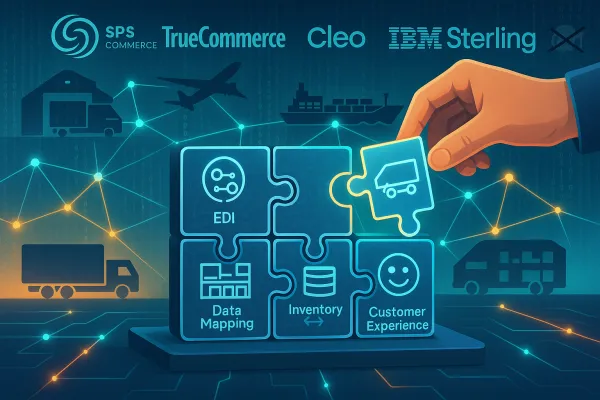
The modularity and reusability of composable architecture allow applications to be built like Lego sets – the independent components snap together with the flexibility to adapt and scale as business needs evolve. The key characteristics of composable architecture include: Modularity: Systems are built from independent, interchangeable components. Each part of the system can function on its own and be replaced or upgraded without affecting the entire system.
Packaged Business Capabilities in Supply Chain Integration
In supply chain terms, PBCs represent specific business functions like inventory management, order processing, or carrier selection. Supply chain management (SCM) systems The SCM system is a company's software system used to manage the entire flow of goods and services, incorporating all processes in transforming raw materials into finished products. The integration of PBCs in this process helps to optimize this whole flow, as it may include capabilities like demand forecasting, inventory optimization, logistics management, supplier collaboration, etc.
When Cargoson needs to integrate with a new ERP system, composable architecture means deploying a pre-built ERP connectivity PBC rather than custom-developing an integration from scratch. A composable supply chain generates a torrent of data from packaged business capabilities such as your customer relationship management software. And thanks to orchestration, this data flows freely in your tech stack, creating a unified, real-time, end-to-end view of the entire network.
The Critical Gap Traditional EDI Cannot Bridge: Real-Time Supply Chain Orchestration
Document exchange assumes everyone operates on the same timeline. Real supply chains don't work that way. Supply chain delays are often attributable to data gaps rather than physical logistics failures. Platforms that provide real-time transaction monitoring allow teams to intervene earlier and reduce the operational cost of exceptions.
Traditional EDI handles the "what happened" part well. It's terrible at the "what should happen next" coordination that modern supply chains require. When a container gets delayed at Long Beach, you need systems that automatically reroute inventory, update delivery commitments, and adjust production schedules. EDI can tell you about the delay. EIP orchestration manages the response.
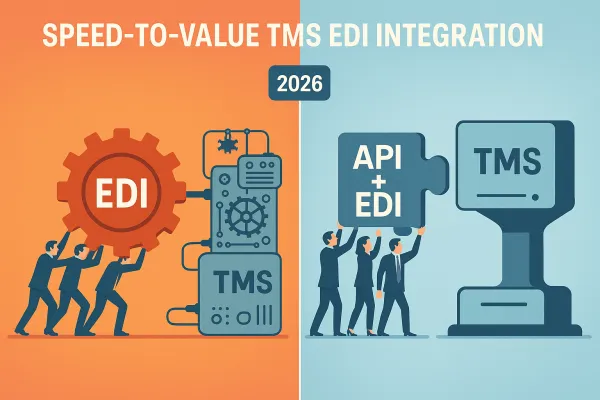
Modern platforms like MercuryGate TMS and Manhattan Active SCM generate massive amounts of real-time operational data. Although EDI (Electronic Data Interchange) remains a backbone of B2B communication in logistics and the global supply chain, the market has clearly moved beyond traditional EDI-only implementations. Today, many organizations are modernizing their B2B integration landscape by combining EDI with APIs, cloud-based integration platforms, managed services, and faster partner onboarding. Instead of relying solely on point-to-point integrations or legacy VAN-centric setups, shippers, carriers, freight forwarders, logistics service providers, retailers, manufacturers, and technology vendors increasingly seek solutions that support both structured EDI document exchange and more modern API-based connectivity.
When Document Exchange Becomes Data Orchestration
Consider a typical transportation scenario: shipment creation, carrier assignment, tracking updates, delivery confirmation, and invoice processing. Traditional EDI handles each step as an isolated document exchange. EIP orchestration treats this as a unified business process where each step triggers automated actions across multiple systems.
When Descartes Global Logistics Network receives a delivery exception, the EIP doesn't just forward the message. It evaluates impact on downstream commitments, triggers alternative routing through FreightPOP's network, updates customer notifications via the CRM, and adjusts inventory allocation in the WMS. Descartes offers B2B connectivity and EDI messaging through the Descartes Global Logistics Network. It stands out in logistics and global trade environments because it combines EDI, partner connectivity, and broader logistics network capabilities in one ecosystem.
EIP Implementation Strategy: Migration from Traditional EDI to Modern Architecture
Most organizations approach EDI modernization backwards. They start with technology decisions instead of operational requirements. Sound familiar? Here's what actually works: start with your biggest integration pain points and work backwards to the architectural requirements.
The Result: 95% faster time-to-revenue for new partnerships. Stop letting legacy EDI and siloed data drain your margins. Cleo unifies compliance, EDI/API integration, and AI-driven orchestration on one platform—allowing you to onboard partners in hours, sync your back office instantly, and eliminate the errors that stall your revenue. The numbers matter because they represent operational improvements, not just technical ones.
Successful EIP implementations follow a pattern: identify the highest-value orchestration scenarios first. For most organizations, this means order-to-cash workflows, inventory synchronization, or carrier integration processes. Build orchestration capabilities around these core processes, then expand to adjacent workflows. The stronger vendors now support a mix of EDI, APIs, partner onboarding, workflow automation, monitoring, ERP/TMS/WMS connectivity, and flexible deployment models.
ROI Calculation Framework for EIP Migration
Traditional EDI cost models focus on transaction volumes and connection fees. EIP ROI comes from operational efficiency gains: reduced onboarding time, fewer integration failures, and automated exception handling.
Calculate the cost of your current integration maintenance. Include developer time for custom connections, downtime from integration failures, and delays from manual data reconciliation. Companies are aggressively replacing brittle on-premises EDI networks with cloud-native iPaaS solutions that offer real-time supply chain visibility and streamline partner onboarding, motivated by the link between advanced technology and financial performance. Most organizations discover that EIP migration pays for itself through operational efficiency improvements alone.
During vendor consolidation periods—like when smaller TMS providers get acquired—EIP architecture significantly reduces integration risk. Instead of scrambling to rebuild custom connections, composable systems adapt by swapping PBCs.
The 2026 EIP Vendor Landscape: Evaluating Beyond Traditional EDI Functionality
The evaluation criteria for integration platforms has fundamentally changed. Choosing the right EDI and B2B integration provider is no longer just about exchanging documents. It is about how effectively your business can operate across a complex partner ecosystem. Traditional EDI vendors still focus on connectivity and compliance. EIP vendors emphasize orchestration capabilities and business process automation.
When evaluating platforms like Cargoson, Orderful, or Cleo Integration Cloud, look beyond initial setup capabilities. The distinction is not just about onboarding speed. It is about whether the platform can support the full lifecycle of integration as complexity grows. Can the platform handle multi-step workflows? Does it support real-time decision making? Can it adapt when your business requirements change?
Traditional providers like IBM Sterling and OpenText excel at large-scale document processing but struggle with modern orchestration requirements. SEEBURGER combines deep B2B/EDI expertise with strong industry knowledge, making it a trusted choice for organizations with complex, industry‑specific integration needs. With flexible deployment options that let customers choose how much they manage versus delegate, SEEBURGER provides high operational control and adaptability. But their strength lies in traditional EDI scenarios, not ecosystem orchestration.
Modern platforms distinguish themselves through orchestration capabilities. The shift toward cloud-native, API-first EDI is accelerating. Enterprises that are rationalising their integration stacks in 2026 are evaluating a new generation of platforms built for speed, automation and real-time data visibility across global trading networks. Look for platforms that treat EDI as one component of broader business process automation rather than the primary focus.
The vendor landscape reflects this architectural shift. Companies choosing Ecosystem Integration Platforms over traditional EDI providers are building for operational agility, not just data connectivity. EDI is not disappearing. It is evolving. The platforms gaining traction in 2026 are those that have rebuilt EDI for cloud infrastructure, API-first connectivity and real-time data exchange.
You'll notice the successful implementations all share a common pattern: they treat integration as a business capability, not a technical project. The organizations building resilient supply chain operations aren't just modernizing their EDI infrastructure. They're constructing integrated ecosystems that can adapt, orchestrate, and execute at the speed modern commerce demands.