The Hidden $2.8M EDI Compliance Cost Crisis: How to Build a Complete Penalty Prevention Framework That Eliminates Retail Chargebacks and Budget Overruns Before They Destroy Your Supply Chain ROI in 2026

A manufacturing director at a mid-sized automotive supplier recently discovered their EDI compliance penalties had cost them $847,000 over 18 months. In large retail ecosystems, even small EDI errors can cost suppliers 1–3% of annual revenue in penalties, while budget overruns of 30–50% are common when "competitive" EDI contracts encounter hidden charges. This represents more than a technical inconvenience—it's a systematic drain on supply chain profitability that most organizations fail to address until damage becomes visible in quarterly financials.
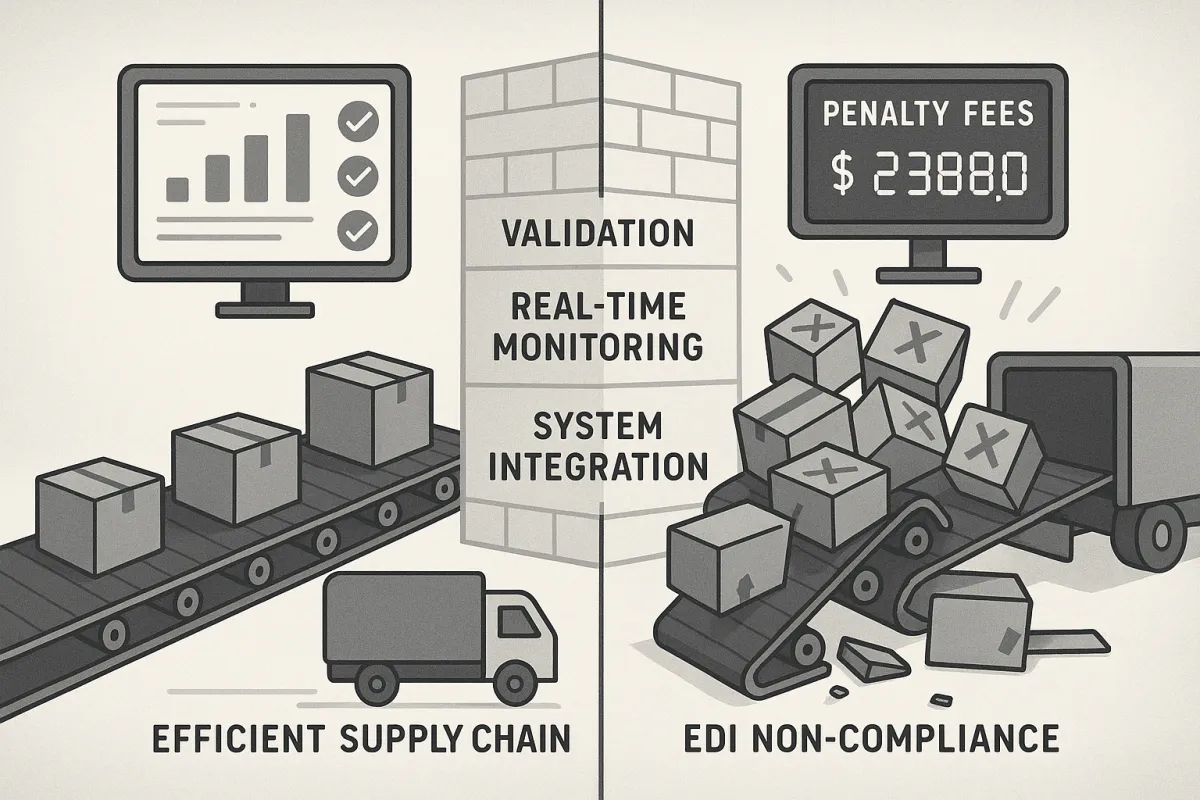
Building a comprehensive EDI compliance cost prevention framework requires understanding that modern retail penalties, VAN hidden fees, and integration complexity create a perfect storm of budget destruction. The result is chargebacks, rejected shipments, delayed payments, and damaged relationships. Preventing these issues requires strict validation, real-time monitoring, and tight system integration.
The Four Hidden Cost Categories Destroying EDI Budgets
Traditional EDI cost analysis focuses on software licensing and implementation fees. The real budget killers hide in operational complexity and non-compliance penalties that compound over time.
Chargebacks can have a serious impact on a supplier's profitability, especially when working with major retailers. The costs associated with frequent chargebacks can quickly reduce profit margins, making it essential to minimize them. Non-compliance results in chargebacks—financial penalties ranging from hundreds to thousands of dollars per violation.
Retail compliance penalties strike without warning. ASN accuracy is one of the most frequent sources of retail penalties. Retailers rely on ASN data for warehouse automation. Any mismatch disrupts receiving operations. Major retailers like Amazon enforce strict timing requirements: Purchase orders must be transmitted within 8 hours, advance shipment notices must be sent 4 hours before arrival, and invoices should be submitted within 24 hours of shipment confirmation.
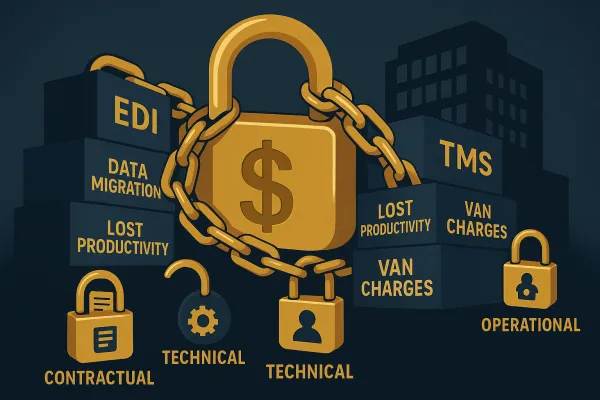
Legacy VAN pricing models create the second major cost category. Mailbox fees are the classic silent drain on your EDI budget. Even if you're not moving massive volumes, you may find yourself shelling out monthly access charges just to store or retrieve your documents. Hit a busy month or exceed a threshold, and mailbox surcharges kick in—piling on costs regardless of actual business value.
There's nothing quite like discovering a $0.25 charge on every EDI 810 invoice at month-end, multiplied by hundreds or thousands of documents processed. CFOs know: this is a budget destroyer, especially when those transactions spike unexpectedly. Some VANs calculate your bill based on rounded data volumes—often rounding up to the nearest MB or even GB per message batch. You send a 3KB invoice? Your cost might be rounded up to a full MB. Multiply that by the number of documents and you're suddenly overpaying for bandwidth or storage you never touched.
Integration and maintenance costs represent the third category. Many providers charge separately every time a new trading partner is added or an existing partner changes document requirements. Over time, these fees add up and slow onboarding. Modern platforms like Cargoson, alongside Orderful and FreightPOP, focus on transparent pricing models that eliminate these recurring charges.
Building Real-Time Compliance Monitoring Systems
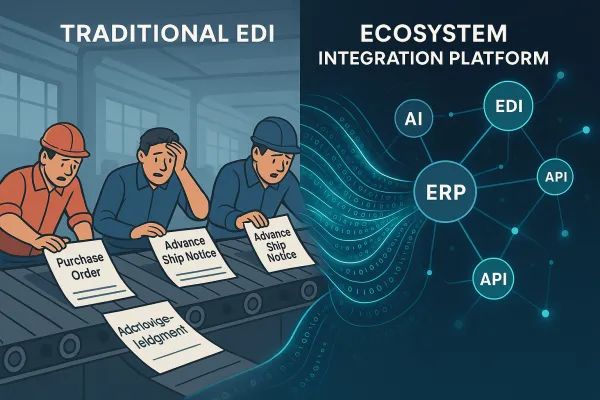
Most EDI failures occur because organizations rely on batch processing and reactive monitoring. Transforming EDI into structured, queryable data allows operations and finance teams to detect compliance risks before they become penalties. Real-time, bi-directional synchronization eliminates the latency and data divergence common in batch-oriented integrations. When applied to EDI workflows, this approach prevents discrepancies between operational systems and outbound retail documents.
Real-time validation requires moving beyond simple format checking. Retailers expect timely acknowledgments confirming receipt and validation of documents. Failure to return 997 or 999 acknowledgments within the required window can trigger automatic compliance violations. Your monitoring system must track document transmission, acknowledgment receipt, and business acceptance across the complete transaction lifecycle.
Critical Validation Points for Penalty Prevention
Document format validation represents the foundation layer. Retailers typically require ANSI X12 or EDIFACT formats with strict implementation guides. Even when a document is technically valid EDI, it may still be non-compliant with a specific retailer's mapping requirements. Your validation engine must check retailer-specific business rules before transmission.
Timing compliance monitoring prevents the most expensive penalties. Implement automated validation checks for each retailer's implementation guide before documents are transmitted. Track submission windows, acknowledgment timeframes, and seasonal requirement changes across your trading partner network.
Data accuracy verification across PO-ASN-Invoice workflows prevents chargebacks. If invoice data does not perfectly match PO and ASN data, retailers may short pay or issue chargebacks. Modern platforms from providers like Cargoson and Orderful provide integrated validation that checks data consistency across document types before transmission.
The Transparent Vendor Selection Framework
Evaluating EDI vendors requires understanding how different pricing models impact your total cost of ownership. Mailbox fees, per-message pricing, and document-size rounding are the most common sources of budget creep, especially with legacy VANs.
Traditional value-added network (VAN) providers use several pricing models including kilo-character (KC) pricing based on file size where 1,000 characters equals 1 KC, per-transaction pricing that charges for each document exchanged, and tiered volume pricing where cost per transaction decreases at higher volumes but penalizes smaller businesses.
Modern alternatives eliminate these complications. Subscription-based EDI includes a fixed monthly or annual fee that covers a defined number of trading partners. Because costs stay consistent regardless of document volume, teams can forecast budgets more accurately and avoid the seasonal spikes common in legacy billing models.
When evaluating vendors, ask specific questions about hidden fees: Data retention and archive access pricing, migration and parallel testing inclusion, and invoice transparency. If any of these answers are unclear or change depending on who you ask, expect budget surprises later. Platforms like Cargoson, Orderful, and TrueCommerce offer different approaches to pricing transparency, but modern API-first platforms eliminate surprise fees and reduce total cost of ownership by 40-60% compared to traditional managed services.
Implementation Strategy for Cost-Controlled EDI Modernization
Phased migration approaches minimize risk while controlling costs. Ensure product identifiers, pricing tables, and freight rules are consistent across ERP and warehouse systems before EDI generation. Move from periodic data exports to real-time synchronization between systems to eliminate timing discrepancies.
Start with your most stable trading partner relationships before tackling complex integrations. Partial go-live strategies reduce implementation risk. Launch in your most stable markets first, then expand to complex regions once the platform proves reliable. This approach allows you to validate your monitoring framework and cost controls before scaling to your complete partner network.
Budget monitoring requires tracking both direct and indirect costs. Soft EDI costs result from problems that take employee time to identify, work around, and resolve, such as performing track-and-trace with your provider or VAN, manually matching functional acknowledgments, and manual steps involved in 'doing EDI' if your system isn't fully automated. These issues are tedious and time-consuming, meaning that energy is misallocated as opposed to being spent on building customer relationships and other functions that help the business thrive.
Modern platforms like Cargoson eliminate many of these soft costs through integrated automation. Most migrations complete in 2-4 weeks, not the months required for traditional EDI implementations. Predictable costs enable accurate budgeting and forecasting, unlimited transactions let you serve customers without cost concerns, and included support ensures success without surprise bills.
Measuring and Maintaining Compliance Cost Control
Track retailer compliance metrics weekly. Early detection prevents compounding penalties. Your monitoring dashboard should display compliance percentages by trading partner, penalty trends over time, and early warning indicators for requirements changes.
Cost optimization monitoring requires ongoing vendor evaluation. Regularly review usage and associated costs to find inefficiencies. Monitor transaction volumes, VAN/AS2 fees and trading partner fees. Periodically renegotiating contracts or seeking better pricing is advised.
ROI measurement must account for both cost avoidance and operational efficiency gains. Retailers use compliance scorecards to determine preferred vendor status. Chronic violations can lead to reduced business opportunities. EDI compliance directly affects revenue stability and long-term retail relationships. Organizations that modernize their integration layer, eliminate batch windows, and enforce upstream data accuracy reduce penalties, improve retailer scorecards, and protect margins.
Building a penalty prevention framework requires recognizing that if retail EDI errors are affecting your operations, start by evaluating how data moves between your ERP, warehouse, and EDI systems. Organizations that invest in real-time monitoring, transparent vendor relationships, and proactive compliance management position themselves to capture market share while competitors struggle with hidden costs and penalty exposure.