The Hidden $3.2M Vendor Lock-In Crisis: Your Complete EDI and TMS Exit Strategy Framework to Prevent Switching Cost Disasters and Build Future-Proof Integration Architecture in 2026

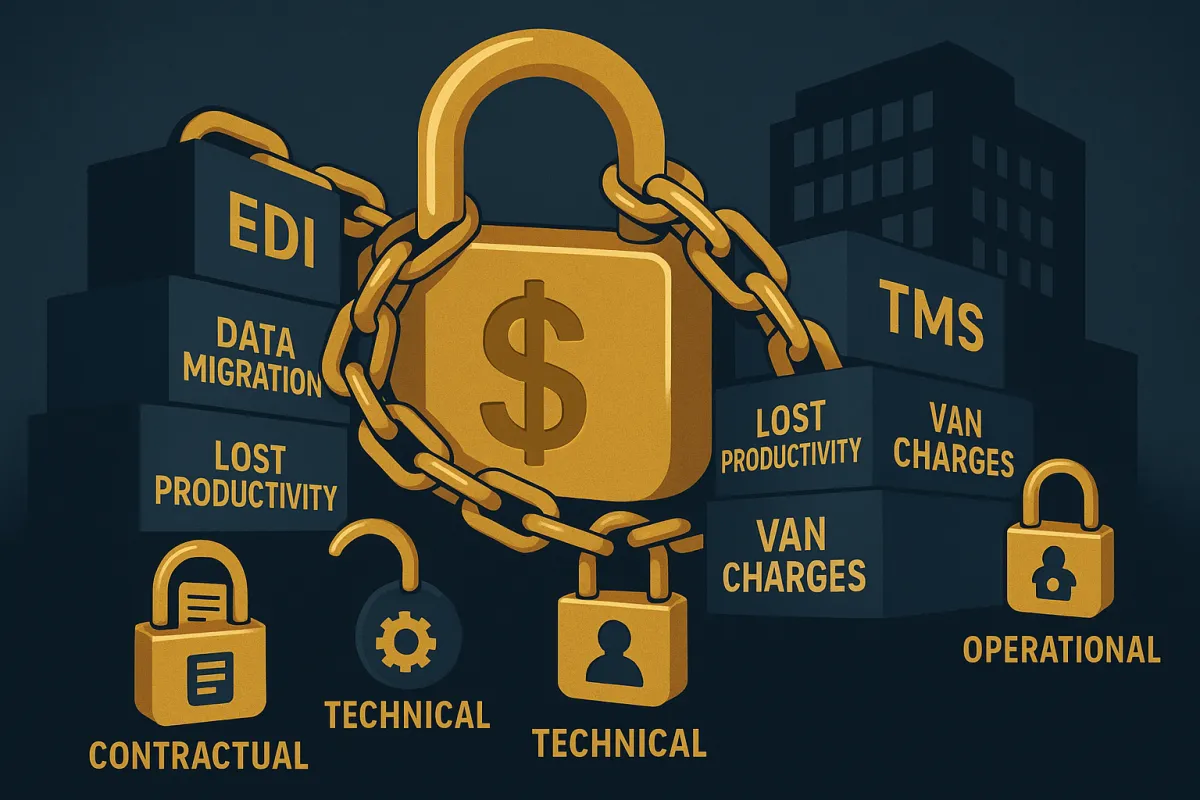
Organizations switching EDI providers report an effective "exit tax" of 150-200% of the Annual Contract Value (ACV) when factoring in data migration, retraining, and lost productivity. For a $1 million contract, the real cost to switch could be $2.5 to $3 million. Yet despite these staggering numbers, the vendor lock-in crisis affecting both EDI and TMS systems in 2026 is getting worse, not better.
Your procurement team faces an unprecedented challenge. WiseTech's acquisition of e2open for $3.30 per share in cash equating to an enterprise value of $2.1 billion marks the largest TMS industry acquisition to date, while Descartes Systems Group has acquired Columbus, Ohio-based 3Gtms for $115 million, fundamentally reshaping the vendor landscape. Meanwhile, typical migration costs range from $1,000-$10,000+ for migration plus $200-$500 per trading partner for compliance mapping, making these fees lock customers into expensive contracts because switching becomes prohibitively costly.
The data reveals a hidden crisis that most procurement teams underestimate. Hidden EDI costs include per-transaction fees ($0.10-$1.00 per document that multiply with volume), VAN charges ($500-$1,500/month), setup fees for each trading partner ($1,000-$5,000), hourly support charges ($150-$300/hour), mandatory annual price increases (5-10%), and contract exit fees. When organizations finally break free, they discover the true scale of savings possible—but only after paying the premium for years.
Understanding the Three Layers of Modern Integration Lock-In
Vendor lock-in in EDI and TMS systems operates through three interconnected layers that compound switching costs exponentially. To dismantle vendor lock-in, you must first understand its three distinct layers. These are the penalties and fees explicitly set out in your agreement.
Contractual Lock-In starts with termination penalties and data egress fees. If you are in a multi-year contract without a "Termination for Convenience" right, the cost to switch is the full remaining value of the contract. Data egress fees charge exorbitant fees to export your own data from the platform. Professional services for offboarding require you to pay the vendor for "professional services" to help you leave.
Technical Lock-In emerges through proprietary data formats and integration complexity. These are the engineering and IT costs associated with the migration. Proprietary data formats mean the vendor provides your data back in a proprietary, unusable format, requiring expensive engineering work to transform it for a new system. In EDI systems, this manifests through custom mapping protocols and VAN-specific message formats that don't translate to other platforms.
Operational Lock-In represents the human cost of change. Project management overhead includes the internal cost of dedicating a team to manage the complex migration project over several months. For TMS systems, this extends to carrier relationship management, where years of negotiated rates and performance data become vendor-specific assets that don't transfer cleanly.
The operational layer particularly affects transport management, where route optimization algorithms, carrier scorecards, and fuel surcharge matrices become deeply embedded in vendor-specific workflows. Moving these operational elements requires not just technical migration but organizational relearning.
The Hidden Costs That Destroy Migration Business Cases
The migration costs you see quoted represent only the tip of the expense iceberg. Common fees include setup charges ($500-$5,000), per-message fees ($0.05-$0.50 per document), mailbox fees ($50-$200/month), overage charges (often 2-3x base rates), and migration fees ($1,000-$10,000). But the hidden expenses are where business cases fall apart.
VAN charges create recurring cost traps that accumulate over time. You pay $50-$300/month for extended archival plus $0.10-$1.00 per document retrieval for viewing, downloading, or retaining your own EDI data beyond 30-90 days. What should be standard is 90+ days of free archival with unlimited portal access included. When you multiply these fees across hundreds of trading partners over multi-year contracts, the hidden costs dwarf the visible subscription fees.
Subscription escalation traps represent the most insidious cost element. SaaS vendors increased prices by 8.8% in 2023, more than doubling regular consumer inflation rates. That year, 73% of all SaaS vendors raised their prices. The compound effect of these increases over 5-7 year implementations means you're paying double within the contract period.
Consider how data gravity amplifies switching costs over time. As you accumulate terabytes of customer and operational data within a single platform, the cost and complexity of migrating that data grow exponentially. This "data gravity" is the strongest form of lock-in. For TMS systems, this includes years of carrier performance data, route optimizations, and fuel cost models that become increasingly valuable—and increasingly difficult to extract—over time.
Transaction volume penalties add another layer of cost complexity. A company processing 10,000 documents monthly at $0.20 per message pays $2,000/month just for transmission. Overage fees can be 2-3x your base rate, with many contracts setting artificially low caps to generate overage revenue during peak seasons or business growth. Modern alternatives like Cargoson, Orderful, and other transparent pricing platforms eliminate these traps, but switching requires overcoming the accumulated technical debt.
The TMS Vendor Consolidation Factor: Why 2026 Is Different
The TMS vendor consolidation wave fundamentally changes the risk profile of vendor lock-in. Descartes Systems Group acquired the transportation management solutions (TMS) software vendor 3GTMS for $115 million. The deal marks Descartes' 32nd acquisition since 2016. This aggressive acquisition pattern indicates further consolidation ahead, not behind us.
Consolidation creates maintenance risks that didn't exist in stable vendor environments. Product roadmap uncertainties are already surfacing. When two TMS platforms merge, customers inevitably face decisions about which system to standardize on, what features will be deprecated, and how long dual support will continue. Your carefully negotiated contract terms may become worthless when ownership changes hands.
The acquisition integration timeline directly impacts your operations. Companies undergoing integration often experience 12-18 months of reduced innovation while they harmonize platforms and teams. When vendor acquisitions happen mid-implementation, your project timeline extends while support resources get redistributed. This operational disruption compounds switching costs by creating unplanned downtime and resource allocation challenges.
Regional vendor focus becomes critical during consolidation. Strategic vendor selection must account for continued market consolidation. European specialists including Cargoson maintain development focus on regional requirements, while global vendors spread resources across multiple geographic priorities. This focus differential becomes more important as complexity increases and vendor options decrease through continued acquisitions.
The post-consolidation landscape reveals distinct vendor categories with different lock-in risks. Global mega-vendors (Infios/MercuryGate, Descartes, SAP TM, Oracle TM, E2open/WiseTech), European specialists (Alpega, nShift, Transporeon/Trimble) each present different acquisition resistance and switching cost profiles. Organizations need to evaluate these categories based on their specific operational requirements and risk tolerance.
Building Your Vendor Lock-In Prevention Framework
Preventing vendor lock-in requires architectural decisions made before you sign contracts, not crisis management after you're trapped. The fight against lock-in is won before you sign the contract. When designing your tech stack, prioritize tools that play well with others. Favor vendors with open, RESTful APIs and a strong marketplace of pre-built integrations. This reduces your dependency on any single provider.
Negotiate Exit Rights on Day One. Make data portability non-negotiable. During the contract negotiation, spend as much time discussing the "divorce" as you do the "marriage." Make a no-cost, standard-format data export clause a non-negotiable term. For EDI systems, specify exact data formats (ANSI X12, EDIFACT, XML) and export procedures that don't require vendor professional services.
For TMS contracts, demand specific export capabilities for historical shipment data, carrier performance metrics, and route optimization parameters. Include regular backup requirements and audit rights to verify these capabilities work throughout the contract term, not just at termination.
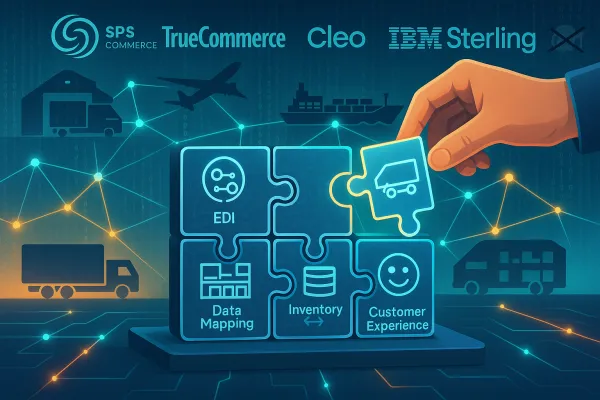
Architect for Interoperability by choosing platforms with proven integration ecosystems. Modern EDI platforms like SPS Commerce, TrueCommerce, Cleo, and Cargoson offer varying degrees of openness and API accessibility. Evaluate not just current API capabilities but vendor commitment to maintaining open standards as they grow.
Contract Analysis Framework should include specific clauses protecting against post-acquisition changes. Price protection clauses should extend through acquisition transitions. Specify that pricing remains locked for 24 months following any ownership change, regardless of platform migration requirements or feature consolidation decisions.
Include vendor acquisition notification requirements. Acquisition-resistant contracts require specific protections including 12-18 months advance notice for ownership changes, guaranteed functionality preservation for minimum periods, and migration assistance rights. Include specific clauses requiring 12-18 months advance notice of ownership changes, with automatic contract review rights triggered by acquisition announcements.
The Complete Exit Strategy Implementation Guide
Building an effective exit strategy requires addressing technical, legal, and operational dimensions simultaneously. Start with comprehensive technical dependency mapping that identifies every integration point, data flow, and custom configuration that would require rebuilding during migration.
Calculate True Switching Costs using a framework that accounts for all cost categories. Direct expenses include setup fees, training costs, and data migration professional services. Indirect costs encompass productivity loss during transition, operational downtime, and resource reallocation. Hidden costs include contract penalties, integration maintenance, and opportunity costs from delayed implementations.
Plan for 15-20% budget increases in 2026-2027 if reactive, or 8-12% if proactive with proper contract protection. This planning buffer accounts for vendor price escalation and implementation complexity that often exceeds initial estimates.
Data Management Strategy represents your most critical exit planning component. Data portability requirements in contracts become your insurance policy against vendor lock-in. Specify formats, export procedures, and transition support that guarantee your ability to migrate operations if consolidation forces system changes. Include regular data backup requirements and audit rights to verify export capabilities.
For EDI systems, maintain parallel data storage that doesn't rely solely on vendor archives. For TMS platforms, ensure carrier performance data, route optimizations, and cost models can be exported in formats compatible with alternative systems. Test export procedures annually, not just during crisis situations.
Step-by-Step Migration Planning should begin 18-24 months before any anticipated vendor change. This timeline allows for thorough vendor evaluation, contract negotiation, and staged implementation that minimizes operational disruption. Include specific milestones for data migration testing, user training, and parallel system operation.
Emergency Exit Procedures become essential when vendor acquisition or service degradation accelerates switching timelines. Develop contingency plans that include backup vendor qualification, accelerated contract termination procedures, and crisis communication strategies for trading partners or carriers.
Future-Proofing Your Integration Architecture Against Lock-In
Multi-vendor strategies reduce single points of failure while maintaining operational efficiency. Using different vendors for different use cases, maintaining architectural separation between the agent orchestration layer and model API calls, and investing in abstraction layers that reduce switching costs are signs of mature enterprise AI governance, not signs of indecision. This principle applies directly to EDI and TMS architecture.
Consider using different vendors for different functional areas rather than seeking monolithic platforms. Core EDI transaction processing might use one platform while advanced analytics and reporting use another. TMS core functionality could be separated from carrier integration and compliance modules. This architectural separation prevents any single vendor from controlling your entire operation.
Abstraction Layer Investment creates vendor-neutral interfaces that reduce switching costs. Build internal APIs that standardize data formats and process flows regardless of underlying vendor capabilities. This investment upfront pays dividends by making vendor replacement modular rather than system-wide.
For EDI operations, develop internal message transformation services that can work with multiple VAN providers. For TMS systems, create carrier integration layers that aren't dependent on single-vendor APIs or data formats.
Monitoring and Early Warning Systems help identify lock-in accumulation before switching becomes impossible. Track vendor dependency metrics including integration complexity, data volume, custom configuration count, and user skill specialization. Set thresholds that trigger architectural reviews before lock-in becomes overwhelming.
Monitor vendor health and acquisition vulnerability through financial analysis, market position assessment, and competitive landscape evaluation. Immediate vendor consolidation risk assessment should begin with your current TMS provider. Is your vendor an acquisition target? Are they acquiring others? How will this affect your contract terms, support quality, and platform roadmap? Build contingency plans that include backup vendor qualification and contract termination scenarios.
The procurement window for building vendor lock-in resistant architectures is narrowing as consolidation accelerates. Organizations that implement these frameworks now position themselves to navigate the changing vendor landscape successfully. Those who delay risk becoming statistics in the costly vendor lock-in crisis that's reshaping supply chain technology procurement in 2026.