The Hidden 40% Revenue Drain: Your Complete Carrier Connectivity Cost Optimization Framework for TMS Platforms in 2026

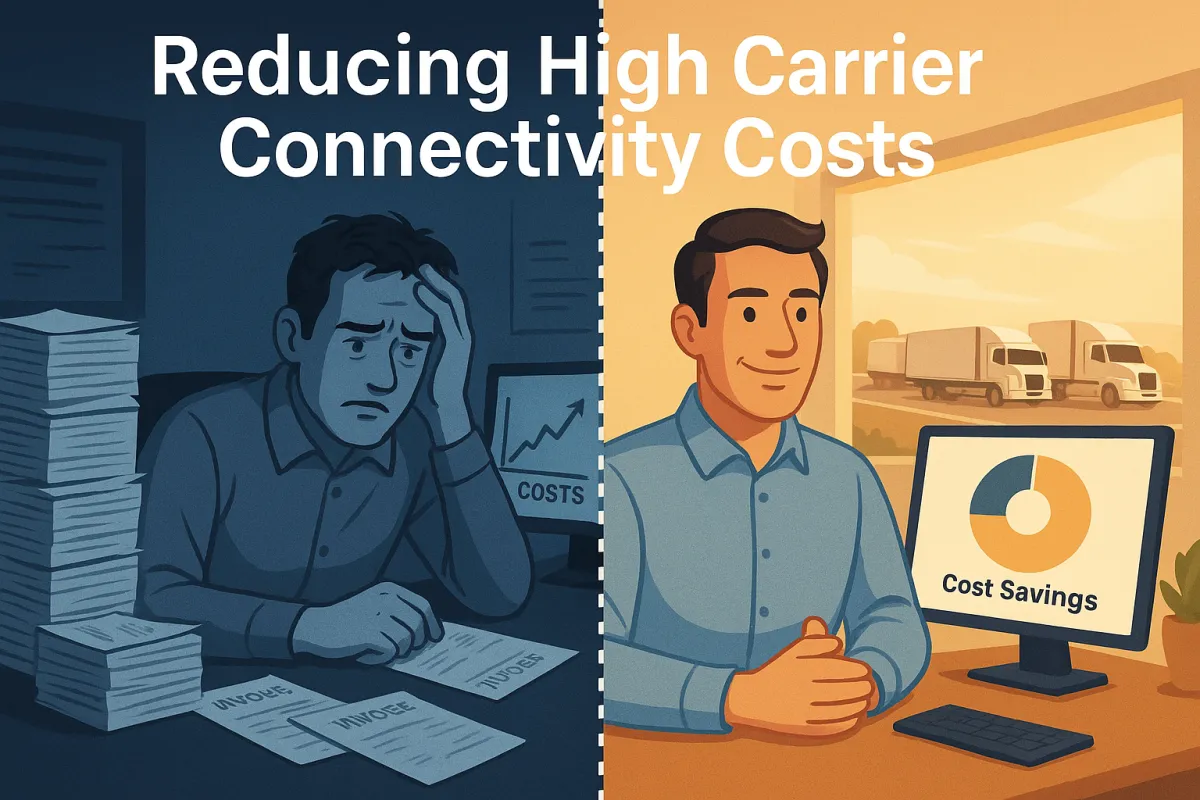
Running a TMS platform in 2026 means grappling with a brutal reality: external integrations consume 40% of your total revenue. That $1 million TMS you launched? You're paying $400,000 annually just for carrier connectivity and API integrations. This isn't a temporary cost spike you can optimize away in six months. It's the new operating baseline for transportation management systems.
Most TMS founders budget for hosting, development, and marketing. Few prepare for the carrier connectivity cost structure that can make or break profitability. The good news? This percentage drops significantly, hitting 20% by 2030 as you gain volume leverage. Understanding this trajectory and building the right negotiation framework can cut these costs in half over four years.
The $400K Carrier API Cost Reality Hitting TMS Platforms in 2026
When you dig into TMS operating costs, carrier connectivity stands out as the single largest variable expense. Fixed costs start at $29,000 monthly in 2026, plus variable costs which total up to 80% of revenue monthly, with carrier API integrations representing the largest chunk of that variable cost structure.
Here's how the math works for a typical $1M annual revenue TMS: You're spending $400,000 on carrier connectivity in year one. That breaks down to roughly $33,000 monthly just for API access, real-time tracking, and integration maintenance across your carrier network. Sound familiar? You're not alone.
This cost intensity creates a catch-22 for TMS platforms. You need comprehensive carrier coverage to win enterprise clients, but those same integrations consume nearly half your revenue before you've paid for development, support, or marketing. The sticker price is only 20-25% of total cost of ownership. Hidden costs include implementation services, carrier connectivity, training, and ongoing maintenance.
Traditional cost projections underestimate carrier connectivity expenses because they focus on published API pricing without factoring in volume commitments, support requirements, and the hidden fees that surface during implementation. Many TMS operators discover their carrier connectivity costs double within the first year as customer volumes increase and service level demands escalate.
Understanding the Three-Tier Carrier Connectivity Cost Structure
Not all carrier APIs are priced equally. Understanding the tier structure helps you prioritize integrations and negotiate better rates. Here's how carriers typically structure their API pricing:
Tier 1: Premium Carrier APIs (FedEx, UPS, DHL) - These carriers charge premium rates but offer the most comprehensive API coverage. Pricing ranges from $500-2,000 monthly minimums plus per-transaction fees. Volume breaks kick in around 10,000 monthly shipments, but you'll need 50,000+ to see meaningful rate reductions.
Tier 2: Regional Carrier Integrations - Regional carriers like OnTrac, LSO, or Spee-Dee often have lower minimums ($100-500 monthly) but hidden per-transaction fees that can escalate quickly. These are the integrations that surprise TMS operators when monthly bills jump from $200 to $2,000 without warning.
Tier 3: Last-Mile and Specialized Carrier Costs - Last-mile providers and specialized carriers (white glove, refrigerated, hazmat) typically charge per-transaction without minimums, but their rates can be 3-5x higher per API call. These often-overlooked budget items can add $10,000+ monthly for active TMS platforms.
Real-time tracking adds another cost layer. Basic connectivity might cost $0.05 per shipment, while real-time tracking with GPS updates every 15 minutes can jump to $0.25+ per shipment. For a TMS handling 100,000 monthly shipments, that's the difference between $5,000 and $25,000 in monthly tracking costs.
The Volume Leverage Point: When 40% Drops to 20%
This percentage drops significantly, hitting 20% by 2030 as you gain volume leverage. The timeline isn't automatic - it depends on crossing specific volume thresholds where carrier pricing tiers change dramatically.
Most premium carriers offer significant volume discounts at three key thresholds: 25,000 monthly shipments, 100,000 monthly shipments, and 500,000+ monthly shipments. Each threshold can reduce per-transaction costs by 30-50%. The trick is timing your contract negotiations around these volume commitments.
Negotiation windows typically open 90-120 days before contract renewals. Smart TMS operators start volume projections six months ahead and time major customer acquisitions to coincide with these renewal periods. This approach can accelerate the transition from 40% to 20% cost intensity by 12-18 months.
TMS Vendor Evaluation: Who Absorbs Carrier Connectivity Costs
TMS vendors handle carrier connectivity costs differently. Some absorb integration expenses into platform fees, while others pass costs directly through to customers. Understanding these models affects your total cost of ownership significantly.
Enterprise platforms like Manhattan has been named a Leader in Gartner's Magic Quadrant for TMS for eight consecutive years, and Oracle has been named a Leader in the 2025 Gartner® Magic Quadrant™ for Transportation Management Systems for Oracle Fusion Cloud Transportation Management. This marks the 18th time Oracle has been named a Leader in this report and in this year's edition, Oracle was positioned highest for its Ability to Execute and furthest for its Completeness of Vision. Both typically include carrier connectivity in their enterprise licensing fees.
Mid-market solutions like Mid-market platforms (GoFreight, Magaya): $100-400/user/month - Enterprise platforms (CargoWise): $500-2,000+/user/month vary in their approach. Some include basic carrier connectivity, while others charge separately for premium integrations.
API-first platforms like Orderful and Cargoson often provide built-in carrier relationships as part of their core value proposition, reducing the need for separate API subscriptions. This integrated approach can reduce third-party carrier connectivity costs by 60-80% compared to building individual integrations.
The Cargoson Connectivity Advantage
Cargoson's integrated approach reduces third-party API dependencies through pre-built carrier relationships and unified connectivity management. Instead of managing 10-15 separate carrier API contracts, you're working with a single integration that handles multiple carrier connections.
This model shifts carrier connectivity from a variable cost to a predictable platform fee. For TMS operators handling 50,000+ monthly shipments, this can represent $15,000-30,000 in monthly savings compared to standalone carrier API subscriptions. The cost comparison becomes even more favorable as volumes scale beyond 100,000 monthly shipments.
The Four-Step Carrier Connectivity Cost Optimization Framework
Controlling carrier connectivity costs requires a systematic approach. Here's the framework successful TMS operators use to reduce these expenses:
Step 1: Baseline Cost Assessment and Current Spend Analysis - Document every carrier API subscription, monthly minimum, per-transaction fee, and volume commitment. Most TMS operators discover 20-30% cost waste in redundant or underutilized integrations during this assessment.
Step 2: Carrier Usage Pattern Analysis and Optimization Opportunities - Analyze which carriers handle your highest volumes and which generate the most revenue per integration. Often, 3-4 carriers handle 80% of volume while 10+ carriers generate minimal usage but consume significant integration costs.
Step 3: Contract Negotiation Timing and Volume Commitment Strategies - Time contract renewals to coincide with volume growth phases. Negotiate volume commitments based on 12-month projections rather than current usage. This approach can unlock pricing tiers 6-12 months ahead of organic growth.
Step 4: Technology Architecture Decisions That Reduce Per-Transaction Costs - Implement caching strategies, optimize API call patterns, and consider hybrid connectivity models that balance real-time data with cost efficiency.
Contract Negotiation Tactics for 2026
Carrier API pricing is more negotiable than most TMS operators realize. Success depends on timing, volume projections, and bundling strategies.
Volume Tier Negotiation - Request custom volume tiers based on your growth projections. Instead of waiting to reach 100,000 monthly shipments, negotiate that pricing at 75,000 shipments with a 12-month commitment.
Bundling Strategies - Combine tracking, booking, and documentation APIs into single contracts. Carriers often provide 20-40% discounts for bundled services compared to individual API subscriptions.
Alternative Pricing Models - Explore flat-rate pricing for predictable volume levels. Some carriers offer monthly caps that can reduce costs by 30-50% for high-volume TMS platforms.
Technology Architecture Decisions That Control Carrier API Costs
Smart architecture choices can reduce carrier API costs by 40-60% without sacrificing functionality. The key is optimizing API usage patterns and implementing intelligent caching.
API Call Optimization - Implement batch processing for non-urgent requests. Instead of making individual tracking calls every 15 minutes, batch 100 requests into single API calls. This can reduce API costs by 70-80% for high-volume tracking scenarios.
Caching Strategies - Cache static data like service levels, transit times, and zone information. Smart caching can reduce API calls by 50% while maintaining data accuracy for most TMS use cases.
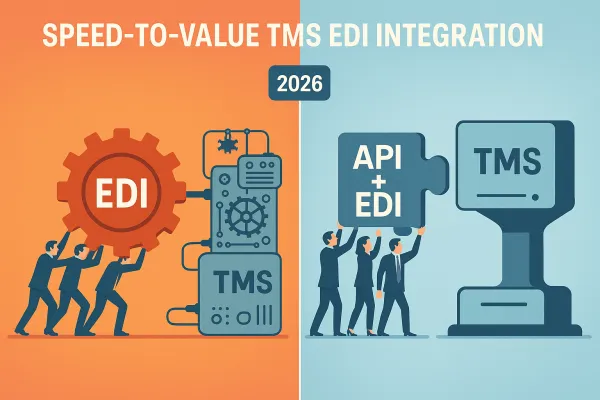
Hybrid Connectivity Models - Use APIs for critical real-time data and EDI or file-based integration for routine transactions. This hybrid approach balances functionality with cost efficiency, particularly for high-volume, predictable workflows.
Integration platforms can centralize carrier connectivity and provide cost management tools. Platforms like Orderful or integration-focused TMS solutions can reduce per-transaction costs through shared infrastructure and volume aggregation.
Future-Proofing Against Rising Connectivity Costs
Carrier connectivity costs will continue rising as real-time tracking, IoT integration, and AI-driven optimization become standard. Furthermore, tms implementation for green logistics and sustainability reporting in transportation management are now core requirements, not optional features. Businesses are adopting cloud native tms architecture benefits to support tms support for autonomous vehicle fleets and facilitate multi enterprise supply chain connectivity. Simultaneously, mitigating cybersecurity risks in logistics has become a top priority, alongside navigating the geopolitical impact on supply chain networks.
Preparing for 5G-enabled real-time tracking will add new cost pressures. Current estimates suggest 5G tracking capabilities could increase API costs by 200-300% for real-time location data. TMS platforms need connectivity strategies that can scale gracefully with these technology advances.
IoT integration will create new carrier connectivity requirements. As more shipments include IoT sensors for temperature, humidity, and shock monitoring, TMS platforms will need additional API capabilities that current carrier connectivity budgets don't account for.
AI-driven optimization will change carrier API usage patterns dramatically. Machine learning algorithms that continuously optimize routing and carrier selection could increase API call volumes by 400-500% as systems make real-time adjustments throughout shipment lifecycles.
The solution isn't avoiding these technologies - they're becoming competitive requirements. Instead, TMS operators need carrier connectivity frameworks that can adapt to changing technology requirements without breaking cost models. This means negotiating contracts with built-in flexibility for new API services and establishing partnerships with carriers that share the cost burden of technology advancement.
Start by auditing your current carrier connectivity costs against the framework above. Most TMS platforms can reduce these expenses by 25-40% within six months through better negotiation timing and contract optimization. The goal isn't eliminating carrier connectivity costs - it's building sustainable, scalable relationships that support growth without consuming half your revenue.