The Legacy Integration Platform Migration Crisis: How BizTalk Server and SAP PI/PO End-of-Life Dates Are Driving the Composable EDI Architecture Revolution in 2026

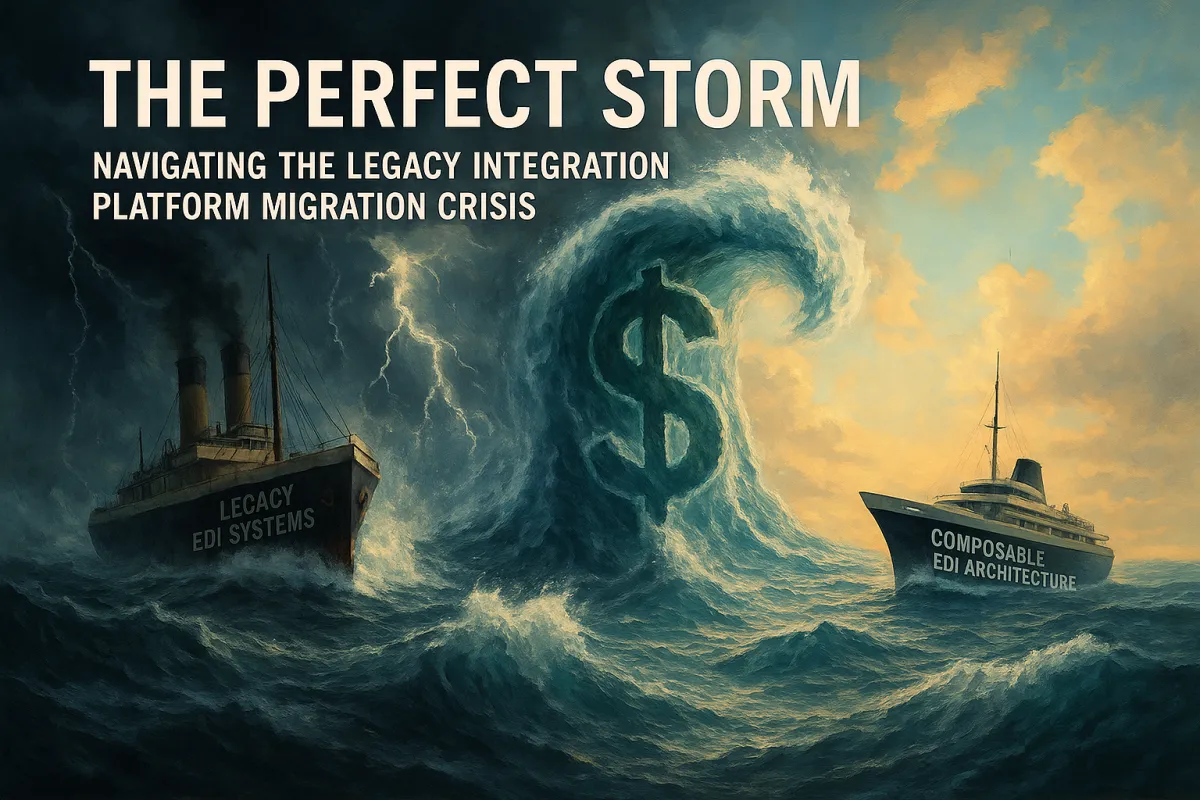
Microsoft BizTalk Server 2020 mainstream support ends April 11, 2028, while SAP PI/PO standard maintenance terminates December 31, 2027. This unprecedented convergence creates the largest enterprise integration migration challenge in IT history, forcing millions of businesses to simultaneously rethink their entire B2B data exchange architecture. The timing couldn't be worse for companies managing complex supplier networks through these legacy platforms.
What makes this different from typical software lifecycle management is the sheer scale. Global system integrators generated $863.8 billion in revenue in 2024, but traditional migration approaches are failing when organizations realize they can't simply transfer point-to-point connections to modern cloud environments. The answer isn't another middleware replacement. Instead, the combined strengths of B2B/EDI and API/EiPaaS offer a flexible and future-ready approach to integration that supports both legacy and modern systems, enables hybrid deployments, and helps organizations move toward unified, composable architectures.
The Perfect Storm - Multiple Legacy Platform End-of-Life Convergence
Never before have two dominant integration platforms reached their sunset simultaneously. BizTalk Server 2020 goes out of mainstream support on April 11, 2028, and out of extended support on April 9, 2030. Meanwhile, SAP will end mainstream maintenance for PI/PO in 2027, with costly extensions only until 2030.
The dependency cascade makes this particularly challenging. Windows Server 2019 left mainstream support on January 9, 2024, and goes out of extended support on January 9, 2029, while SQL Server 2019 leaves mainstream support on February 28, 2025. This forces a complete platform refresh, not just integration middleware updates.
Microsoft is retiring the Service Bus Messaging Protocol (SBMP) on September 30, 2026, which means BizTalk Server 2020's default Service Bus adapter relies on SBMP, and after this date, any BizTalk-to-Azure integrations using this protocol will fail. That's less than two years to address critical connectivity issues.
The $17.67 Billion Migration Market Reality
The enterprise application integration market stands at $17.67 billion in 2025 and is projected to climb to $36.56 billion by 2030, reflecting a 15.65% CAGR. But this growth masks a more urgent reality: 95% of IT leaders cite integration as a challenge to seamless AI implementation, while organizations are still struggling with basic connectivity.
Manufacturing, retail, and logistics sectors face the highest impact. These industries built their supplier ecosystems around EDI transactions processed through BizTalk or PI/PO middleware. The average enterprise uses 897 applications, with 71% of applications remaining unintegrated. When your core integration platform disappears, this fragmentation becomes critical.
Why Traditional "Lift and Shift" Migration Strategies Are Failing
Organizations attempting to transfer existing interfaces one-to-one are missing the fundamental shift in integration architecture. A 1:1 transfer is technically possible but not recommended, as the Integration Suite offers new paradigms and functions that cannot be used in a direct migration, and a strategic reassessment and modernization of the integration landscape is significantly more sustainable.
Here's the problem: point-to-point connections that worked in monolithic environments break down in distributed, API-driven ecosystems. Nearly half of ECC customers may still be on legacy ERP by 2027, projects take 30% longer on average, and only 8% finish on schedule. The complexity isn't just technical - it's architectural.
Trading partner networks become unstable during these migrations. A retail supplier managing hundreds of EDI relationships through BizTalk discovers that Azure Logic Apps doesn't handle batch processing the same way. Purchase orders get delayed, advance ship notices fail, and invoice processing breaks. This isn't a technical glitch - it's a mismatch between legacy transaction patterns and modern integration paradigms.
Microsoft recommends Azure Logic Apps as the official replacement, while SAP pushes Integration Suite. But neither addresses the fundamental question: How do you maintain EDI reliability while gaining API agility? Companies using platforms like Cargoson for transportation management, alongside established solutions like IBM Sterling, MuleSoft, and Axway, are discovering the answer lies in composable architecture rather than simple platform replacement.
The Composable EDI Architecture Solution Framework
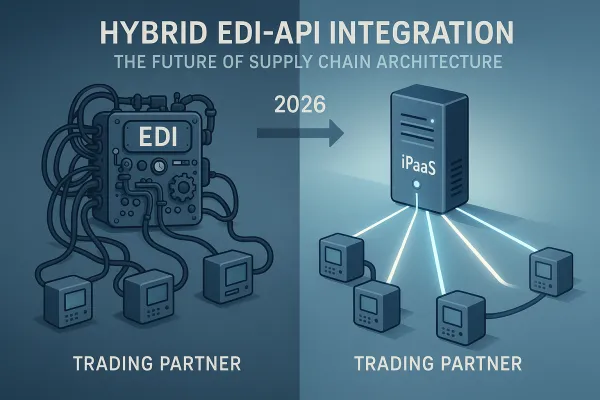
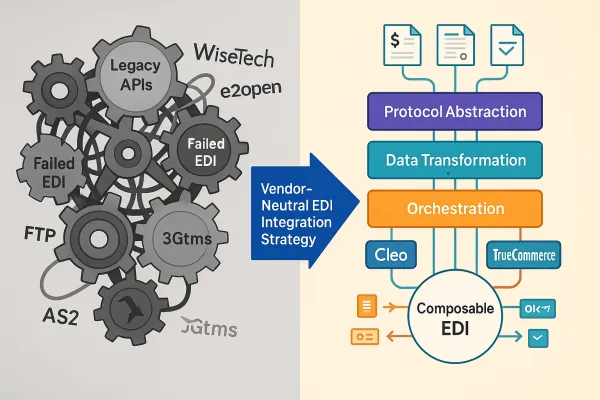
Composable EDI architecture breaks integration into modular, interchangeable components rather than monolithic systems. Instead of a single platform handling all B2B communication, hybrid integration strategies combine the reliability of EDI with the speed and agility of APIs, creating a single environment where both technologies work together.
The technical approach centers on specialized processing for different transaction types. EDI outside, APIs inside means using partner-facing EDI while using APIs to communicate across internal microservices. Your suppliers still send X12 850 purchase orders, but internal systems communicate via REST APIs with real-time event triggers.
This approach supports both legacy and modern systems, enables hybrid deployments, and helps organizations move toward unified, composable architectures. Think of it as microservices for B2B integration - each function (translation, routing, validation, acknowledgment) operates independently while contributing to the complete data flow.
Modern platforms enable this modularity through API-first design. The platform supports both traditional EDI processes and modern API-driven interactions to create a unified environment for all B2B communications. Companies leveraging this approach through solutions like Cargoson for logistics, alongside MercuryGate, Descartes, and nShift, find they can modernize incrementally without disrupting existing partner relationships.
Hybrid EDI-API Integration Patterns
The most successful implementations combine EDI's proven reliability with API flexibility through specific use case patterns. Hybrid integration strategies combine the reliability of EDI with the speed and agility of APIs, but the key is knowing when to use which approach.
Financial documents stay in EDI - invoices, payment notifications, and audit trails benefit from standardized formatting and built-in compliance features. But shipment tracking shifts to APIs - carriers need real-time status updates, route optimization data, and exception notifications that EDI's batch processing can't deliver effectively.
Load tendering represents the perfect hybrid scenario. The initial tender goes through EDI for standardized formatting and regulatory compliance, but acceptance responses, pickup confirmations, and delivery updates flow through APIs for speed. EDI and APIs are increasingly being used in combination, for example when EDI processes are enhanced with APIs for querying status updates.
The Strategic Migration Decision Framework
Moving beyond vendor-recommended replacement paths requires systematic evaluation of your integration requirements against business objectives. This additional time is not a pass to postpone action but rather a strategic advantage for organizations that start their BizTalk Server migration planning now, as the extension provides a rare opportunity to transition methodically without the pressure of an imminent deadline forcing a rushed and risky migration.
Assessment begins with transaction volume analysis. High-frequency EDI relationships (automotive just-in-time delivery, retail replenishment) need bulletproof reliability. Low-frequency, high-value transactions (healthcare claims, financial settlements) require audit trails and compliance features. Real-time interactions (transportation visibility, inventory queries) demand API speed.
Without security updates, the system becomes vulnerable to new threats, and after 2028, BizTalk will become increasingly difficult to work with new systems, applications, and technologies, leading to bottlenecks in integration processes and limiting organizational flexibility. The risk compounds over time - each month you delay increases technical debt and migration complexity.
Platform selection criteria extend beyond feature comparisons. IBM Sterling dominates large-scale EDI networks but struggles with API-first architectures. MuleSoft excels at API management but requires additional EDI capabilities. Axway provides strong B2B functionality but with higher complexity. Transportation-specific needs might lead to specialized platforms like Cargoson that understand industry workflows while connecting to broader integration ecosystems.
Implementation Roadmap for Composable EDI Architecture
Migration success depends on iterative deployment starting with non-critical trading partners. Rather than a straightforward 1:1 migration, develop a forward-looking integration strategy that makes full use of modern capabilities, offering efficiency, cloud compatibility and measurable added value. This approach reduces risk while building team expertise.
Technical implementation follows the strangler fig pattern - gradually replace legacy functionality without disrupting operations. Begin with outbound document flows (purchase orders, shipping notices) where you control timing and can easily rollback. Move to inbound transactions (invoices, acknowledgments) once confidence builds.
A 1:1 transfer is technically possible but not recommended, as modern platforms offer new paradigms and functions that cannot be used in a direct migration. Use this opportunity to implement event-driven integration, real-time monitoring, and API-first connectivity that legacy platforms couldn't support.
Resource planning requires new skill sets. Integration architects understand both EDI standards and API design patterns. DevOps engineers manage deployment pipelines and monitoring across hybrid environments. Legacy system veterans and certified specialists with migration experience must work together to ensure continuity and modernization.
The 2026 Action Plan
Start with comprehensive discovery. Identify integration domains, use case patterns, API potential and risks as the basis for the target architecture. Document existing EDI relationships, transaction volumes, error handling requirements, and business process dependencies. This inventory becomes your migration priority matrix.
Select pilot partners who represent different integration patterns - high-volume automated transactions, exception-heavy manual processes, and emerging API-capable partners. Success with diverse scenarios proves architectural validity and builds confidence for broader rollout.
With support for PI/PO set to end in late 2027, companies have a limited window of opportunity to make strategic decisions, and successful migrations require time for organizational transformation and skills development. Companies starting planning now have decisive advantages: sufficient time for strategic planning, pilot project opportunities, and gradual competence building.
Risk mitigation centers on parallel operation capabilities. Maintain existing EDI connections while testing composable architecture with selected partners. The hybrid path allows organizations to take small steps towards the future by writing new applications in modern platforms, taking baby steps while developing new integrations. This approach provides safety nets while proving new capabilities.
By 2027, the race intensifies. Organizations still running legacy platforms face compressed timelines, limited vendor resources, and higher migration costs. Those who start architectural planning in 2026 position themselves to modernize systematically rather than react desperately to end-of-life deadlines.