The Protocol Agnostic Integration Strategy: How to Eliminate the Hidden "Hybrid Tax" in Your TMS Architecture and Build Future-Proof B2B Connectivity That Works Across EDI, APIs, and Emerging Technologies in 2026

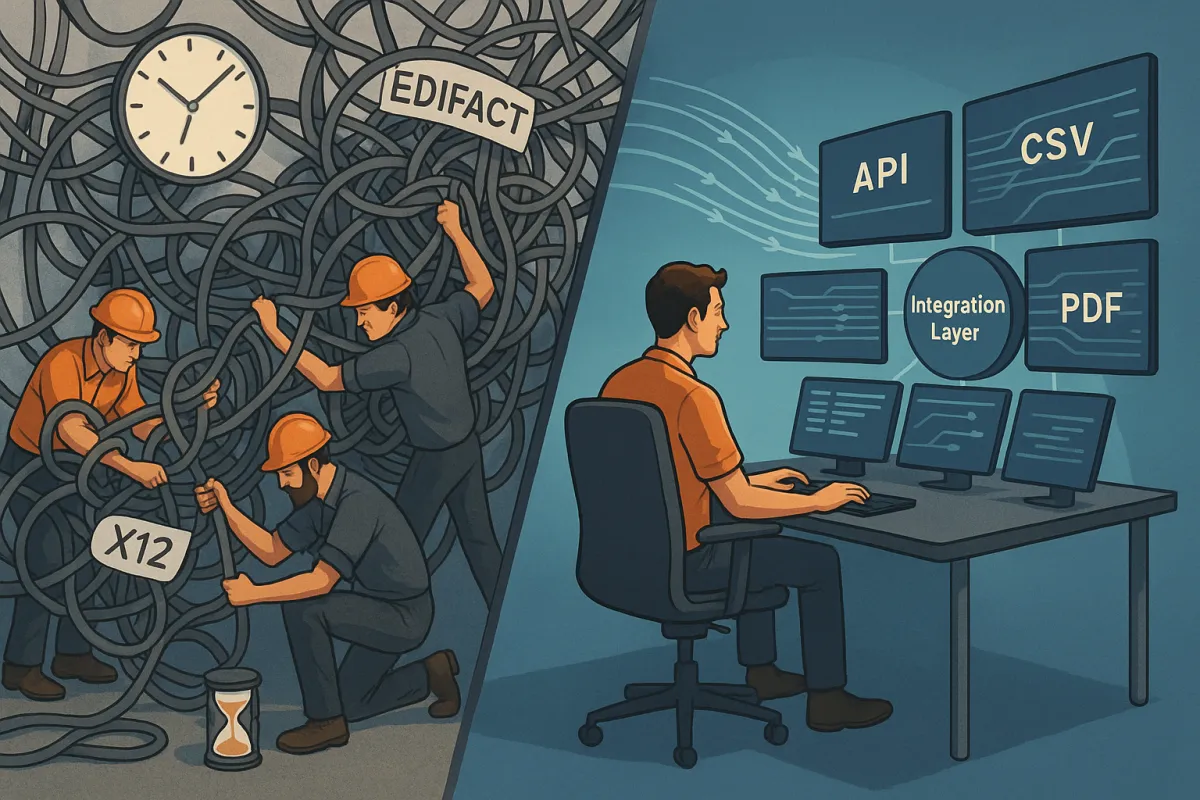
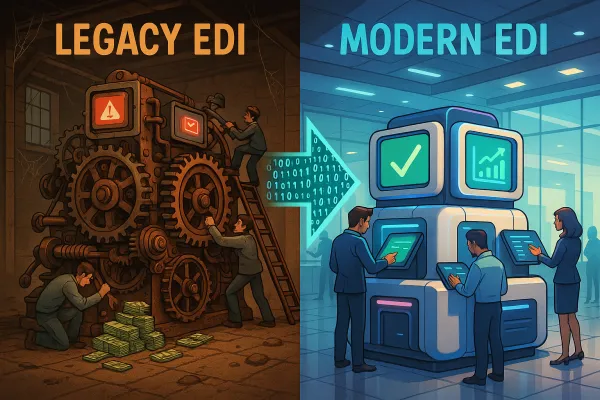
Between VAN fees, specialized labor costs, and partner setup expenses, most companies now pay what industry insiders call a "Hybrid Tax"—the literal and operational cost of running two completely different technical infrastructures to accomplish the exact same goal: moving data from Point A to Point B. Your engineering team spends mornings debugging flat-file EDI errors and afternoons optimizing JSON payloads. When your engineering team has to spend their morning debugging a flat-file EDI error and their afternoon optimizing a JSON payload, they aren't building new features. They are playing "Logistics Plumber." The cognitive load of switching between these protocols leads to slower deployments and higher burnout.
The numbers tell the story. Costs can range from $1,000 to $10,000+ monthly depending on complexity and partner count. Legacy providers may charge separately for partner onboarding, map changes, testing, and ongoing support. Meanwhile, EDI bundles orders, invoices, and shipment notices into standard file formats like X12 and UN/EDIFACT. Because the files move on a fixed schedule, updates can take hours to reach the next system.
The $2.3M Hidden Cost of Running Dual EDI-API Streams
Most logistics directors see the obvious costs: VAN fees, consultant hours, and setup expenses for each new partner. What they miss is the innovation opportunity cost. You reclaim the most valuable asset in your company: Innovation time. Your in-house software engineers are some of the most time-constrained people in your organization.
Break down the real expenses and you'll find three cost layers that compound:
Infrastructure Duplication: Traditional EDI connections are notoriously "heavy." Between Value Added Network (VAN) fees, expensive setup costs for every new partner, and the specialized labor required to maintain them, EDI remains a significant line item. Add API infrastructure costs, monitoring tools, and security protocols for both streams, and you're funding two complete data transmission systems.
Operational Complexity: When data lives in different "languages," it creates a visibility gap. If your API stream is processed in real-time but your EDI batching happens every four hours, your automated workflows are only as fast as your slowest protocol. This lack of synchronization makes true end-to-end automation nearly impossible to scale.
Resource Allocation: Your TMS vendor relationships become fragmented. Some carriers connect via EDI through providers like Descartes or TrueCommerce, others through direct API connections with platforms like Cargoson, E2open, or Manhattan Active. Each requires different specialist knowledge and troubleshooting approaches.
Why the 2026 API-First Promise Failed
By early 2026, the industry consensus was supposed to be clear: API-first was the only way forward. We were told that legacy EDI (Electronic Data Interchange) would finally be sunsetted in favor of real-time, nimble webhooks and RESTful architectures. The reality, as we've all discovered, is much more expensive.
The API sunset never materialized because trading partner requirements didn't disappear overnight. Partner Readiness - every carrier and customer can send/receive APIs or at least use a self‑service web portal. System Limits - your WMS, TMS, or ERP can send and receive API messages without messy workarounds. Compliance Comfort - finance and quality teams are confident using digital logs in place of traditional EDI control reports.
Major retailers still mandate EDI compliance. Customs systems expect structured document formats. Your WMS vendor's API might be excellent, but half your carrier base operates through EDI-only connections. Crews and back‑office staff know the X12 or EDIFACT forms by heart... VAN fees appear in every forecast and are easy to sign off.
Understanding Protocol Agnosticism: The 2026 Integration Evolution
Protocol agnosticism means your business logic doesn't care whether data arrives via EDI, API, CSV upload, or PDF extraction. If your integration strategy requires your team to treat EDI and API as two different operations, you are overpaying for your transmission infrastructure. The goal for this year is to stop managing connections and start managing outcomes. By abstracting the complexity of the protocol away from the developer, you don't just reduce cost.
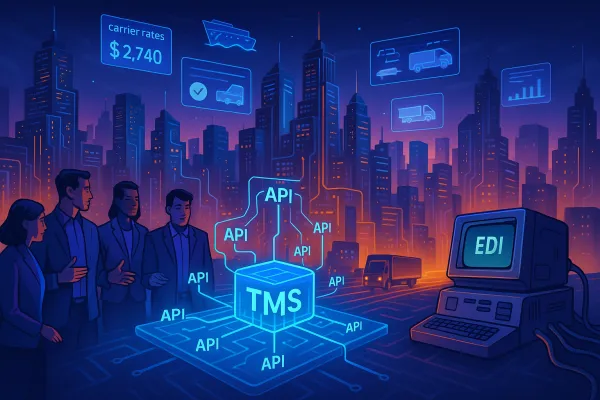
Today, a new layer is emerging as foundational rather than optional: the integration layer. As networks grow more dynamic and parcel, LTL and TL operations increasingly converge, API-based integration hubs are becoming the backbone of the modern supply chain network. Modern integration platforms like Orderful, Cleo, and Cargoson abstract protocol complexity from your developers.
Instead of building separate workflows for EDI purchase orders and API purchase orders, your system processes "purchase order data" regardless of how it arrived. The platform handles translation, validation, and routing behind the scenes. For deeper visibility, some add a middleware gateway. This cloud service takes in an API call and quietly converts it to X12 or EDIFACT (and back again) so every partner sees its preferred format. You gain real‑time speed without asking every carrier or supplier to re‑tool at once, though you do pay a translation fee for the convenience.
The Three-Layer Problem Most Platforms Miss
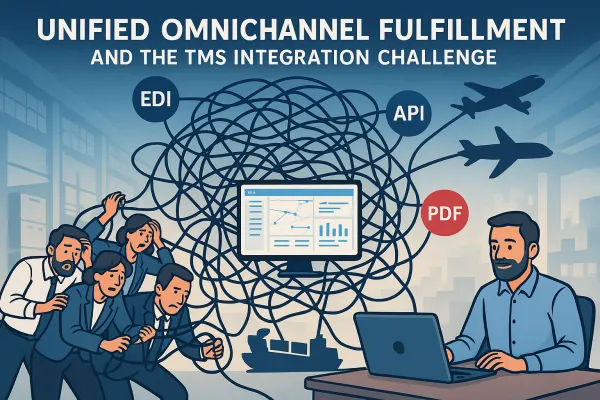
EDI and API integration only solve two-thirds of the data problem. The third layer—PDFs, spreadsheets, and email attachments—breaks most automation attempts. Hybrid EDI Integration – This approach combines both direct and indirect to manage EDI business partners and can provide for the most flexibility in integration. For non-EDI business partners this solution can also include integration methods via Email, PDFs, Excel, flat files, etc for those without EDI capabilities. These solutions typically leverage solutions via web portals, OCR, etc to translate and communicate data between business partners.
Your TMS handles structured data beautifully, but what happens when a carrier sends delivery confirmations via email attachment or updates load status through a PDF upload? Most integration platforms treat unstructured data as an exception rather than part of the core workflow.
The integration of EDI and OCR creates a complete document exchange ecosystem. OCR bridges the gap between physical and digital documents by converting unstructured data into machine-readable formats, which can then be seamlessly processed through EDI workflows, enabling end-to-end automation. TMS platforms like Blue Yonder, nShift, and Alpega increasingly support these AI-powered document processing capabilities.
Building Your Protocol Agnostic Evaluation Framework
Evaluating integration platforms requires looking beyond feature lists to architectural fundamentals. We address this challenge by proposing a unified approach to tool integration that abstracts protocol differences while optimizing execution performance. Our solution demonstrates how protocol-agnostic design principles can significantly reduce development overhead through automated schema generation, dual-mode concurrent execution, and seamless multi-source tool management.
Technical Architecture Requirements:
Your platform needs native support for EDI, API, and file-based protocols without requiring separate adapters or middleware layers. ToolRegistry addresses these limitations by providing a lightweight, protocol-agnostic solution that differs from existing approaches in several key aspects: Unified Multi-Protocol Support unlike existing solutions that focus on single protocols or require separate adapters, ToolRegistry natively supports Python functions, MCP servers, OpenAPI services, and LangChain tools through a single interface.
Look for platforms that offer automated data mapping rather than requiring manual field-by-field configuration for each partner. The system should handle data validation, error management, and retry logic consistently across all protocols. Real-time monitoring and alerting must work regardless of whether data arrives via batch EDI files or streaming API calls.
TMS Integration Capabilities:
Your chosen platform must connect seamlessly with major TMS vendors. Oracle TM and SAP TM require different integration approaches than cloud-native platforms like Cargoson or E2open. Global platforms like Oracle TM and SAP TM provide enterprise integration advantages and broader functional scope but may deprioritize European-specific features during consolidation activities. The choice depends on organizational priorities between regional optimization and global standardization.
Key Questions for TMS Integration Vendors
During vendor evaluations, focus on specifics rather than marketing promises:
Protocol Translation Capabilities: How does the platform handle EDI-to-API translation without data loss? Can it convert an X12 856 shipment notification into JSON format while preserving all tracking details and custom fields? What happens when API rate limits are reached—does the system automatically fall back to batch processing?
Partner Onboarding Process: Onboarding speed is critical since slow partner enablement delays revenue and creates bottlenecks during expansion. Evaluate support workflows, as providers relying on manual processes or ticket-based systems struggle to support fast-moving supply chains compared to platforms with standardized configurations and automation. Modern platforms should onboard new carriers within days, not weeks.
Future Protocol Support: What happens when new carriers use different protocols (API, EDI, or PDF)? The platform should adapt to new data formats without requiring system-wide changes or lengthy development cycles. Real marketplace connectivity goes beyond portal access or manual uploads. Digital freight-matching APIs pipe live spot rates into TMS tendering screens, letting users auto-award loads to best-fit carriers based on cost, on-time metrics, and sustainability performance.
Implementation Strategy: Moving from Hybrid to Agnostic
Migration to protocol agnostic systems requires a phased approach that maintains operational continuity while building new capabilities.
Phase 1: High-Volume File Tracing
Start by identifying your highest-volume EDI transactions and most critical API connections. Focus on data flows that directly impact customer experience or operational efficiency. Document current error rates, processing times, and resource requirements for both streams.
Implement dual-feed testing where new protocol agnostic connections run parallel to existing systems. This lets you validate data accuracy and system performance without risking production operations. Phased implementation strategies protect against vendor disruption by establishing core functionality first, then adding compliance modules and specialized features in subsequent phases. This approach allows platform changes or vendor consolidation to be addressed without complete system replacement.
Phase 2: Pilot with Success Metrics
Choose a manageable subset of trading partners for initial migration. Success metrics should include reduced onboarding time, improved data accuracy, and decreased manual intervention requirements. Modern API-first platforms like Orderful use transparent, predictable pricing with flat per-partner rates that eliminate surprise fees and reduce total cost of ownership by 40-60% compared to traditional managed services.
ROI Calculation and Business Case Development
Quantifying protocol agnostic benefits requires looking beyond direct cost savings to operational improvements and risk mitigation.
Innovation Time Recovery: Calculate the hours your development team currently spends on integration maintenance, troubleshooting, and partner onboarding. Experimental results show 60-80% code reduction across integration scenarios, performance improvements up to 3.1x through optimized concurrency, and full compatibility with existing function calling standards. Apply these productivity gains to your internal development rates.
Development Resource Savings: Protocol agnostic platforms reduce the specialist knowledge requirements for your team. Instead of needing EDI experts and API developers, your staff can focus on business logic and user experience improvements. APIs can be set up and configured pretty easily by your IT department or any tech-savvy analyst. EDI generally needs expensive, specialized consultants to set up or change anything.
Risk Mitigation Value: Calculate the cost of integration failures, data synchronization errors, and delayed partner onboarding. Protocol agnostic systems reduce these risks through standardized error handling and automated retry mechanisms across all data streams.
Future-Proofing Your Integration Architecture
This shift is not just about cleaner architecture. It is about speed, resilience and real optimization. Future-proof integration architecture anticipates protocol evolution rather than reacting to individual technology changes.
Emerging Protocol Support: New standards like Model Context Protocol (MCP) are changing how AI systems interact with external tools. Together, MCP creates a powerful synergy where the model uses rich context through a platform agnostic standardized protocol to effortlessly connect with external tools and services. The Model Context Protocol (MCP) provides universal interoperability for AI, much like the USB-C standard for revolutionized device connections.
AI-Powered Translation: Modern integration platforms increasingly use AI for automatic data mapping, anomaly detection, and predictive error handling. Hybrid integration maximizes technology strengths: Combining EDI's standardized reliability with API's real-time speed creates seamless workflows that satisfy both legacy and modern system requirements. OCR bridges the digital-physical gap: Integrating OCR with EDI creates end-to-end automation by converting unstructured documents into standardized digital workflows. Strategic advantage through intelligent orchestration: Organizations adopting these advanced EDI frameworks gain competitive advantages through improved efficiency, reduced costs, and enhanced supply chain visibility.
Vendor Consolidation Adaptation: WiseTech's acquisition of e2open for $3.30 per share in cash equating to an enterprise value of $2.1 billion marks the largest TMS industry acquisition to date, while Descartes Systems Group has acquired Columbus, Ohio-based 3Gtms for $115 million USD in cash, reshaping vendor options for European buyers. Protocol agnostic architectures protect against vendor disruption by maintaining connection flexibility regardless of platform ownership changes.
The strategy for 2026 isn't to "wait it out". The strategy is to move toward Protocol Agnosticism. Your integration decisions today determine whether you'll spend the next three years managing technical debt or building competitive advantages through superior connectivity. Choose platforms that treat protocol diversity as a feature, not a problem to solve.