The TMS Vendor Consolidation-Resistant Integration Framework: How to Evaluate Transportation Management System EDI Capabilities That Survive Acquisitions and Protect Trading Partner Networks in 2026

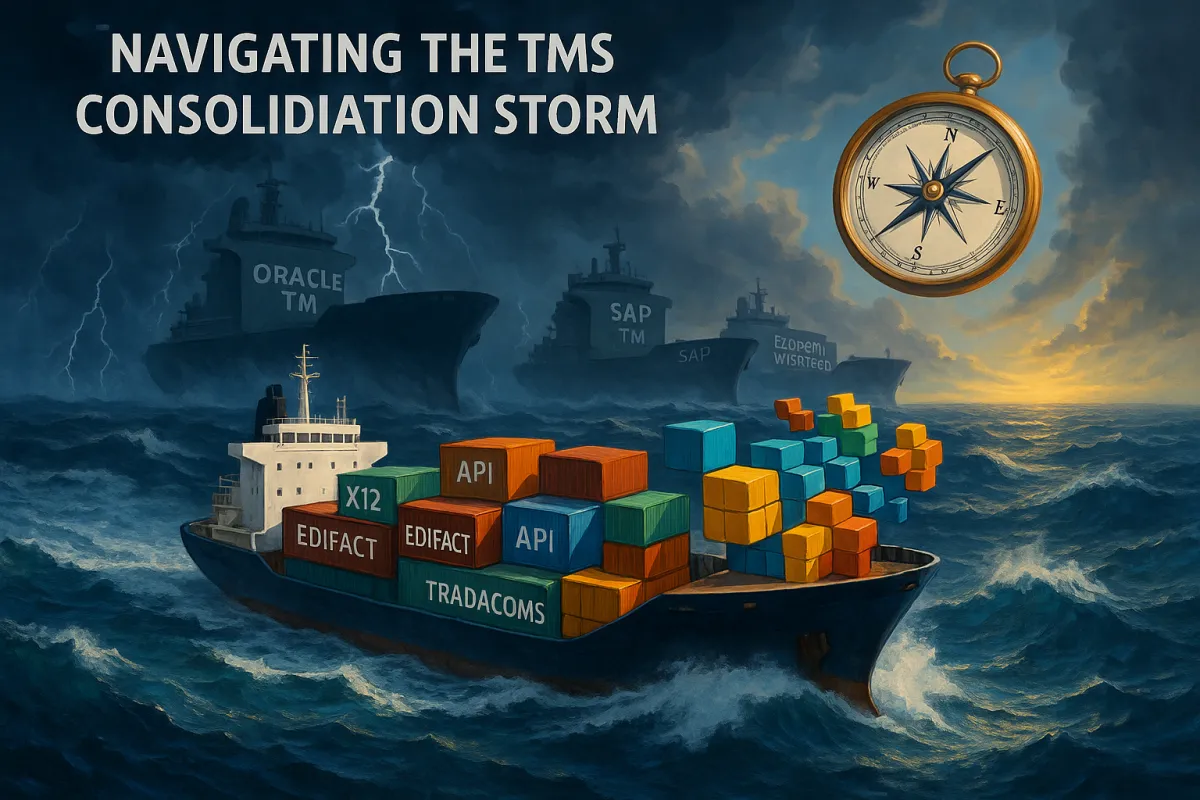
TMS procurement in 2026 isn't just about features anymore. A staggering 76% of logistics transformations never meet their budget, timeline, or performance targets, while the industry faces its most significant vendor consolidation wave in over a decade. WiseTech Global's $2.1 billion acquisition of E2open and Descartes Systems Group's $115 million purchase of 3GTMS in March 2025 represent the most significant TMS vendor consolidation wave in over a decade.
This perfect storm demands a new approach. Transportation management system selection now requires evaluation frameworks that protect against vendor consolidation risks while ensuring future-proof B2B connectivity through composable EDI architecture. The old RFP checklist approach leaves organizations vulnerable to post-acquisition integration failures and vendor lock-in scenarios that can cost hundreds of thousands in remediation.
The Perfect Storm: Why 2026 TMS Procurement Requires a New Integration Evaluation Model
The numbers tell a sobering story. A German automotive parts manufacturer discovered their €800,000 TMS implementation mistake the hard way. Six months into deployment, they realized their new system couldn't handle their complex carrier network across 12 European countries. Sound familiar?
The vendor landscape transformation happening simultaneously compounds this challenge. The most significant TMS vendor consolidation wave in over a decade is reshaping European procurement decisions right now. WiseTech Global's $2.1 billion acquisition of E2open is more than a headline—it's a directional shift for one of the industry's biggest technology players.
This consolidation creates three distinct vendor categories for European shippers: global mega-vendors (Oracle TM, SAP TM, E2open/WiseTech), European specialists (Alpega, nShift, Transporeon), and emerging European-native solutions like Cargoson that focus specifically on cross-border European operations.
The ripple effects extend beyond simple market dynamics. Integration timelines are extending as merged vendors focus on internal platform consolidation rather than customer-specific connectivity projects. This directly impacts European shippers whose carrier networks span multiple countries with varying technological capabilities.
Why Traditional RFP Processes Fail in Consolidation Scenarios
European TMS procurement requires a fundamentally different approach in 2026. The traditional RFP process that worked when the market had dozens of independent vendors no longer addresses consolidation risks, vendor viability concerns, or European-specific regulatory requirements.
Here's what procurement teams miss: Companies undergoing integration often experience 12-18 months of reduced innovation while they harmonize platforms and teams. Product roadmap uncertainties are already surfacing. When two TMS platforms merge, customers inevitably face decisions about which system to standardize on, what features will be deprecated, and how long dual support will continue.
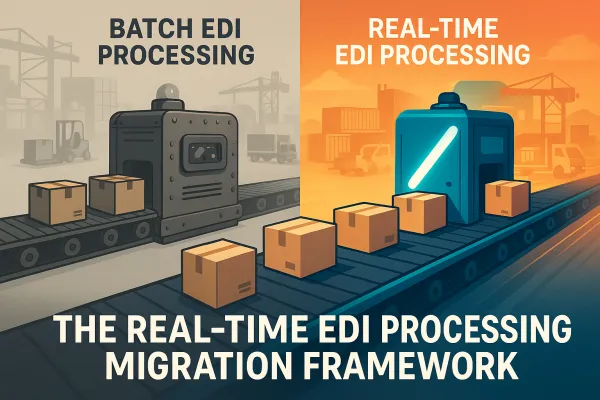
The shift from "we can integrate" statements to proven event-driven APIs over batch EDI has become critical. When your TMS vendor becomes an acquisition target, you inherit integration complexity without managing the project timeline. First, you lose control over technology roadmaps.
The Composable EDI Architecture Advantage: Building Vendor-Agnostic Integration
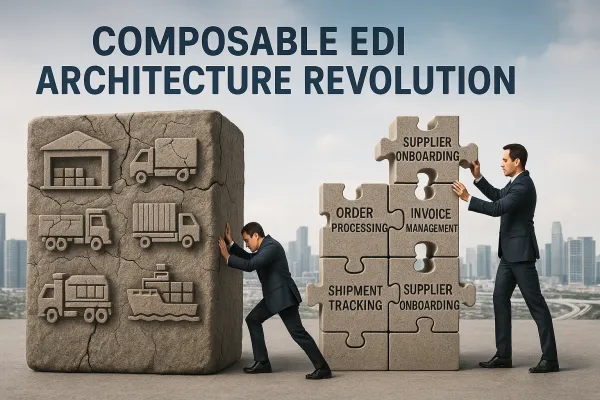
The future lies in Composable EDI: a modular approach where components can be independently deployed, replaced, or upgraded without impacting the entire system. This architectural shift addresses the fundamental vulnerability in traditional TMS-embedded EDI systems.
Traditional EDI systems were often built as monolithic platforms—rigid, tightly coupled, and difficult to modify. This matters because it allows IT leaders to upgrade specific components without risking the stability of the entire EDI environment.
Think of composable EDI as building blocks rather than monoliths. When your TMS vendor gets acquired, your EDI components can continue operating independently. By adopting clean architectural principles, organizations gain the flexibility to evolve their integrations, introduce new capabilities, and adapt to changing business requirements without disrupting core operations.
The practical advantage becomes clear during vendor transitions. Instead of ripping out entire EDI infrastructures, you modify specific components while maintaining trading partner connectivity. This approach works whether you're evaluating established platforms like Oracle TM and SAP TM, European specialists like Transporeon, or modern alternatives including Cargoson that focus specifically on European cross-border operations.
iPaaS vs. Traditional EDI Integration Models
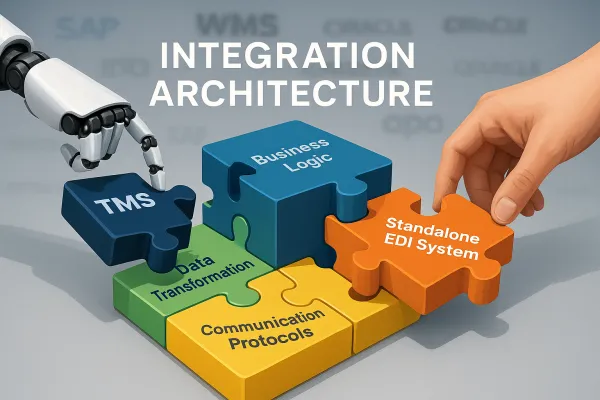
The most critical trends include the shift toward Composable EDI architectures and the adoption of iPaaS for unified integration. Integration Platform as a Service represents a fundamental shift from point-to-point connections to centralized management architectures.
Boomi provides a comprehensive platform with multiple modules for integration, API management, B2B/EDI exchanges, workflow automation ("Flow"), and master data management. Boomi's cloud-native AtomSphere platform uses low-code tools to build integrations that can run on cloud or on-premises ("Atoms"), enabling companies to link SaaS applications with on-premise systems seamlessly. It has been recognized for its ease of use and wide range of pre-built connectors, making it suitable for both traditional enterprise IT and modern cloud integration needs.
Most modern EDI iPaaS solutions offer connections to over 1,000 trading partners through a single integration platform. From one dashboard, users can easily connect systems, automate workflows, and monitor all transactions with minimal effort.
The hybrid advantage proves particularly relevant for European shippers. iPaaS solutions increasingly support hybrid integration architectures, connecting applications across both on-premises and cloud environments. This flexibility allows businesses to integrate legacy systems with modern cloud solutions effectively.
The Consolidation-Resistant TMS Evaluation Framework: 7 Critical Assessment Criteria
Moving beyond traditional feature checklists, this framework evaluates TMS vendors through the lens of consolidation resistance and integration architecture independence. Each criterion includes specific evaluation questions and vendor assessment techniques.
Criterion 1: Integration Architecture Independence
The fundamental question: Can your EDI and API integrations survive vendor changes without complete rebuild? Tightly coupled EDI within TMS creates single points of failure during acquisitions.
Ask vendors about their API-first architecture. How do they separate trading partner connectivity from core TMS functionality? The 2026 trend is an "API-First" approach, serving as a low-friction gateway for partners while EDI handles the heavy lifting behind the scenes.
European-focused vendors like Cargoson often provide clearer separation between TMS and integration layers compared to monolithic enterprise platforms. This architectural independence becomes critical when evaluating long-term vendor viability.
Test this by requesting detailed integration architecture diagrams showing data flow separation. Vendors with truly independent architectures can demonstrate how integrations continue operating even during TMS platform migrations.
Criterion 2: API-First Trading Partner Onboarding
Evaluate how vendors handle the shift from legacy EDI to modern API integration. Onboarding new trading partners is one of the biggest challenges in B2B integration. The 2026 trend is an "API-First" approach, serving as a low-friction gateway for partners while EDI handles the heavy lifting behind the scenes.
Ask for specific examples of trading partner onboarding timelines. Can smaller carriers connect via REST APIs while larger partners maintain EDI connections? The ability to support multiple integration patterns simultaneously indicates architectural maturity.
Compare vendor capabilities across the spectrum. Enterprise platforms like E2open/WiseTech may excel at traditional EDI volume but lag in modern API capabilities. Conversely, platforms like Cargoson often provide faster API onboarding for European carriers but may have limitations with legacy EDI requirements.
Criterion 3: Data Portability and Export Capabilities
Data portability clauses become non-negotiable in consolidating markets. Standard TMS contracts rarely address acquisition scenarios directly. Include specific clauses requiring 12-18 months advance notice of ownership changes, with automatic contract review rights triggered by acquisition announcements.
Specify data format requirements beyond standard exports. You need trading partner configurations, mapping templates, and integration logic—not just transactional data. Test this during vendor evaluations by requesting sample data exports in standardized formats.
European vendors often provide better data portability due to GDPR compliance requirements. However, verify that portability extends beyond personal data to include all integration configurations and business logic.
Criterion 4: Vendor Financial Stability and M&A Risk Assessment
Financial evaluation extends beyond revenue figures in consolidating markets. Start with financial stability assessment. Look beyond current revenue figures to understand how recent acquisitions impact the vendor's cash flow, development priorities, and customer service capacity.
While WiseTech has demonstrated consistent profitability and growth, e2open has struggled with financial performance in recent years, reporting declining revenue and net losses in recent fiscal years. This creates uncertainty about long-term platform investment priorities.
Evaluate acquisition likelihood based on market position and strategic value. Smaller innovative vendors like Cargoson may face acquisition pressure as they gain market traction, while established players like Oracle TM and SAP TM represent stable but potentially stagnant options.
Red flags include declining R&D spending, frequent executive turnover, and delayed product roadmap deliveries. Request customer references specifically about vendor stability concerns and communication during challenging periods.
Criterion 5: Multi-Vendor Integration Testing
Limited testing environments create challenges during vendor transitions. Most TMS evaluations focus on single-vendor scenarios, ignoring the complexity of parallel system operations during migrations.
Request staging environments that simulate real trading partner connections. Can you test EDI transactions with actual carriers during evaluation? How quickly can vendors provision test environments for your specific use cases?
Address the reality that Your backup vendor qualification should include pre-negotiated implementation timelines, data migration support, and compliance feature equivalency. This isn't paranoia – it's prudent risk management in a consolidating market.
European vendors like Cargoson often provide faster test environment provisioning compared to enterprise platforms with complex approval processes. However, ensure testing environments include actual European carrier connections, not just simulated scenarios.
Criterion 6: Regulatory Compliance Future-Proofing
As of January 2026, eFTI platforms and service providers can start preparing for operations, with Member States authorities potentially starting to accept data stored on certified eFTI platforms for inspection. Member States authorities may start accepting data stored on certified eFTI platforms for inspection from January 2026.
Use compliance deadlines as vendor evaluation criteria. The eFTI compliance deadline creates procurement leverage that savvy buyers can exploit. Vendors need your business to validate their eFTI implementations and demonstrate market traction to potential acquirers.
Compare vendor approaches to European regulations. Some focus on checkbox compliance while others integrate regulatory requirements into core platform architecture. European-native vendors like Cargoson often provide deeper regulatory integration compared to global platforms adapting to European requirements.
Criterion 7: Real-World Migration Track Record
Move beyond vendor promises to actual migration success rates. According to the Standish Group's CHAOS 2020 report, 66% of technology projects end in partial or total failure, with McKinsey research showing that 17% of large IT projects threaten the very existence of the company.
Ask vendor references specific questions about consolidation experiences. How did they handle platform migrations after acquisitions? What support was provided during integration challenges?
Request detailed case studies from similar European manufacturers or distributors. Generic success stories from different industries provide limited insight into your specific challenges.
Implementation Roadmap: Rolling Out Consolidation-Resistant Integration
This phased approach balances risk management with operational requirements while maintaining trading partner connectivity throughout the transition.
Phase 1: Current State Assessment and Risk Analysis
Start with honest evaluation of existing TMS and EDI systems. Your procurement framework needs five distinct evaluation phases: vendor financial analysis, European compliance verification, carrier integration assessment, TCO modeling over 5-7 years, and implementation risk evaluation.
Map your current integration dependencies. Which trading partners rely on specific EDI formats? How many custom connections would break during vendor transitions? This analysis reveals hidden consolidation risks.
Score vendor acquisition risk using financial data, market position analysis, and strategic value assessment. Create weighted scoring that balances innovation capabilities against stability concerns.
Phase 2: Vendor Evaluation and Selection Process
Structure evaluations around consolidation scenarios, not just current functionality. Your procurement team should evaluate the full vendor landscape now while options remain available. This includes established platforms like MercuryGate, Descartes, E2open, Manhattan Active, Oracle TM, and SAP TM alongside European specialists like Alpega, nShift, Transporeon, and modern alternatives including Cargoson that focus specifically on European cross-border operations.
Use compliance requirements as differentiation criteria. This timeline creates negotiation leverage – vendors who can deliver compliant solutions early gain competitive advantage. Structure your compliance-first approach around three negotiation pillars: Certification Timeline Milestones: Use eFTI platform certification deadlines as contract delivery requirements.
Weight evaluation criteria based on your risk tolerance. Organizations requiring maximum stability might favor Oracle TM or SAP TM despite higher costs. Those prioritizing European expertise and flexibility might prefer Cargoson or similar European-native platforms.
Phase 3: Integration Architecture Design and Testing
Design integration architecture with vendor-agnostic principles. The trend for 2026 is the migration toward platforms that handle everything in one place. When you unify these systems, you reduce vendor sprawl and future-proof your tech stack.
Implement parallel system operation strategies during transitions. This requires careful planning of data synchronization, trading partner communication, and rollback procedures if issues arise.
Test consolidation scenarios explicitly. Can your integration architecture survive vendor changes without trading partner disruption? This testing proves more valuable than feature demonstrations for long-term success.
Future-Proofing Your Investment: Monitoring and Adaptation Strategies
The vendor landscape will look dramatically different by 2026. This perfect storm creates a narrow procurement window. Organizations that implement proper monitoring and adaptation strategies protect themselves against future market disruptions.
Establish vendor health monitoring beyond financial metrics. Track development velocity, customer satisfaction trends, and market position changes. Early warning indicators include delayed feature releases, reduced conference presence, and customer reference reluctance.
Build relationships across multiple vendor categories. Maintain connections with global mega-vendors for scale requirements, European specialists for regional expertise, and innovative platforms like Cargoson for emerging capabilities. This portfolio approach provides options when market conditions change.
The convergence of capacity shortages and vendor consolidation creates urgency, but rushed decisions amplify hidden costs and implementation risks. European shippers who act decisively within the next 90 days—with proper frameworks that account for both capacity and consolidation scenarios—position themselves to navigate 2026's perfect storm successfully. Those who delay risk joining the statistics of failed implementations and budget overruns that plague reactive procurement strategies.
The composable EDI framework isn't just about surviving vendor consolidation—it's about thriving in uncertainty. Organizations that adopt vendor-agnostic integration architectures, evaluate TMS platforms through consolidation resistance criteria, and implement monitoring strategies position themselves for sustainable competitive advantage regardless of how the vendor landscape evolves.
Your next TMS decision determines whether vendor consolidation becomes a strategic opportunity or an expensive operational disruption. The framework exists. The window remains open. The question is whether you'll act before the market decides for you.