The TMS Vendor PEPPOL Integration Crisis: How to Evaluate Transportation Management System Compliance Readiness Before 2026's European E-Invoicing Deadlines Force Emergency Vendor Switching

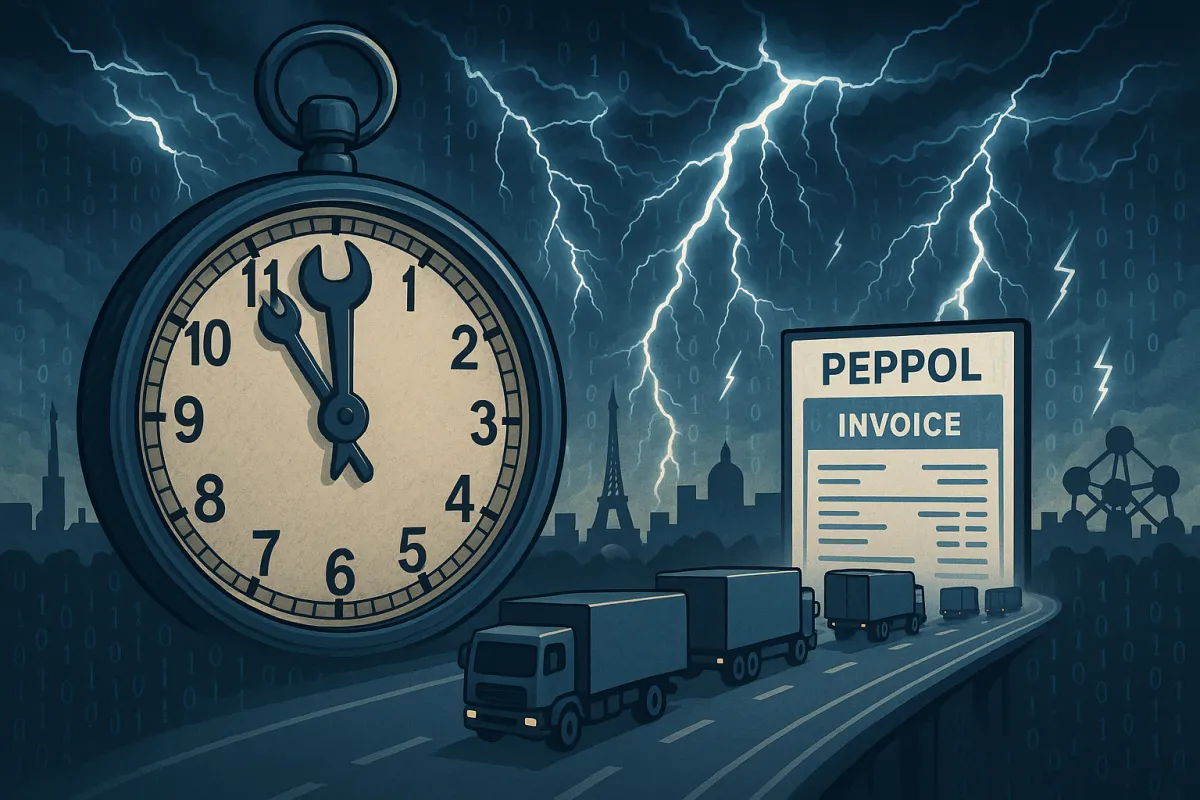
European transportation management system vendors face an unprecedented crisis. With fines of up to €1,500 per infringement now in force following Belgium's January 1, 2026 mandate for structured B2B e-invoices in EN 16931 format transmitted via Peppol, and France delivering the year's biggest go-live in September 2026 requiring large and mid-sized businesses to send and receive structured e-invoices, TMS providers are scrambling to integrate PEPPOL capabilities before their customers face a vendor selection crisis.
The scale of this transformation is staggering. While transport operators have been adapting their invoicing processes, if your TMS or invoicing setup isn't Peppol-ready, compliance can sound complicated – but it doesn't have to be. The challenge lies not in understanding PEPPOL itself, but in the implementation complexity that most TMS vendors underestimated.
The Hidden Implementation Cost Crisis Hitting TMS Budgets
Budget overruns hit 75% of European TMS implementations, and 66% of technology projects end in partial or total failure. But here's what catches European transport departments off-guard: €50,000+ budget overruns hitting most European manufacturers aren't inevitable - they're the predictable result of treating complex cross-border integration requirements like simple software purchases.
Budget overruns hitting 75% of European TMS implementations have a specific pattern when PEPPOL integration is involved. A basic domestic shipper requires 10-15 integrations minimum, potentially totaling 1,000-1,500 hours of labor. For shippers with freight spend exceeding $250M annually, implementation can cost 2-3 times the subscription fee.
The budget planning reality reveals troubling math. Plan for 15-20% budget increases in 2026-2027 if reactive, or 8-12% if proactive with proper contract protection. These increases aren't optional when regulatory compliance becomes mandatory.
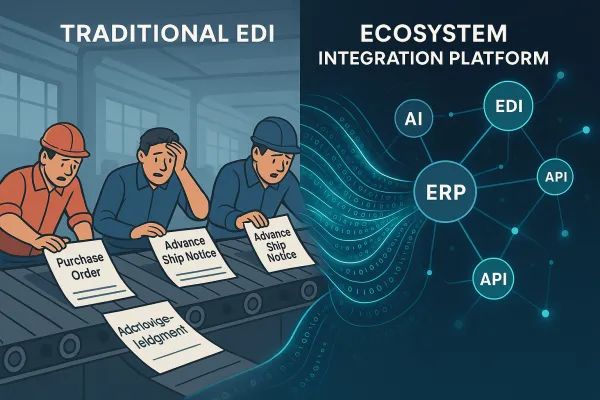
Legacy TMS and accounting tools weren't built with modern e-invoicing in mind, making retrofitting PEPPOL compliance expensive, slow, and complex. European TMS providers must now choose between costly platform overhauls or losing customers to competitors with native PEPPOL integration.
How Vendor Consolidation is Limiting TMS-PEPPOL Options
The TMS market landscape changed dramatically in 2025. WiseTech's acquisition of E2open in 2025, Descartes' purchase of 3GTMS for $115 million in March 2025, and Körber's transformation of MercuryGate into Infios following their 2024 acquisition represent just the beginning of a fundamental market restructuring. The deal marks Descartes' 32nd acquisition since 2016.
WiseTech Global's $2.1 billion acquisition of E2open is more than a headline—it's a directional shift for one of the industry's biggest technology players. With the addition of E2open's 500,000+ connected enterprises and its legacy platforms like INTTRA—responsible for around 25% of global ocean bookings, the consolidation creates three distinct categories.
The post-consolidation landscape reveals three distinct categories: global mega-vendors (Infios/MercuryGate, Descartes, SAP TM, Oracle TM, E2open/WiseTech), European specialists (Alpega, nShift, Transporeon/Trimble), and emerging European-native solutions (including Cargoson) that focus specifically on cross-border European operations.
Companies undergoing integration often experience 12-18 months of reduced innovation while they harmonize platforms and teams. This timing couldn't be worse for PEPPOL readiness. While vendors focus on internal consolidation, their customers need urgent compliance solutions.
TMS Vendor PEPPOL Readiness Assessment Framework
Major platforms approach PEPPOL integration with varying degrees of sophistication. Oracle TM, Manhattan Active, and Descartes have enterprise-grade capabilities, but implementation complexity can be significant. European shippers evaluating platforms should understand that vendors like MercuryGate (now Infios), Blue Yonder, Oracle TM, and Cargoson are implementing these capabilities differently, with varying levels of European market focus and regulatory compliance understanding.
Smart procurement teams evaluate specific criteria: API-first architecture, pre-built PEPPOL connectors, testing environments, and vendor compliance roadmaps. Not all vendors treat European regulations equally. Global platforms like Oracle TM and SAP TM provide enterprise integration advantages and broader functional scope but may deprioritize European-specific features during consolidation activities. The choice depends on organizational priorities between regional optimization and global standardization.
Testing becomes critical because issues such as rounding, non-standard country codes, incomplete or mismatched addresses triggered validation warnings or downstream processing failures. Another example is the incorrect or missing Participant ID, which results in non-delivery of the e-invoice.
When evaluating modern TMS solutions like Cargoson alongside established players, look for vendors demonstrating both technical capabilities and acquisition resistance that protects your implementation investment.
The European-Native TMS Advantage in PEPPOL Implementation
SAP TM dominates German operations, MercuryGate focuses heavily on North American markets, while Alpega and Cargoson compete more directly for cross-border European business. Regional vendors typically offer faster regulatory response times for European compliance requirements.
European-based development teams understand these regulatory nuances better than global vendors treating European compliance as secondary market requirements. When France revised its PA specifications, Poland updated its FA(3) schema, Spain delayed its VeriFactu timeline, and Belgium introduced a last-minute tolerance period, European specialists adapted faster.
European specialists provide more transparent pricing models built specifically for cross-border European operations. While global vendors often surprise customers with hidden compliance fees, Cargoson and other modern European TMS providers often include implementation support in their pricing models, contrasting with traditional enterprise vendors who separate these services.
This creates opportunities for European-focused solutions like Cargoson, Transporeon, and Alpega that understand specific operational requirements of cross-border European freight. They maintain development resources focused exclusively on European market needs.
Implementation Strategy: Avoiding the 66% Failure Rate
66% of technology projects end in partial or total failure, with 17% of large IT projects threatening company existence. The key difference for successful PEPPOL integrations lies in starting compliance projects on time to gradually become familiar with PEPPOL, giving space to adjust processes and detect errors.
Phased implementation strategies work best. Start with core functionality in Q2-Q3 2025, activate AI features in Q4 2025, and ensure eFTI compliance by Q1 2026. TMS implementation usually takes 1-2 months for smaller shippers and 3-6 months for larger, more complex networks.
API-first integration strategies provide superior flexibility. The three emerging categories—global mega-vendors (Oracle TM, SAP TM, E2open/WiseTech), European specialists (Alpega, nShift, Transporeon), and emerging European-native solutions like Cargoson—offer different risk profiles for long-term strategy planning.
Contract protection becomes essential during consolidation periods. Acquisition-resistant contracts require specific protections including 12-18 months advance notice for ownership changes, guaranteed functionality preservation for minimum periods, and migration assistance rights. Include specific clauses requiring 12-18 months advance notice of ownership changes, with automatic contract review rights triggered by acquisition announcements.
Future-Proofing Your TMS Investment Beyond 2026
The decree highlights Peppol as a critical component of Belgium's future near real-time e-Reporting system, planned for implementation in 2028, aligned with the ViDA initiative. This represents just the first phase of European digital transformation.
PEPPOL becomes part of the next phase of digital trade in Europe. Poland will expand B2B e-invoicing mandates by February 2026 for large taxpayers and by April 1 for all others, with a sanction-free period during 2026. Spain will require B2B transactions to use e-invoicing during a phased rollout, starting in the second half of 2026.
Building vendor-agnostic integration strategies requires API-first architectures that adapt to changing requirements without major re-implementation projects. Modern TMS solutions designed with interoperability at their core can add new integrations, including enhanced PEPPOL connectivity, without disrupting existing operations.
The procurement window for securing TMS platforms before vendor consolidation eliminates choices runs through Q1 2026. European transport teams who act decisively now - with proper evaluation frameworks that account for both PEPPOL readiness and consolidation risks - position themselves to navigate 2026's perfect storm successfully. Those who delay risk joining the statistics of failed implementations and budget overruns that plague reactive procurement strategies.