The 5 Critical EDI Adoption Barriers Blocking 70% of SMEs in 2025 (And Proven Solutions That Cut Implementation Costs by 60%)

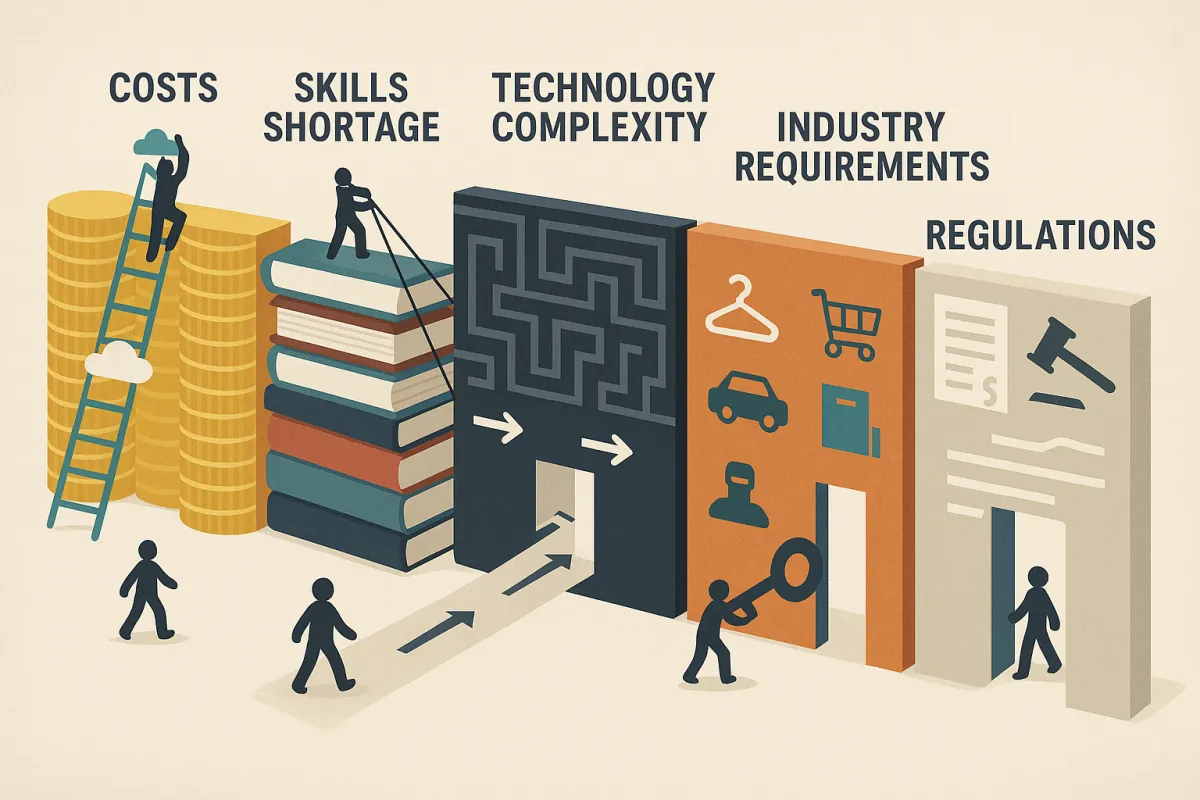
Despite the increasing adoption of digital technology, small and medium enterprises (SMEs) continue to lag behind larger firms. While 85% of SMEs recognize digital transformation benefits and 68% see digitalization as crucial, most struggle with EDI adoption barriers that prevent them from accessing larger trading partners and supply chains.
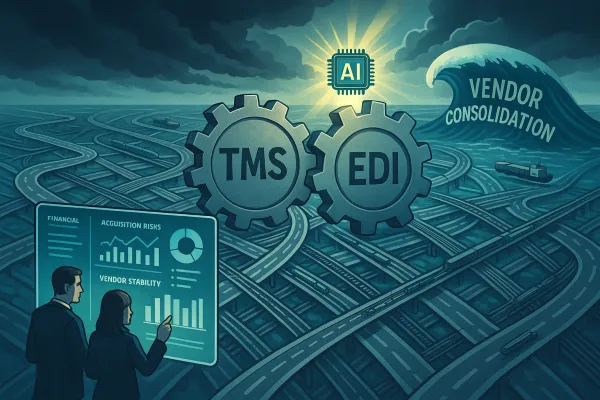
The EDI landscape has consolidated dramatically. Over 75% of the EDI industry revenue is concentrated in five public companies: OpenText, SPS Commerce, Descartes, Sterling Commerce (IBM) & Axway, and two private companies: Boomi and TrueCommerce. This consolidation creates both challenges and opportunities for SMEs looking to implement EDI solutions.
Here's the reality: the electronic data interchange (EDI) market is observing significant growth owing to the rising digital transformation across various industries and the growing adoption of EDI in small and medium enterprises. Yet many SMEs remain locked out by five critical barriers that can be overcome with the right strategies and cost-effective approaches.
Barrier 1: High Implementation and Maintenance Costs - The 40% Problem
The OECD study identified the primary obstacles preventing SMEs from fully embracing digital transformation: Maintenance costs (40%) – Ongoing expenses for software updates, fixes and technical support. This represents the single biggest hurdle for SME EDI adoption barriers.
The cost structure breaks down into three painful categories. High Costs: Upfront investments, maintenance, and training are expensive, with these businesses face three main expenses: upfront investments, ongoing maintenance, and employee training.
Morgan Leucat, Director IT Sales at Konica Minolta, captures the dilemma perfectly: "Costs and effort for IT have increased in most companies. At the same time, many SMEs do not have the internal IT resources that are available to bigger companies".
The Cloud Solution That Changes Everything
One of the main advantages of cloud-based EDI is its cost-effectiveness. Traditional EDI usually requires a large upfront investment in infrastructure, software licensing, and ongoing maintenance. However, a cloud-based model follows a subscription or pay-as-you-go basis, which eliminates large capital expenditures.
To ease these financial pressures, many SMEs turn to cloud-based solutions. These replace hefty upfront costs with manageable, recurring fees. Companies like Cargoson, alongside major players like SPS Commerce and TrueCommerce, now offer EDI implementation costs that work for smaller budgets.
Traditional systems require a big upfront investment, but cloud and web-based EDI have made things more affordable — especially for small and mid-sized businesses. These options cut down on infrastructure costs and are easier to maintain. Many providers offer flexible pricing so businesses can start small and scale up as they grow without major expenses.
Barrier 2: Skills Shortage and Training Gaps - The 39% Challenge
The numbers are stark. 79% of employers report skill shortages, especially in tech and AI, making it hard to use advanced systems effectively. More specifically, Lack of time for training (39%) – Insufficient capacity to develop necessary skills ranks as the second-biggest barrier.
The problem compounds when you look at training effectiveness. 33% of employees receiving less than an hour of training during software rollouts, with 63% stopping use of technology they find irrelevant. This creates a vicious cycle where inadequate EDI training programs lead to system abandonment.
Managed Services and Smart Training Strategies
Training costs can also be reduced through smart strategies. For example, Orange™ introduced a knowledge management system that cut agent training time in half while maintaining high-quality service for its 256 million customers.
The Verizon Small Business Digital Ready program shows what's possible: provided over $1 million in funding and hosted more than 200 events in 2024. Programs like this align with broader strategies for digital transformation.
Solutions include partnering with providers offering EDI managed services - companies like Cargoson, TrueCommerce, and SPS Commerce that handle the technical complexity while your team focuses on business outcomes. To address these challenges, 25% of employees are looking for technology/IT training, while 21% want to learn about AI. For SMEs seeking more structured guidance on digital transformation and technology adoption, advisory services like Growth Shuttle can provide tailored support.
Barrier 3: Technology Complexity and Integration Challenges
The survey found a lack of qualified in-house personnel, a lack of budget and the complexity of integrating these technologies to be the three primary barriers to adoption for SMEs. Complexity of integration was the third largest barrier, with 38% identifying it as a main concern.
SMEs often feel overwhelmed by systems that don't align with their existing workflows. So far, we have learned that adoption of digital solutions faces significant challenges even in firms that are interested in making this change and have been offered a platform free of charge. One reason may be that the benefits of this technology are less tangible since they are not directly tied to a specific production process and may thus be difficult to observe or more uncertain from the outset.
Hybrid EDI-API Solutions Simplify Integration
Modern platforms now support both EDI and API technologies working together. Offers hybrid EDI solutions, combining traditional EDI with API-driven workflows. Ideal for SMBs seeking flexibility. This approach reduces EDI integration challenges by letting companies gradually transition from legacy systems.
Integration Compatibility: Ability to integrate with commonly used SMB tools such as QuickBooks, Shopify, and NetSuite. Providers like Cargoson now offer pre-built connectors that eliminate much of the technical complexity previously required.
Barrier 4: Limited Awareness of Available Solutions and Support
The awareness gap is significant. financial incentives to support digital adoption remain a key concern, with barriers to accessing and navigating existing financial support. Many SME EDI solutions exist but remain unknown to the businesses that need them most.
Government support programs suffer from poor uptake. Despite the UK's global leadership in tech and AI, smaller SMEs can face persistent barriers to digital adoption. The challenge isn't lack of programs - it's lack of awareness about small business EDI providers that offer accessible solutions.
Educational Resources and Vendor Guidance Bridge the Gap
The solution involves better educational resources and clearer vendor comparisons. Today over 75% of the EDI industry revenue is concentrated in five public companies: OpenText, SPS Commerce, Descartes, Sterling Commerce (IBM) & Axway, and two private companies: Boomi and TrueCommerce. OpenText, SPS Commerce, Sterling Commerce, Descartes & True Commerce all offer B2Bi software, Value Added Networks, and Value Added Supply Chain SaaS applications.
But newer players like Cargoson are making EDI more accessible by focusing specifically on SME needs, offering solutions designed for companies without extensive IT departments or massive implementation budgets.
Barrier 5: Cultural Resistance and Change Management
Resistance from employees is a major reason why up to two-thirds of change management efforts fail in small and medium-sized enterprises (SMEs). This resistance can show up as outright opposition or subtle disengagement, both of which can derail the adoption of new technologies.
The fear factors are real. Employee Resistance: Fear of job loss, lack of training, and unclear communication lead to pushback during tech rollouts. When you combine this with inadequate training - where 33% of employees receiving less than an hour of training during software rollouts, with 63% stopping use of technology they find irrelevant - you get systematic EDI change management failure.
Phased Implementation and Employee Involvement
Research shows clear pathways to success. Getting employees involved early improves success rates by 15%, with clear communication and support systems essential. The key is treating change management as seriously as technology selection.
Successful employee EDI training involves showing immediate, tangible benefits rather than abstract productivity improvements. short, practical training sessions that demonstrate specific AI applications within job roles can increase employee confidence and incentivise use of AI · SMEs with clear internal policies permitting AI use are more likely to adopt AI tools. Conversely, ambiguity or lack of guidance often leads to hesitation among employees · SMEs where leadership actively support and communicates the benefits of AI adoption see higher engagement and implementation rates among employees.
The 60% Cost Reduction Strategy Framework
Here's how successful SMEs cut EDI implementation costs by 60% while avoiding the barriers above:
Step 1: Choose Cloud-First Solutions
Cloud-Based Solutions: Cloud-based EDI ensures accessibility, flexibility, and reduced infrastructure costs. Cost effectiveness: Cloud based EDI is very cost effective because it eliminates the need for large investments in the EDI infrastructure. This greatly reduces upfront costs. Cloud EDI majorly reduces upfront costs and eliminates the need for ongoing maintenance.
Step 2: Start with Managed Services
Companies like Cargoson, SPS Commerce, and TrueCommerce offer different levels of management. A big plus is that you do not need any in-house EDI expertise. Our EDI experts are happy to help.
Step 3: Focus on Integration-Ready Platforms
Integration Compatibility: Ability to integrate with commonly used SMB tools such as QuickBooks, Shopify, and NetSuite. This eliminates custom development costs.
Step 4: Implement Phased Rollouts
Rather than big-bang implementations, successful SMEs start small. Scalability As You Need It: Cloud EDI allows you to easily add documents, trading partners, or integrations without fussy hardware upgrades or pricey additional licenses. This flexibility ensures EDI cloud services can grow alongside business needs, providing unmatched scalability.
Step 5: Prioritize Employee Involvement
Remember that Getting employees involved early improves success rates by 15%, with clear communication and support systems essential. Make training practical and job-relevant.
Real Results from Cost-Effective Implementation
A mid-sized retail company case study demonstrates the potential: Reduced Errors: A 95% reduction in transaction errors. Cost Savings: Saved 30% on annual EDI-related expenses. Faster Transactions: Reduced order processing time from 48 hours to 12 hours. The retailer now enjoys seamless scalability and better partner relationships.
Another example shows broader impact: a case study by Gartner highlights a retail company that saw a 50% reduction in order processing times after switching to a cloud-based EDI solution.
The Competitive Advantage of Early EDI Adoption
The OECD research identified the primary benefits SMEs report from successful digital adoption: Process automation (53%) – Reducing manual tasks and increasing efficiency · Customer base expansion (39%) – Reaching new markets and demographics · Increased domestic sales (35%) – Growing revenue within existing markets.
EDI specifically enables SMEs to access previously unreachable markets. according to Generix Group data of March 2024, around 86% of businesses are using EDI to fulfill trading partner requirements and facilitate compliance with industry standards. Without EDI, you're locked out of 86% of potential B2B relationships.
The market growth supports early adoption. The electronic data interchange market was valued at US$34.02 billion in 2024 and is projected to reach US$74.36 billion by 2031; it is expected to register a CAGR of 11.9% during 2025-2031. This growth creates opportunities for SMEs who move early while their competitors remain trapped by the five barriers.
Future-proofing considerations matter too. Rise of JSON-Based EDI: JSON's readability and API compatibility make it the preferred choice for modern businesses. AI and Machine Learning: Advanced analytics and automation are enhancing the efficiency of EDI systems. Sustainability Focus: Eco-friendly and energy-efficient EDI solutions are gaining traction as businesses prioritize sustainability.
The choice is clear: overcome the five barriers now with proven cost-reduction strategies, or watch competitors gain market access while you remain locked out. Cloud-based solutions from providers like Cargoson, combined with the established capabilities of SPS Commerce, TrueCommerce, and others, make 2025 the year when SME EDI adoption barriers finally become surmountable for businesses ready to invest in their digital transformation future.