The 7 Critical EDI-API Hybrid Integration Challenges Blocking TMS Projects: Your Complete Problem-Solving Framework for Successful Implementation in 2025

Most TMS implementations require significant investment, with 63% of IT decision-makers saying the EDI onboarding process takes too long because of all the different customized requirements demanded by trading partners. Yet behind these delays lurks a deeper problem: the partner buy-in still tops the list of challenges blocking hybrid EDI-API integrations in 2025.
When a German automotive manufacturer discovered their €800,000 spent, they realized their new system couldn't handle their complex carrier network across 12 countries, they joined the ranks of organizations learning why 66% of technology projects based on the analysis of 50,000 projects globally end in partial or total failure. The stakes get higher when you factor in that average price of a TMS system varies from US$36K to US$150K within the first year, and from US$300K to US$1M within five years.
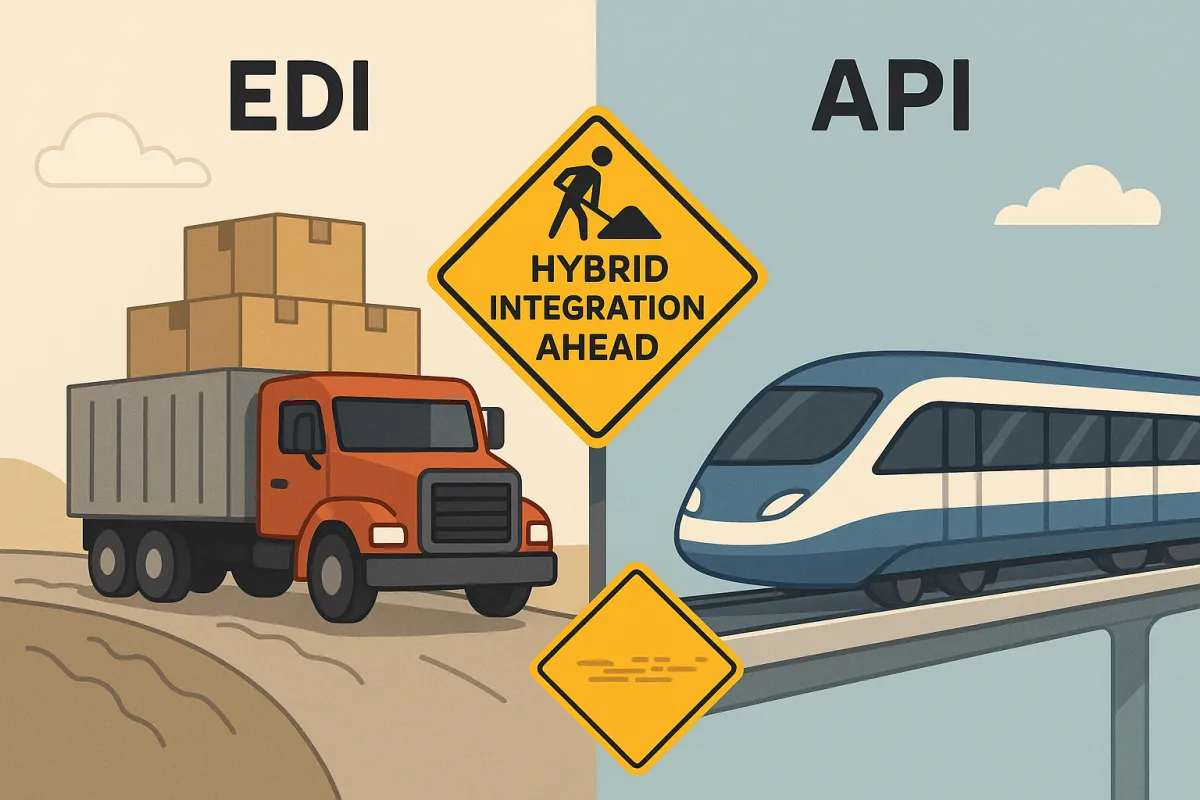
The root cause isn't the technology itself. Much of supply chain data still moves through scheduled batch transmissions via Electronic Data Interchange (EDI). Meanwhile, modern APIs can push the same information in real time. The challenge isn't choosing one over the other — it's gaining the speed and visibility of APIs without disrupting the EDI connections that partners already depend on.
Challenge #1: Partner Buy-In and Legacy System Dependencies
Your biggest technical hurdle isn't servers or code. Partner buy-in still tops the list of barriers preventing successful hybrid implementations. Trading partners invested decades building reliable EDI processes. Replacing EDI entirely isn't a viable option for most businesses that operate on a supply chain. Partner requirements, industry standards, and legacy systems make a complete transition unrealistic.
Here's what actually happens: your largest customer uses a 15-year-old EDI system that processes 40,000 transactions monthly without errors. They've built compliance processes, trained staff, and integrated this system with their ERP. When you suggest APIs, they see risk, retraining costs, and potential disruption to proven workflows.
The solution requires a phased migration approach. Partner readiness – confirm each carrier or supplier can connect to the new channel or keep sending a backup EDI file. Cut‑over plan – run a short pilot and keep the old file feed open until loads flow smoothly. Start with high-volume, tech-forward partners who can handle API connections while maintaining EDI channels for traditional partners.
Companies like Cargoson have built platforms specifically to handle these transitions alongside established providers like TrueCommerce and SPS Commerce. Companies like Cargoson, Cleo, and TrueCommerce excel at handling multiple format variations from a single interface.
Challenge #2: Technical Integration Complexity Between EDI and API Systems
The technical reality hits when you try connecting systems that speak fundamentally different languages. Integrating EDI with TMS can be technically challenging, especially for organizations with outdated systems or limited IT resources. Businesses may need to invest in middleware solutions to bridge the gap between legacy systems and modern EDI requirements.
Mapping mismatches: Every TMS platform structures its data differently. Without precise mapping between new and existing fields, critical information can be dropped or misrouted. Your EDI 204 load tender contains 47 data elements. Your new API endpoint expects JSON with different field names, data types, and validation rules. Manual mapping becomes a nightmare when you're handling multiple document types across dozens of partners.
Many businesses need to connect EDI workflows with APIs, flat files, databases, or SaaS apps like Shopify, QuickBooks, or Salesforce. Traditional EDI systems fall short here. This gap often leads to costly middleware solutions, bolt-on integrations, or manual processes outside the EDI environment, defeating the purpose of automation.
The integration complexity multiplies when you consider protocol differences. Older EDI connections often rely on protocols like FTP or AS2. If the new TMS doesn't support those methods or supports them differently, message delivery can fail entirely.
Modern platforms address this through unified integration architectures. IBM Sterling offers comprehensive mapping tools, while Cleo provides protocol translation capabilities. Newer solutions like Cargoson build API-first architectures that can handle both EDI translation and real-time API calls within the same workflow.
Challenge #3: Real-Time vs. Batch Processing Conflicts
The fundamental timing mismatch creates operational friction that most organizations underestimate. EDI bundles orders, invoices, and shipment notices into standard file formats like X12 and UN/EDIFACT. Because the files move on a fixed schedule, updates can take hours to reach the next system. Meanwhile, your new API integration expects real-time responses for inventory checks and load confirmations.
Consider this scenario: your driver delivers a shipment at 2 PM. The API immediately updates the TMS with proof of delivery. But your customer's EDI system won't receive the status update until the next scheduled batch runs at 6 PM. During those four hours, customer service receives calls asking about delivery status, creating unnecessary friction.
While modern EDI systems can transmit documents in near real-time, some legacy or flat file-based implementations may still rely on scheduled batch processing. This setup can introduce slight delays compared to APIs, which are often used for real-time data exchange—especially for dynamic needs like inventory availability. Businesses that require instant, synchronous communication may consider supplementing or integrating EDI with APIs depending on their use case and trading partner capabilities.
The synchronization challenge extends beyond timing. Rolling out APIs gives you data in seconds, but any mistake shows up just as fast. If a partner's old system can't connect, planners end up re‑keying loads; if a security token expires, trucks can't be booked.
Solutions require hybrid monitoring systems that can track both batch and real-time flows. Alpega and Oracle TM provide traditional batch processing capabilities, while platforms like Cargoson offer real-time API processing with EDI translation as backup. The key is implementing live monitoring & rollback – trigger alerts on the first failed call and fall back to EDI until success rates stay above 99.9%.
Challenge #4: Security and Compliance Gaps in Hybrid Environments
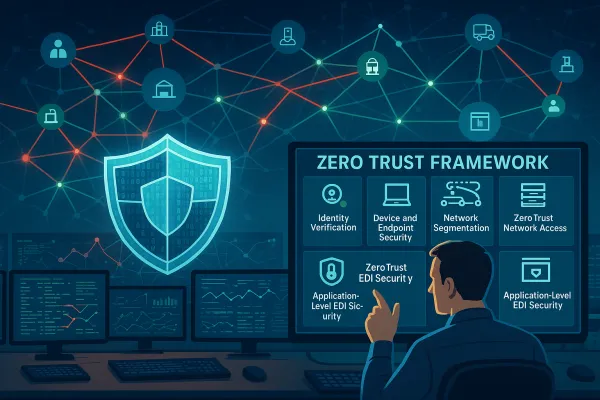
Security complexity multiplies when you're managing both EDI and API protocols. Integration challenges: EDI needs to integrate seamlessly with existing business systems, which can be a technical hurdle for some companies. Each protocol brings different security models, authentication methods, and compliance requirements.
EDI typically uses established protocols like AS2 with certificate-based authentication and encryption. APIs often use OAuth tokens, API keys, or JWT tokens. Managing certificate renewals, token refreshes, and protocol-specific security becomes a full-time job. One expired certificate can break EDI flows while an expired API token stops real-time updates.
New integrations mean more endpoints and higher risk. Sensitive transaction data must meet compliance standards, such as HIPAA, GDPR, and CCPA. Solution: With deep expertise in compliance and data protection, Remedi supports secure EDI integration solutions that include encryption, tokenization, and audit capabilities, helping clients meet industry-specific regulatory requirements.
Cross-border operations add regulatory complexity. Plan for different data privacy requirements across European countries. GDPR compliance isn't just about having a privacy policy—it affects how you can store and process transportation data across borders.
Enterprise solutions like SAP TM and Manhattan focus heavily on compliance frameworks but can be rigid in hybrid scenarios. Cloud-native platforms like Cargoson build compliance into their API architecture while maintaining EDI security standards. The key is finding solutions that provide unified security management across both protocols rather than managing them separately.
Challenge #5: Scalability and Performance Bottlenecks Under Network Dependencies
Network dependency becomes the Achilles heel of hybrid systems. Some months are busier than others. If your EDI system can't keep up, everything slows down. Modern iPaaS platforms don't have this issue; they scale as you grow, whether you're sending a few hundred documents or a few million, there is no issue of downtime.
But APIs introduce different scaling challenges. If a partner's old system can't connect, planners end up re‑keying loads; if a security token expires, trucks can't be booked. Network latency, API rate limits, and connection timeouts create new failure points that don't exist in batch EDI processing.
Volume handling becomes complex when you're mixing protocols. USA Truck discovered their EDI tools couldn't scale when they expanded their carrier network from 200 to 500+ partners. Processing times increased from 2 minutes to 45 minutes for standard load tenders. Adding API calls to this mix without proper architecture planning multiplies the performance problems.
The network dependency issue affects reliability differently than traditional EDI. Many vendors now host modern cloud edi hubs that stream files through permanent sockets. This is sometimes sold as "real time edi", yet those file streams still carry the bulk of an X12 or EDIFACT document. Unlike the hybrid gateway services we discussed earlier, cloud EDI keeps you tied to full file batches rather than letting you send single updates on demand. For high‑volume lanes, direct APIs are still faster and cost less.
FreightPOP and E2open offer traditional scaling approaches focused on EDI volumes. Cargoson's architecture handles both EDI batch processing and API scaling within the same infrastructure, allowing organizations to optimize performance based on partner capabilities and transaction volumes.
Challenge #6: Hidden Implementation Costs and ROI Calculation Complexity
The initial investment for integration can be substantial, but hidden costs emerge during hybrid implementations. The price of system integration depends on existing infrastructure complexity and required connections. Basic API integrations typically cost between $5,000 and $15,000, while connecting with complex ERP systems might exceed $50,000. Organizations frequently need custom features and specific workflow adjustments, which increase costs but improve operational efficiency.
Training costs multiply in hybrid environments. Single-day training sessions start at $1,500, while complete onboarding packages range from $10,000 to $30,000. Online training options cost significantly less than in-person sessions. Staff must understand both EDI document structures and API integration patterns, effectively doubling the learning curve.
Ongoing maintenance creates budget surprises. Regular maintenance costs should be included in budget planning, usually amounting to a percentage of the initial investment each year. These fees support system updates, technical assistance, and regular performance improvements. Managing both EDI and API protocols means maintaining expertise in two different technology stacks.
The ROI calculation becomes complex when benefits arrive at different rates. Stakeholders often hesitate to greenlight projects without a clear path to return on investment. Solution: Remedi begins every project with a comprehensive business case and a clear ROI framework. Using tools like our EDI Cost Savings Calculator, clients can model potential savings from automation, reduced error handling, and lower transaction latency.
Vendor cost structures vary significantly. 3Gtms and Blue Yonder typically charge based on transaction volumes and user licenses. Platforms like Cargoson often provide transparent pricing that includes both EDI and API capabilities, reducing the need for separate vendor relationships and integration costs.
Challenge #7: Skills Gap and Resistance to Hybrid Technology Management
The human element creates the most persistent implementation barrier. Your EDI team understands X12 transaction sets, mapping specifications, and AS2 protocols. Your development team knows REST APIs, JSON schemas, and OAuth authentication. But hybrid EDI-API systems require expertise in both domains, and few professionals have this combined skill set.
Employees may resist adopting new technologies due to fear of the unknown or concerns about job security. It is essential to address these concerns through effective communication and training. Change Management: Implement a change management strategy to help staff transition smoothly to the new system. Involvement: Engage employees in the integration process to foster a sense of ownership.
The skills gap goes beyond technical knowledge. Problem: Integrating advanced technology into EDI systems requires specialized talent and resources that many internal teams lack. Solution: Remedi provides EDI managed services and staffing support to augment internal teams with expert-level consultants.
Staff resistance intensifies when they're asked to manage both legacy and modern systems simultaneously. Your EDI analyst who's spent five years mastering EDIFACT doesn't want to learn API testing tools. Your developer who builds microservices doesn't want to debug X12 validation errors.
Training effectiveness varies by vendor approach. nShift and Transporeon typically provide traditional EDI training with separate API documentation. Cargoson's approach focuses on unified platform training that covers both EDI and API concepts within the same workflow, reducing the learning burden on staff.
The solution requires cross-training strategies that build bridge skills rather than expecting mastery of both domains. Cross-training staff on legacy EDI and modern APIs leads to a smoother transition when implemented gradually rather than attempting comprehensive retraining.
Your 5-Step Problem-Solving Framework for Hybrid EDI-API Success
Based on successful implementations across multiple organizations, this framework addresses the core challenges systematically:
1. Assessment and Partner Mapping
Start with a walkthrough of the current paperwork: trace one high‑volume file from the shipping desk to the ERP and note every manual hand‑off or delay. Turn that route map into a plain‑language list of "shipment status," "inventory balance," and similar business objects, so ops, IT, and each trading partner agree what will change. Document which partners can handle APIs versus those requiring EDI maintenance.
2. Pilot Implementation Strategy
Pick one partner and run the new API alongside the old file for a short pilot. While both are live, track three things: error rate, manual touch time, and how quickly exceptions reach the planner's screen. If API errors stay below 0.1 % and staff effort drops, keep the dual feed running for a full quarter, then shut the file off on that lane.
3. Unified Platform Selection
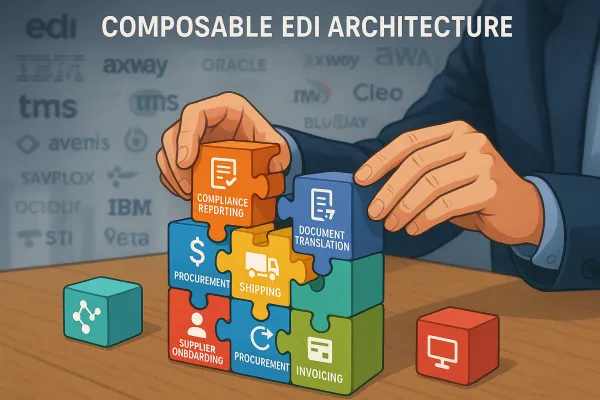
Choose platforms that handle both protocols natively rather than cobbling together separate systems. The platform supports both traditional EDI processes and modern API-driven interactions to create a unified environment for all B2B communications. Solutions like Cargoson, alongside enterprise options like IBM Sterling and Cleo, provide integrated environments that reduce complexity.
4. Monitoring and Fallback Protocols
Live monitoring & rollback – trigger alerts on the first failed call and fall back to EDI until success rates stay above 99.9%. Build automated monitoring that can switch between protocols based on performance metrics and partner availability.
5. Gradual Skills Development
Rather than expecting immediate expertise in both domains, focus on building bridge skills. Train EDI specialists in basic API concepts and developers in EDI document structure. EDI professionals skilled in AI, IoT, APIs, and blockchain become valuable assets as organizations expand their hybrid capabilities.
Success in hybrid EDI-API implementations requires acknowledging that this isn't a technology problem—it's a change management challenge that happens to involve technology. The organizations succeeding in 2025 are those treating hybrid integration as a strategic capability rather than a technical project. They're building platforms that can adapt to partner capabilities while maintaining the reliability that supply chains demand.