The Complete EDI-CSDDD Compliance Framework: How to Transform Your Supply Chain Data Exchange to Meet EU Due Diligence Requirements and Build Sustainable Reporting Systems in 2025

The EU Corporate Sustainability Due Diligence Directive (CSDDD) entered into force on July 25, 2024, requiring companies with over 1,000 employees and €450 million in global revenue to monitor human rights and environmental impacts across their entire value chain. For supply chain professionals managing complex supplier networks, this creates an unprecedented data collection challenge that traditional manual processes simply can't handle.
The directive implements a staggered compliance timeline: companies with over 5,000 employees and €1.5 billion revenue must comply by 2027, followed by companies with over 3,000 employees and €900 million revenue by 2028, and finally all qualifying companies by 2029. That gives you less than three years to build systems capable of capturing sustainability data from hundreds or thousands of suppliers.
The CSDDD Compliance Challenge: Why Traditional Supply Chain Visibility Falls Short
Most supply chain teams already struggle with basic visibility. Now the CSDDD demands you track actual and potential adverse human rights and environmental impacts in your company's own operations, subsidiaries, and those of business partners throughout your value chain. You need real-time carbon emissions data, labor compliance monitoring, and environmental impact tracking across every tier of suppliers.
The directive covers activities ranging from upstream production to downstream distribution, transport, and storage, requiring companies to prevent, mitigate, or minimize adverse impacts arising from their own operations and those of their business partners. The financial stakes are massive, with penalties potentially reaching 5% of global revenue for non-compliance.
The Data Collection Crisis: Manual Processes Can't Scale to CSDDD Requirements
Traditional supplier questionnaires and sustainability spreadsheets worked when you needed annual reports for a few dozen key suppliers. But CSDDD compliance requires continuous monitoring across your entire value chain. You need systems that can automatically capture sustainability metrics from purchase orders, validate carbon footprint data in shipping notices, and track compliance certificates without manual intervention.
As noted in recent industry analysis, EDI systems are evolving to monitor carbon emissions, ethical sourcing, and ESG compliance across the supply chain. The technology exists, but most companies haven't connected their compliance requirements to their EDI infrastructure.
Building Your EDI-Powered CSDDD Compliance Architecture
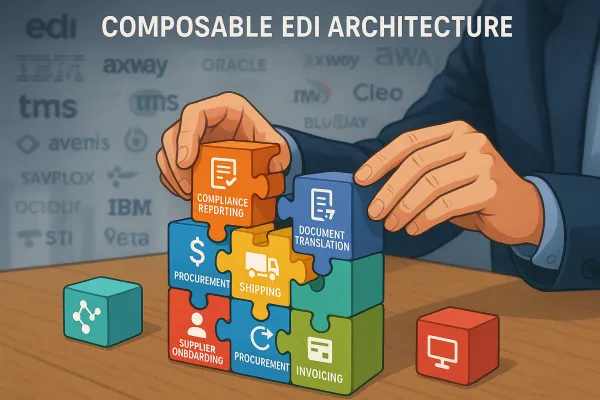
Smart supply chain teams are approaching this challenge systematically. Rather than building separate sustainability reporting systems, they're enhancing existing EDI infrastructure to capture compliance data automatically during regular business transactions. This approach leverages your existing supplier relationships and data flows while adding the specific fields required for CSDDD reporting.
The key insight: sustainability will become a dominant theme in supply chain strategies in 2025, with companies leveraging EDI to track and report on sustainability metrics such as carbon footprints and energy usage, driven by regulatory pressures and consumer demand for eco-friendly practices.
Your EDI-CSDDD architecture should integrate with existing enterprise systems including ERP platforms, transportation management systems like Cargoson, MercuryGate, and Descartes, and sustainability reporting tools. This creates a unified data flow where compliance information is captured automatically during normal business operations.
Essential EDI Transaction Sets for CSDDD Compliance
Start with modified versions of standard EDI documents. Your 850 Purchase Orders need additional fields for sustainability criteria. The 856 Advance Ship Notice should include carbon footprint calculations. The 810 Invoice requires sustainability compliance confirmations. These aren't new document types, they're enhanced versions of transactions you're already processing.
Consider adding custom segments to track supplier certifications, environmental impact assessments, and human rights compliance status. EDI systems offer detailed tracking and reporting capabilities that can automatically send shipment status documents with real-time tracking information, including departure times, expected delivery times, and current location. Apply this same principle to sustainability data.
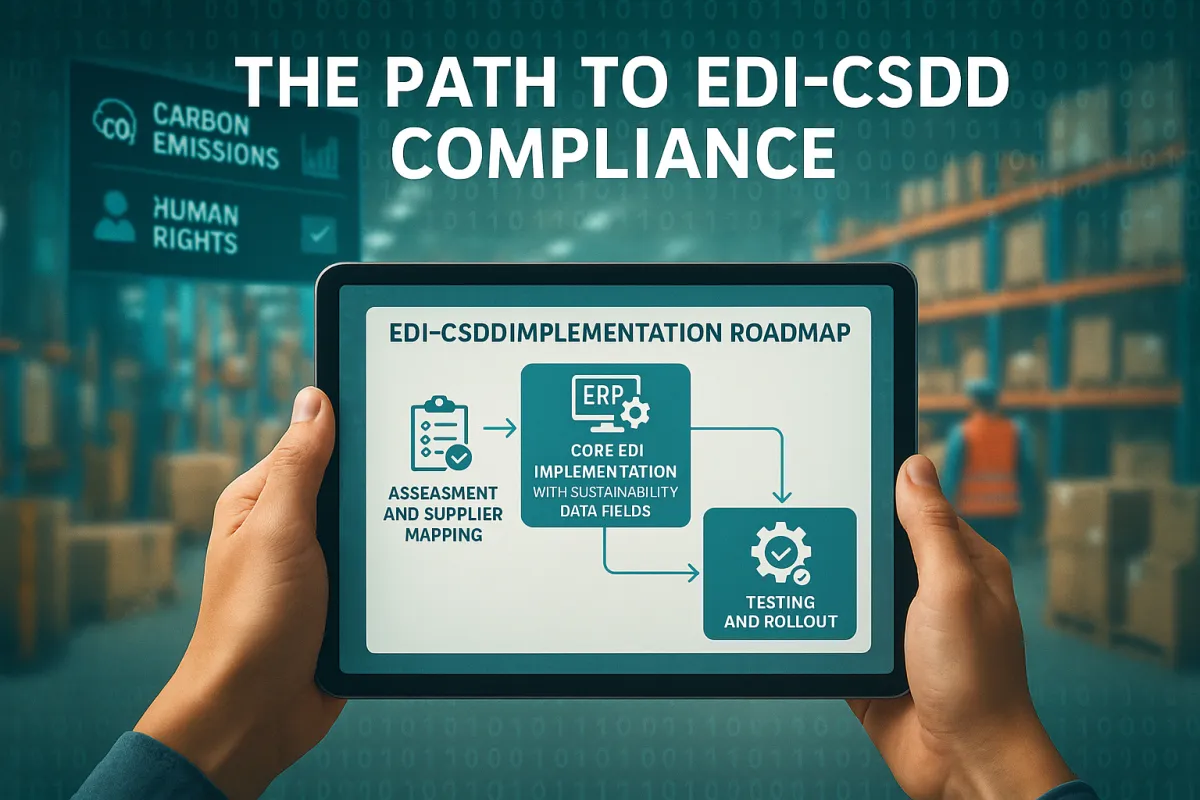
The Three-Phase EDI-CSDDD Implementation Roadmap
Phase 1: Assessment and Supplier Mapping (30 days)
Map your current supplier network against CSDDD scope requirements. Identify which suppliers need enhanced monitoring based on the directive's coverage of subsidiaries and business partners along your chain of activities, requiring companies to ensure human rights and environmental obligations are respected. Prioritize high-risk suppliers and those representing significant transaction volumes.
Phase 2: Core EDI Implementation with Sustainability Data Fields (90 days)
Enhance your existing EDI transaction sets with sustainability data requirements. Test with pilot suppliers before rolling out broadly. EDI reduces errors through rigid standardization, helping ensure information is correctly formatted and eliminating human hang-ups such as typographical mistakes and misinterpreted categories. Apply these same benefits to sustainability data collection.
Phase 3: Full Automation and Reporting Integration (60 days)
Connect your enhanced EDI flows to CSRD reporting platforms and carbon tracking systems. Build automated workflows that flag compliance issues and generate the documentation required for annual statements companies must publish on their websites, with detailed information on due diligence, actual and potential adverse impacts identified, and appropriate measures taken.
Critical Integration Points: Connecting EDI to Sustainability Reporting Systems
Your EDI system should feed data directly into sustainability reporting platforms through APIs. Modern transportation management systems and freight management platforms already support these integrations. The goal is creating seamless data flows where sustainability metrics collected through EDI transactions automatically populate your CSDDD compliance reports.
Build validation workflows that cross-check sustainability data against known benchmarks. If a supplier reports unusually low carbon emissions for a particular shipment type, your system should flag this for verification before including it in compliance reports.
Overcoming Technical Challenges in EDI-CSDDD Implementation
The biggest technical hurdle is data mapping for sustainability metrics that don't exist in standard EDI formats. You'll need to define custom segments or leverage flexible transaction sets that can accommodate additional data fields. Work with your EDI provider to ensure these enhancements don't break existing integrations.
Legacy system integration presents another challenge. EDI integration allows businesses to automate data flow between internal systems and external trading partners, reducing manual data entry, eliminating duplication of work, and minimizing errors in the supply chain process. Apply this principle to sustainability data by ensuring your enhanced EDI transactions can feed existing ERP and compliance systems.
Partner Onboarding: Getting Suppliers EDI-Compliant for CSDDD
Supplier onboarding for enhanced sustainability reporting requires careful change management. Start with your largest suppliers who already have robust EDI capabilities. Provide clear documentation on new data requirements and testing procedures. Consider self-service portals where suppliers can validate their sustainability data before submitting EDI transactions.
Many suppliers will need technical assistance to modify their EDI systems for sustainability reporting. Build this support into your implementation timeline. The investment in supplier enablement pays off through more reliable compliance data and reduced manual verification efforts.
Measuring ROI and Ensuring Long-Term Compliance Success
Track specific metrics to demonstrate the value of your EDI-CSDDD investment. Measure cost per compliance report, supplier onboarding time reduction, and audit preparation efficiency. EDI implementation reduces costs associated with paper-based processes while automating supply chain processes, reducing labor costs, decreasing order processing time, and improving operational efficiency.
Build ongoing monitoring capabilities into your system. CSDDD requirements will evolve, and your EDI infrastructure needs to adapt quickly to regulatory changes. Climate disclosure is becoming law with regulations like Scope 3 emissions reporting tightening, making traceability move from nice-to-have to must-have.
Future-Proofing Your EDI Compliance Strategy
Prepare for expanding regulations beyond CSDDD. The shift toward Agentic AI represents AI systems that operate with autonomy, and EDI agents can unlock the potential of data that resides inside EDI transactions, with companies exchanging more than 31 billion transactions per year representing 2.5 trillion pieces of data.
Consider AI-powered anomaly detection for sustainability data, blockchain integration for supply chain traceability, and API evolution for more flexible data exchange. Agentic AI designed to function without human intervention is promising for EDI, with systems that can monitor supply chain anomalies, cross-check invoices, and resolve problems independently.
The companies that build robust EDI-CSDDD compliance frameworks now will have significant advantages as sustainability regulations continue expanding. Start with your core transaction flows, enhance them systematically with sustainability data requirements, and build the automation that turns compliance from a burden into a competitive advantage.