The Complete Supply Chain Orchestration Evaluation Framework: How to Bridge EDI Systems with Real-Time API Coordination for Autonomous Operations in 2026

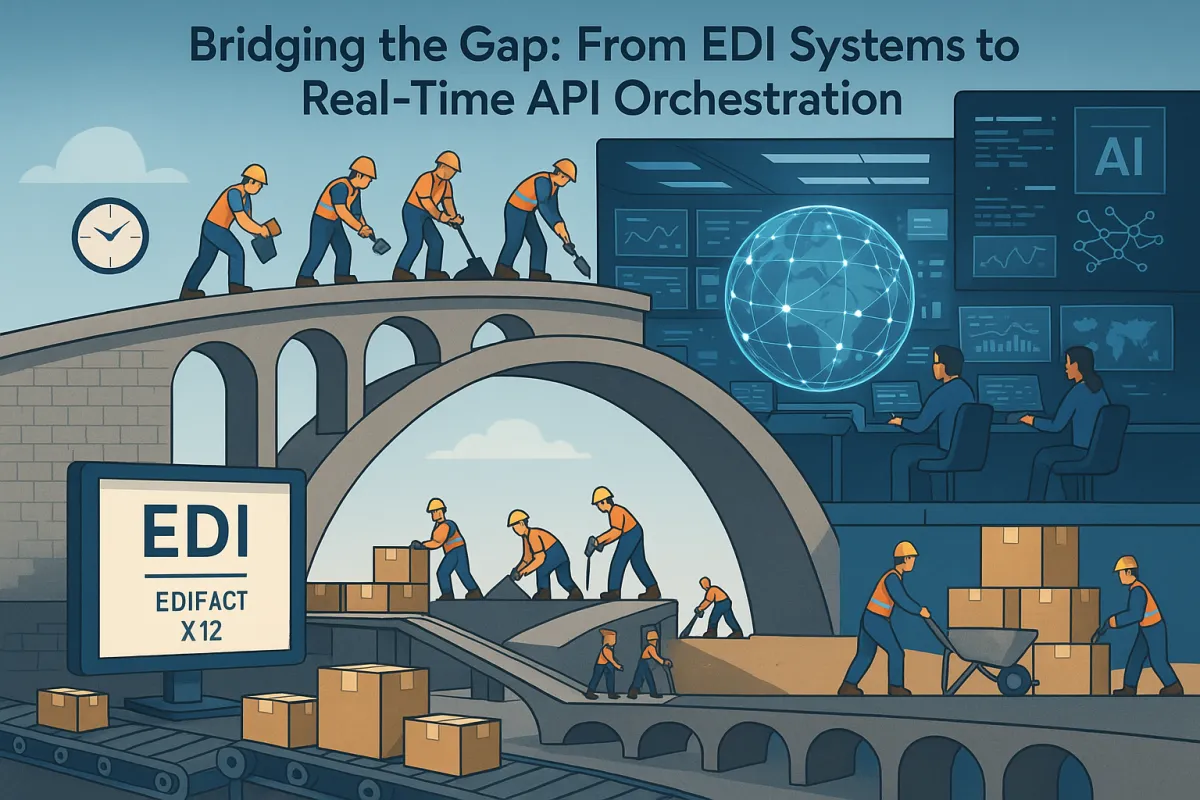
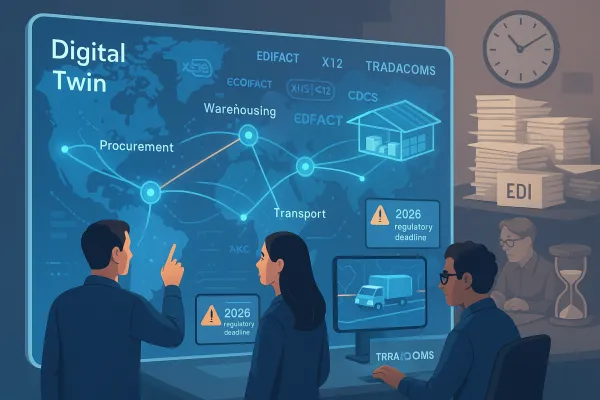
Supply chain orchestration EDI has moved far beyond basic document exchange. Legacy integration platforms were built to connect systems and exchange documents. They do that job well, but they often break down when the supply chain shifts from "business as usual" into disruption mode. In 2026, supply chain orchestration closes the execution gap—unifying EDI, APIs, and AI to protect OTIF, speed resolution, boost resilience, and provide real-time data.
EDI managers evaluating orchestration platforms face a fundamental question: can your systems continuously coordinate processes, data, and decisions across your entire trading partner network, then respond immediately when conditions change? The organizations that win are not the ones that only move data faster. They are the ones that can manage outcomes in real time.
Understanding the Shift from EDI Integration to Supply Chain Orchestration
Data movement does not equal execution. This insight drives the next generation of supply chain integration beyond traditional EDI connectivity toward intelligent coordination across digital supply networks operating in real time. The shift from connectivity alone to end-to-end supply chain orchestration is why orchestration is emerging as the next evolution beyond integration.
Traditional EDI excels at connecting systems and facilitating document exchanges, but EDI was designed for a different operating environment. Most implementations rely on batch processing, where files are exchanged periodically rather than continuously. While this approach works for predictable workflows, it introduces delays that are increasingly incompatible with modern supply chain operations.
Supply chain orchestration addresses this execution gap by enabling real-time visibility and automated decision-making across your entire partner ecosystem. Allowing everything in your supply chain to be connected with the combined power of API integration, EDI integration, file based integration and more in a single platform.
Major TMS platforms like Cargoson, MercuryGate, and Descartes are rapidly evolving from simple document exchange to orchestration-ready solutions that unify traditional EDI with real-time API coordination. Blue Yonder, Oracle TM, and Cargoson each offer different approaches to automating carrier selection based on historical performance data, real-time capacity, and cost optimization.
The Critical Gap Between EDI Connectivity and Real-Time Orchestration
Supply chain orchestration asks whether your teams can continuously coordinate processes, data, and decisions across the network from one location, then take action fast when conditions change. In 2026, speed matters. This shift changes the cadence of supply chain decision making from waiting hours or days for updates to systems that react immediately to new information about inventory levels, shipment delays, or changes in demand.
The difference becomes clear in disruption scenarios. Traditional EDI environments require manual intervention when shipments face delays or capacity constraints change. Many organizations are now moving toward API based integration. Application Programming Interfaces allow systems to exchange information instantly rather than through scheduled file transfers. Transportation management systems, warehouse platforms, supplier portals, and visibility networks can share operational events as they occur.
Supply chain partners need real-time coordination to respond to disruptions, demand shifts and capacity constraints. The speed gap between what businesses need and what manual processes can deliver is becoming insurmountable. AI orchestration promises to close this gap by coordinating decisions across the supply chain at machine speed.
Why Traditional EDI Falls Short in Orchestration Scenarios
Several technical limitations prevent traditional EDI from supporting true orchestration. Lack of Real-Time Capability: EDI operates on batch processing, meaning data arrives in scheduled intervals—not instantly. When a shipment faces delays in Paris, traditional EDI might not communicate this status change until the next scheduled transmission, potentially hours later.
Inflexibility: Adding custom fields or adapting to new requirements involves complex mapping and lengthy partner negotiations. This rigidity prevents the dynamic adjustments orchestration requires. Many suppliers still process PDF orders manually while managing EDI connections and API integrations with the same retailer across different channels.
The cost implications compound these technical limitations. Slow Scalability: Onboarding new partners can take months, making EDI less agile for fast-growing businesses.
Building the Technical Foundation for Hybrid EDI-API Orchestration
Creating unified platforms that handle both traditional EDI and modern API integration requires careful architectural planning. A hybrid approach offers flexibility, which helps organizations modernize without disrupting existing workflows or supply chain operations. APIs that work with EDI and can connect to common ERPs like ERPs, like SAP S/4HANA, Oracle Fusion, NetSuite, and MS Dynamics 365, are essential for businesses seeking agile, efficient, and future-ready supply chain integration. This approach enables seamless automation, universal trading partner connectivity, and real-time supply chain visibility, supporting growth and resilience in a digital-first economy for any size organization.
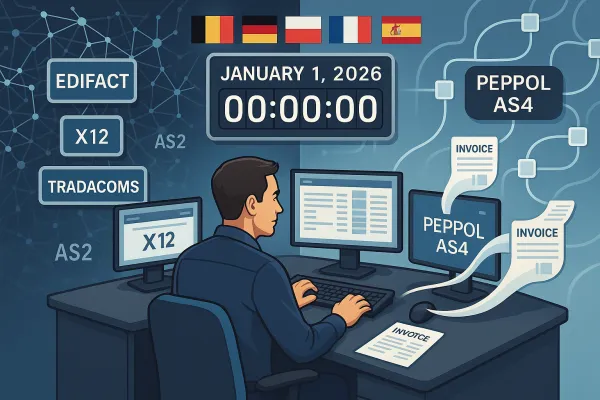
Advanced platforms like TraceLink demonstrate how comprehensive hybrid orchestration works in practice. They support all transaction types and map through an ever-expanding catalog, enabling partners to use any format (X12, EDIFACT, IDoc, CSV, Custom), with any method (UI, API integration, asynchronous message integration), over multiple protocols (HTTPS, SFTP, AS2).
Most supply chains use a mix of automated EDI, APIs, and managed file transfer (MFT) to work with different partners, systems, and compliance requirements. The best tools supply chain orchestration 2026 unify connectivity across API, EDI, and MFT, provide real-time visibility, and support coordinated action at scale.
Platforms like Cleo, OpenText Business Network, and Cargoson represent different approaches to hybrid orchestration. Cleo positions its approach as AI-native and states it can resolve operational disruptions 85% faster than legacy integration middleware.
API-First Design Principles for EDI Modernization
An API-First strategy uses APIs as the primary, simple entry point for trading partners, eliminating the need for them to have deep EDI expertise. The system then translates these API inputs into standard EDI formats in the backend, accelerating onboarding times while maintaining internal data standardization.
This approach reduces partner onboarding friction significantly. Whoever can most quickly adapt to each communication and data requirement - whether it's EDI, non-EDI, or API - will separate themselves and earn new business. Modern hybrid platforms abstract the complexity for partners while maintaining compliance requirements behind the scenes.
It unifies standardized EDI transactions with real-time API orchestration, creating a single integration fabric that's pragmatic for today and ready for tomorrow. AI-driven intelligence. The platform learns from transactional patterns, detects anomalies, and recommends optimal routing—EDI when compliance matters, APIs when speed is critical. It augments governance with automated policy checks and enriches integration with predictive ETAs, inventory risk signals, and smart retries.
AI-Powered Autonomous Operations in Orchestrated Supply Chains
AI in supply chain orchestration moves from experimental to operational in 2026. With structured, complete, and accurate EDI data, supply chain leaders can embed autonomous AI agents into EDI workflows to alert, interpret, act on, and optimize data in real time. This shift suggests a move away from manual troubleshooting of EDI onboardings, mappings and transactions, which often drains day-to-day productivity, toward using AI to free up resources to solve bigger supply chain challenges and drive growth-related innovation.
Agentic AI capabilities now sit inside core business processes with AI agents identifying risks and opportunities, proposing workarounds, onboarding suppliers, and triggering corrective actions automatically within trusted guardrails. For example, AI-generated mappings will soon integrate with orchestration engines, enabling real-time validation and correction during partner onboarding. One of the most time-consuming aspects of EDI has always been data mapping. AI is now accelerating this process by learning from semantic models and automating field matching, reducing setup time and simplifying updates over time.
TMS vendors demonstrate varying levels of AI sophistication. Blue Yonder's TMS is part of their broader supply chain suite, with particular strength in the retail environment. Blue Yonder integrates machine learning to predict corridor disruptions based on historical patterns and real-time data feeds. Meanwhile, platforms like Cargoson focus on automating routine decisions across European cross-border operations.
AI is quickly moving from being a customer experience tool to transforming how businesses function at their core. Businesses are using AI to manage inventory, forecast demand and coordinate vendors at machine speed—reducing delays, errors and human bottlenecks.
The Complete Orchestration Platform Evaluation Framework
Supply chain orchestration transforms fragmented operations into synchronized ecosystems through coordinating processes, data, and decisions across your extended supply network in ways that enable autonomous execution and real-time adjustments. Evaluating vendor capabilities requires systematic assessment beyond traditional feature checklists.
Your evaluation framework should address four critical orchestration capabilities:
Unified Connectivity Assessment: This is accomplished by consolidating the typically fragmented integration capabilities (API integration, EDI integration and file based integration) into a single solution. Test how potential vendors handle mixed integration requirements across your partner ecosystem.
Real-Time Intelligence Evaluation: Supply chain orchestration collapses these gaps by enabling real-time visibility into every end-to-end business process. Once implemented, what were once disparate data points become a single, automated engine for supply chain visibility but more importantly, decision-making.
Autonomous Action Capabilities: Cleo AI reimagines orchestration by embedding agentic solutions across your platform and network. Evaluate each vendor's approach to automated exception handling and decision-making.
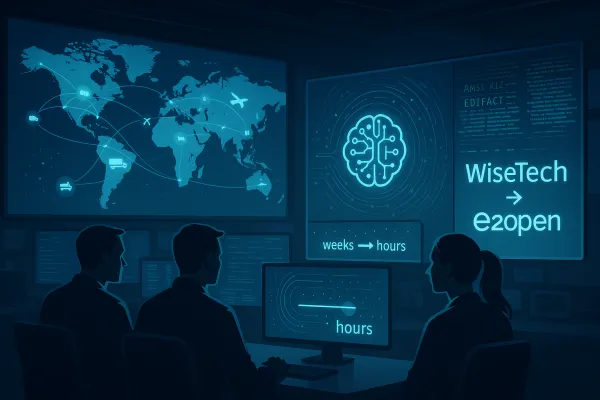
Vendor Ecosystem Resilience: Market consolidation affects platform evaluation. WiseTech's acquisition of E2open in 2025, Descartes' purchase of 3GTMS for $115 million in March 2025, and Körber's transformation of MercuryGate into Infios following their 2024 acquisition. The most significant TMS vendor consolidation wave in over a decade is reshaping European procurement decisions right now.
Comprehensive vendor analysis should include SAP TM, Oracle TM, Cargoson, MercuryGate, Descartes, Blue Yonder, and emerging orchestration-focused platforms. This includes established platforms like MercuryGate, Descartes, E2open, Manhattan Active, Oracle TM, and SAP TM alongside European specialists like Alpega, nShift, Transporeon, and modern alternatives including Cargoson that focus specifically on European cross-border operations.
Cost-Benefit Analysis for Orchestration Migration
ROI calculations for orchestration platforms differ significantly from traditional EDI implementations. Faster, more informed decisions for every supply chain network, 85% faster time to resolve errors and 24-hour trading partner onboarding time. These operational improvements often exceed direct cost savings.
Organizations typically see 5–10% savings on freight budgets by automating rate comparisons, with manual processes generating billing errors that automated systems eliminate through real-time validation. Gartner® finds optimization features can contribute up to 15% ROI. The productivity gains often exceed direct cost savings.
Hidden costs include change management requirements and platform integration complexity. Companies undergoing integration often experience 12-18 months of reduced innovation while they harmonize platforms and teams.
Implementation Roadmap: From Traditional EDI to Orchestrated Operations
Practical migration from legacy EDI to orchestration-enabled platforms requires phased approaches that minimize disruption while maximizing speed to value. Successful implementations during capacity shortage periods require phased deployment strategies that minimize risk while maximizing speed to value. Successful cloud TMS migrations follow a proven pattern.
Phase 1: Foundation Assessment (4-6 weeks). Document current transport processes, carrier relationships, and integration requirements. This year marks a shift from siloed integration to true orchestration to provide real-time alignment of planning, time alignment of planning, time alignment of planning, logistics, procurement, and partner data across a unified backbone.
Phase 2: Hybrid Platform Selection. Evaluate vendors based on orchestration readiness rather than traditional feature comparisons. Smart procurement teams are structuring their TMS evaluations around compliance readiness rather than traditional feature checklists. This means evaluating vendors like Cargoson, Manhattan Active TMS, Blue Yonder, and Oracle TM based on their demonstrated regulatory compliance capabilities, not just their routing algorithms or carrier connectivity.
Phase 3: Pilot Implementation. Partial go-live strategies reduce implementation risk. Launch in your most stable markets first, then expand to complex regions once the platform proves reliable. Modern platforms enable faster deployment cycles. Most machinery manufacturers are live in 1-2 weeks. We import your carrier rate cards in any format, set up API connections, and provide go-live training. Compare this to 6-18 month implementations typical of enterprise TMS platforms.
Phase 4: Orchestration Activation. Enable real-time coordination and autonomous capabilities once foundational systems prove stable. Supply chain orchestration layers AI-driven visibility over the entire order-to-cash cycle, so you catch mismatches—like SKU errors or pricing gaps—at the source. This shifts your operations from reactive firefighting to a predictive state, ensuring you hit OTIF targets and kill shipping errors before they turn into costly retail penalties.
Success metrics should focus on orchestration capabilities rather than traditional EDI measurements. The productivity metrics that matter most in 2026's capacity-constrained environment include cycle time reduction, error elimination, and resource optimization. With automation, tasks that used to take hours can now be completed in minutes. This speed advantage becomes particularly valuable when securing capacity from preferred carriers or reacting to disruptions.
The transition from traditional EDI to supply chain orchestration represents more than technological upgrade. It enables your organization to operate proactively rather than reactively, turning supply chain visibility and autonomous operations into competitive advantages. EDI managers who build hybrid orchestration platforms bridge the execution gap between data movement and business outcomes, preparing their organizations for autonomous supply chain operations that adapt in real time to changing conditions.