The Critical Batch EDI Processing Crisis That's Breaking 70% of TMS Integrations: Your Complete Solution Framework to Bridge Legacy Systems and Modern API Requirements in 2026

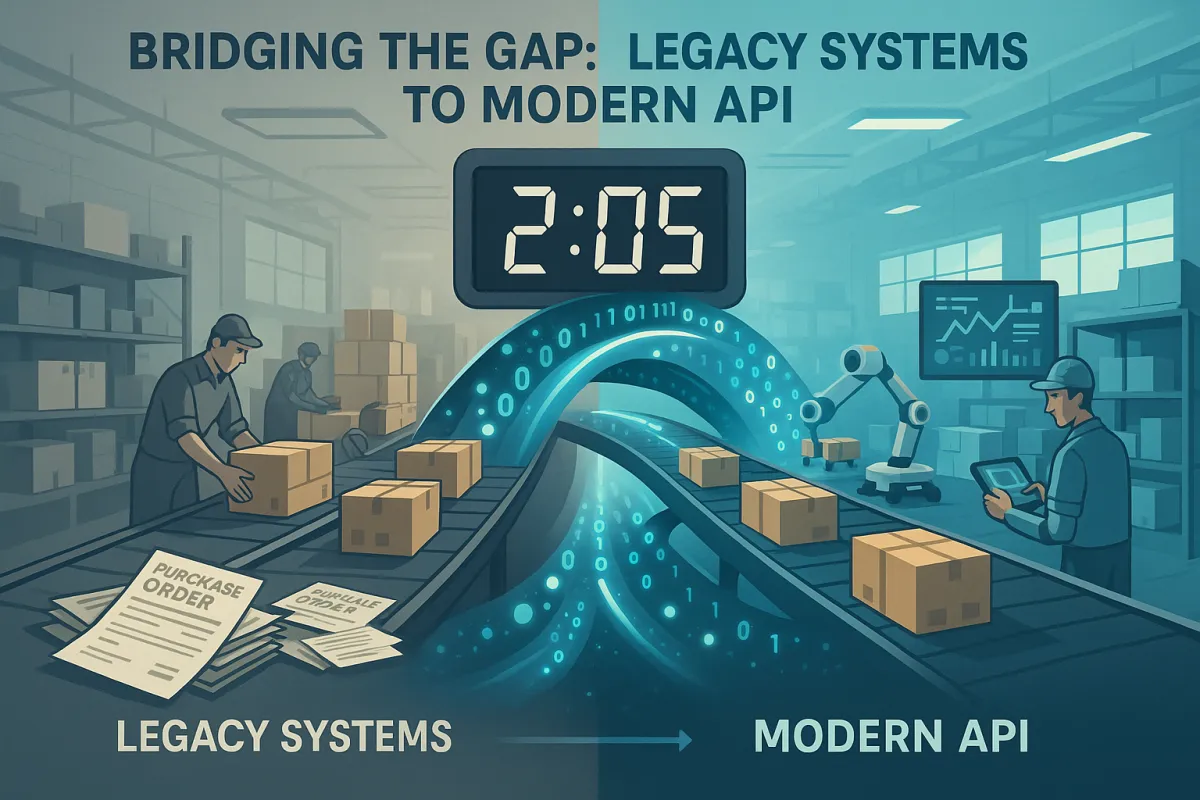
When your purchase order arrives at 2:05 PM but doesn't hit your ERP until the 3:00 batch run, nearly an hour of latency for a single document creates operational friction that compounds across your entire TMS operation. This isn't a theoretical problem. 66% of technology projects end in partial or total failure, and batch EDI processing delays represent one of the biggest contributors to TMS integration breakdowns.
The math becomes brutal when you factor in real-time visibility requirements. Modern transport management systems promise instant shipment tracking and immediate exception handling, but each step introduces its own delay when batch processing queues documents until scheduled intervals run.
The 15-Minute Data Gap That Costs More Than You Think
Inventory accuracy depends on how frequently stock levels are synchronized across systems. When EDI operates on 15-minute batch windows, there is a 15-minute period where the inventory count in your ERP does not match the actual inventory in your warehouse. Notice the pattern? Your TMS displays available capacity that no longer exists.
If 200 units sell in 10 minutes but the EDI batch does not fire until minute 15, trading partners still see inventory that no longer exists. The result hits your bottom line through unfulfillable orders, cancellations that damage customer relationships, and chargebacks that erode margin. Research on e-commerce latency shows every 100 milliseconds of delay can reduce conversions by 1 percent, and stale EDI data follows the same principle at a larger scale.
Peak season amplifies this problem. During Black Friday, holiday rushes, and promotional launches, order volume spikes. Batch queues that handle 50 documents per cycle suddenly face 500. The same 15-minute interval now processes ten times the volume, and each cycle takes longer to complete. The delays that were tolerable at normal volume become order-canceling bottlenecks at peak.
Why Legacy TMS Platforms Crack Under Modern EDI Requirements
Legacy TMS platforms built for lower transaction volumes show their age when integrated with modern EDI expectations. If fewer than 70% of eligible users are actively using the system within 90 days of go-live, full adoption is unlikely without significant intervention. Sound familiar? Your team reverts to spreadsheets and email because the batch processing delays make real-time operations impossible.
ERP systems enforce concurrency limits that batch processing amplifies. NetSuite's standard tier allows 15 concurrent requests. When a batch dumps hundreds of documents into the import queue simultaneously, the system hits rate limits, requests queue or fail, and the entire batch needs investigation. The common EDI errors in supply chains that teams spend hours troubleshooting often trace back to these concentrated load spikes.
The Monolithic Architecture Problem
Traditional TMS platforms built on monolithic architectures provision for average load, not peak load, with no auto-scaling or elastic infrastructure. When volumes spike from 5,000 to 20,000 daily deliveries during peak e-commerce seasons, these systems buckle.
Even a batch of 50-100 transaction in TN take 4-5 minutes (or more) to Batch. Multiply this across hundreds of trading partners, and batch processing becomes the bottleneck that prevents your TMS from delivering real-time visibility.
The breaking point often manifests as shadow systems. When the logistics team maintains a separate spreadsheet to track what the TMS is supposed to track, or uses email chains for communication the TMS was configured to automate, the software has been effectively abandoned in practice.
The Complete Hybrid EDI-API Integration Framework
More than 7,200 enterprises deployed API-enhanced EDI modules in 2024 to complement traditional batch processing. This hybrid approach supported over 1.3 billion real-time document exchanges globally in the past year. The strategy routes data through the most efficient channel, using low-cost APIs for frequent status checks while reserving EDI bandwidth for massive batch files.
Modern platforms like Cargoson, Cleo, OpenText, and SPS Commerce support hybrid architectures that eliminate artificial batch delays. Traditional EDI uses batch processing and set communication windows, whereas API-integrated EDI lets systems send and receive data instantly and on demand, which makes them more responsive and flexible. Businesses can use APIs to connect EDI platforms directly to ERP, CRM, and logistics systems, making sure that data flows smoothly from start to finish. This cuts down on delays, gets rid of mistakes made when entering data by hand, and lets you update your inventory, confirm orders, and track shipments in real time.
API-First Gateway Strategy
The API-First approach uses APIs as the primary entry point for trading partners, eliminating the need for deep EDI expertise while translating to standard EDI formats in the backend. This accelerates partner onboarding by removing technical barriers that traditionally required months of EDI mapping coordination.
Your integration architecture should prioritize immediate document processing over scheduled batch windows. Real-time EDI processing eliminates scheduled batch windows by handling each document individually as it arrives. Instead of accumulating documents in a queue and processing them on a timer, the system parses, validates, and delivers each document within seconds of receipt.
Real-Time Processing Migration Roadmap
The shift from batch to real-time is not about replacing EDI as a protocol. EDI remains the backbone of B2B commerce, handling over 75 percent of digital trade globally. The shift is about removing the artificial delays that batch schedules introduce between when a transaction happens and when your systems reflect it.
Your migration strategy should follow a three-phase approach. Start with high-volume, time-sensitive documents like purchase orders and acknowledgments. Move to shipment notifications and status updates in phase two. Complete the transition with invoices and settlement documents in phase three.
Oracle TM, SAP TM, Manhattan Active, and Cargoson each offer different migration capabilities. Evaluate their real-time processing support, not just their batch optimization features.
The Document Lifecycle Optimization
In a batch-based EDI architecture, the document lifecycle follows a predictable path. Inbound documents arrive at the VAN or AS2 endpoint. They accumulate in a queue. At the scheduled interval, the translation engine picks up the queue, parses each document, maps fields to the ERP schema, and loads the data into staging tables. The ERP then processes the staged records during its own batch cycle. Each step introduces its own delay.
Direct integration patterns bypass these batch queues entirely. Event-driven architectures trigger immediate processing when documents arrive, eliminating queue accumulation and scheduled delays. Your TMS should support webhook-based notifications that update status immediately, not on batch schedules.
The EDI 856 Advance Ship Notice is the document most affected by batch delays. Retailers use ASN data to plan receiving labor, allocate warehouse space, and update their own inventory systems before a shipment arrives. When the ASN is generated from a batch export rather than live warehouse data, it often contains discrepancies: A warehouse worker substitutes one product for another during packing. If the ASN was generated from a batch snapshot taken before these changes, the electronic notification and physical shipment will not match.
Avoiding the Integration Failure Statistics
Most TMS deals don't fail because the software is "bad"—they fail because integration and execution get treated like an afterthought, and 76% of logistics transformations miss performance objectives. Poor system communication creates fragmented operations that often perform worse than manual processes they replaced.
Prioritize integration architecture from day one, focusing on connectivity capabilities as much as core TMS functionality. Up to 40 percent of implementations fail by some estimates, and most of those failures trace back to integration issues that surface after launch.
MercuryGate, Descartes, nShift, and Cargoson handle integration differently. Some excel at EDI batch optimization, while others prioritize real-time API connectivity. Match their strengths to your processing requirements, not their marketing claims.
The Change Management Framework
Operations team participation in vendor selection reduces resistance to new workflows. When your logistics team understands how real-time processing improves their daily operations instead of disrupting them, adoption accelerates.
A successful TMS implementation reduces freight invoice errors by 30–50% within six months; if error rates haven't moved, your integration strategy needs adjustment. Track specific metrics: document processing latency, exception handling time, and the percentage of transactions requiring manual intervention.
The shift to real-time EDI processing isn't optional anymore. In 2024, over 61% of new EDI installations were cloud-based, with hybrid deployment models gaining popularity among multinational firms. Approximately 42,000 businesses migrated from legacy on-premise EDI to cloud-native environments, driven by ease of integration and remote accessibility. Your TMS integration strategy should eliminate batch processing delays before they become the constraint that limits your operational growth.