The Critical EDI Digital Fragility Crisis: Your Complete Framework to Prevent AI-Driven System Failures and Maintain Supply Chain Data Flow Continuity in 2026

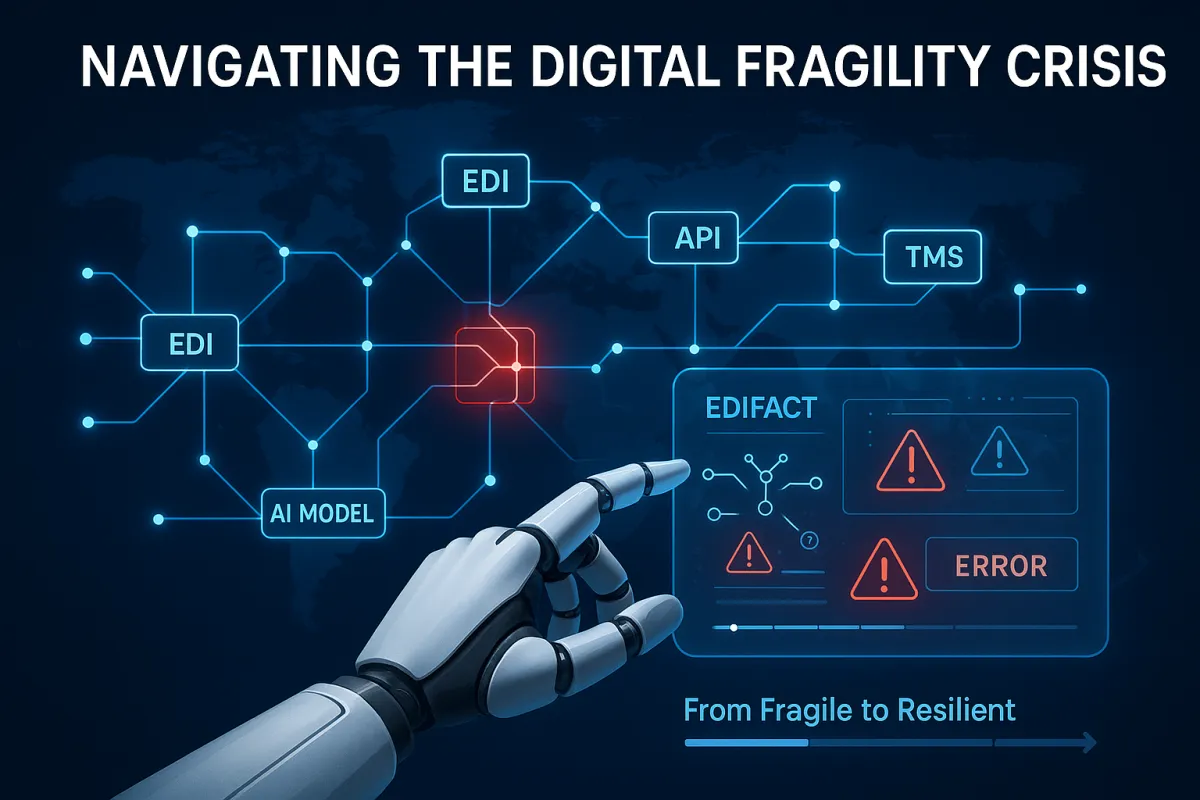
Supply chain leaders are waking up to a harsh reality: EDI digital fragility has become their biggest blind spot. While you've spent years hardening physical supply chains against disruptions, your digital backbone—the EDI systems and APIs that move 90% of your transactional data—remains dangerously vulnerable to cascading failures.
The numbers tell the story. Companies now depend on AI-driven decisions for 73% of their supply chain operations, yet most lack coherent plans for when geopolitical events, cloud outages, or API rate limits bring these systems down. One automotive manufacturer recently lost $2.3 million in a single week when their primary EDI provider suffered regional connectivity issues, forcing manual processing of 40,000 purchase orders.
The Hidden Vulnerabilities: Where EDI-AI Integration Creates Single Points of Failure
Your EDI infrastructure isn't just processing transactions anymore. It's feeding AI models that automatically adjust inventory levels, reroute shipments, and trigger purchase orders. When these systems fail, the ripple effects compound quickly.
Take automated EDI mapping powered by machine learning. Most implementations rely on a single AI model to interpret varying supplier formats. When that model degrades or receives unexpected data patterns, it doesn't just stop—it starts making incorrect mappings. A food distributor discovered this the hard way when their AI-powered EDI system began miscategorizing temperature-sensitive products as standard freight, resulting in $180,000 in spoiled inventory.
API rate limiting poses another critical vulnerability. During peak seasons or supply disruptions, when transaction volumes spike 300-400%, third-party APIs often throttle connections. Your EDI transactions queue up, creating delays that cascade through your entire network. TMS EDI integration becomes particularly fragile during these periods, as transportation management systems depend on real-time data exchange to optimize routes and capacity.
Geopolitical events add another layer of complexity. Data sovereignty regulations now affect where your EDI data can be processed and stored. When tensions escalate between countries hosting your cloud infrastructure, you might find critical integration pathways suddenly blocked or degraded.
The TMS Integration Vulnerability Audit
Your TMS connections deserve special attention because they represent the most time-sensitive data flows. Start by mapping every integration point between your EDI system and transportation platforms—whether you're using Manhattan Active, Blue Yonder, Descartes, or solutions like Cargoson.
Test each connection under stress conditions. Can your system handle 10x normal transaction volumes? What happens when your primary carrier API goes down for six hours? Most companies discover they have no backup data paths for critical shipment updates.
Document your dependency chains. If your EDI provider uses AWS infrastructure in a specific region, and your TMS relies on Google Cloud services, what happens when either experiences outages? The 2021 Fastly outage took down major logistics platforms for hours, but companies with redundant pathways kept operating.
Building Anti-Fragile EDI Systems: The Complete Resilience Framework
Real supply chain digital resilience requires moving beyond simple backup systems. You need anti-fragile architectures that actually improve during stress.
Multi-path data routing should be your foundation. Configure your EDI system to automatically route transactions through alternative pathways when primary routes fail. This isn't just about having a backup EDI provider—it's about maintaining multiple protocol options. If your primary EDIFACT connection fails, can you immediately switch to API-based messaging for the same transactions?
Implement intelligent failover that goes beyond basic health checks. Monitor transaction latency, error rates, and processing volumes in real-time. When your system detects degradation, it should proactively shift loads before complete failure occurs. One manufacturing company reduced outage impact by 89% simply by switching to predictive failover instead of reactive.
Hybrid EDI-API approaches provide excellent redundancy. Maintain both traditional EDI connections and modern API integrations for your most critical partners. When one pathway experiences issues, seamlessly shift to the alternative. This dual approach also positions you for gradual migration to API-based systems without risking operational continuity.
Implementation Roadmap: From Fragile to Resilient in 90 Days
Phase 1 focuses on comprehensive dependency mapping. Catalog every system that touches your EDI data flows—ERP systems, TMS platforms, WMS applications, and external partner connections. Document data formats, processing volumes, and SLA requirements for each integration point. This typically takes 30 days if you approach it systematically.
Phase 2 introduces redundancy where you need it most. Start with your highest-volume, most time-sensitive connections. If 80% of your transactions flow through five key partnerships, ensure those have multiple pathways. Configure backup EDI providers for critical connections and establish API alternatives where possible.
Phase 3 validates your resilience through controlled testing. Simulate various failure scenarios—single provider outages, regional connectivity issues, and peak load conditions. Run these tests during low-impact periods but use production-level transaction volumes to identify real bottlenecks.
Technology Solutions and Vendor Selection for Digital Resilience
Your technology stack architecture determines how well you can handle disruptions. Cloud-native solutions offer inherent redundancy but introduce new dependencies on internet connectivity and cloud provider reliability. Hybrid deployments provide better control but require more internal expertise to maintain.
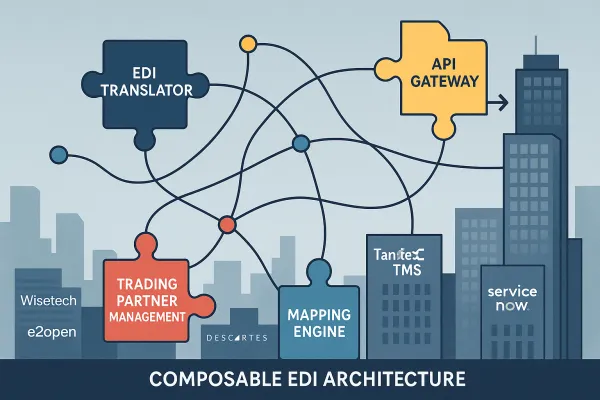
When evaluating EDI providers, examine their infrastructure diversity. SPS Commerce, TrueCommerce, and Cleo each offer different approaches to redundancy. EDI in logistics and transportation requires providers with robust failover capabilities and multiple data center locations.
API gateway solutions become critical for managing multiple integration pathways. Look for platforms that can automatically route traffic, implement circuit breakers, and provide detailed monitoring across all your connections. This infrastructure investment pays for itself during the first major outage you avoid.
Modern TMS platforms increasingly offer built-in resilience features. Whether you're working with established players like Transporeon and nShift, or innovative solutions like Cargoson, evaluate their approach to handling connectivity disruptions and data synchronization issues.
Measuring and Monitoring Digital Fragility: KPIs That Matter
Traditional uptime metrics miss the nuances of digital fragility. You need measurements that reveal degradation before complete failure occurs.
Track transaction success rates by pathway and partner. A 5% error rate might seem acceptable until you realize it represents 500 failed purchase orders daily. Monitor processing latency trends—gradual increases often signal capacity issues or network degradation before outages occur.
Measure your Mean Time to Recovery (MTTR) for different failure scenarios. Can you restore full operations within two hours of a primary EDI provider outage? How long does it take to activate manual processes when automated systems fail? These metrics reveal your actual resilience, not theoretical capabilities.
Calculate the true cost of outages beyond immediate transaction losses. Include overtime costs for manual processing, expedited shipping fees, customer service impacts, and partner relationship damage. One retail company discovered that a four-hour EDI outage during peak season cost them $340,000 in total impacts, far exceeding their initial estimates.
Future-Proofing Your EDI Strategy Against Emerging Digital Threats
The threat landscape continues evolving. Quantum computing will eventually compromise current encryption methods, requiring migration to quantum-resistant algorithms. Start planning now—cryptographic transitions take years to implement across complex EDI networks.
Regulatory changes around data sovereignty will likely accelerate. Supply chain trends for 2026 suggest increasing restrictions on cross-border data flows, potentially forcing architectural changes in global EDI networks.
AI evolution presents both opportunities and risks. While machine learning will improve EDI processing accuracy, it introduces new failure modes. Build architectures that can accommodate rapid AI model updates without disrupting core transaction processing.
Design your systems for adaptability rather than optimization for current conditions. The most resilient EDI architectures can accommodate new protocols, partners, and regulatory requirements without major rebuilds. This flexibility becomes your competitive advantage when market conditions shift rapidly.
Start your digital resilience assessment this week. Map your five most critical EDI connections, identify single points of failure, and establish backup pathways for your highest-risk integrations. The next major outage won't wait for your convenience—but with proper preparation, it doesn't have to stop your operations.