The Critical EDI Trading Partner Security Crisis: Your Complete Risk Assessment Framework to Prevent Supply Chain Attacks That Have Doubled in 2025

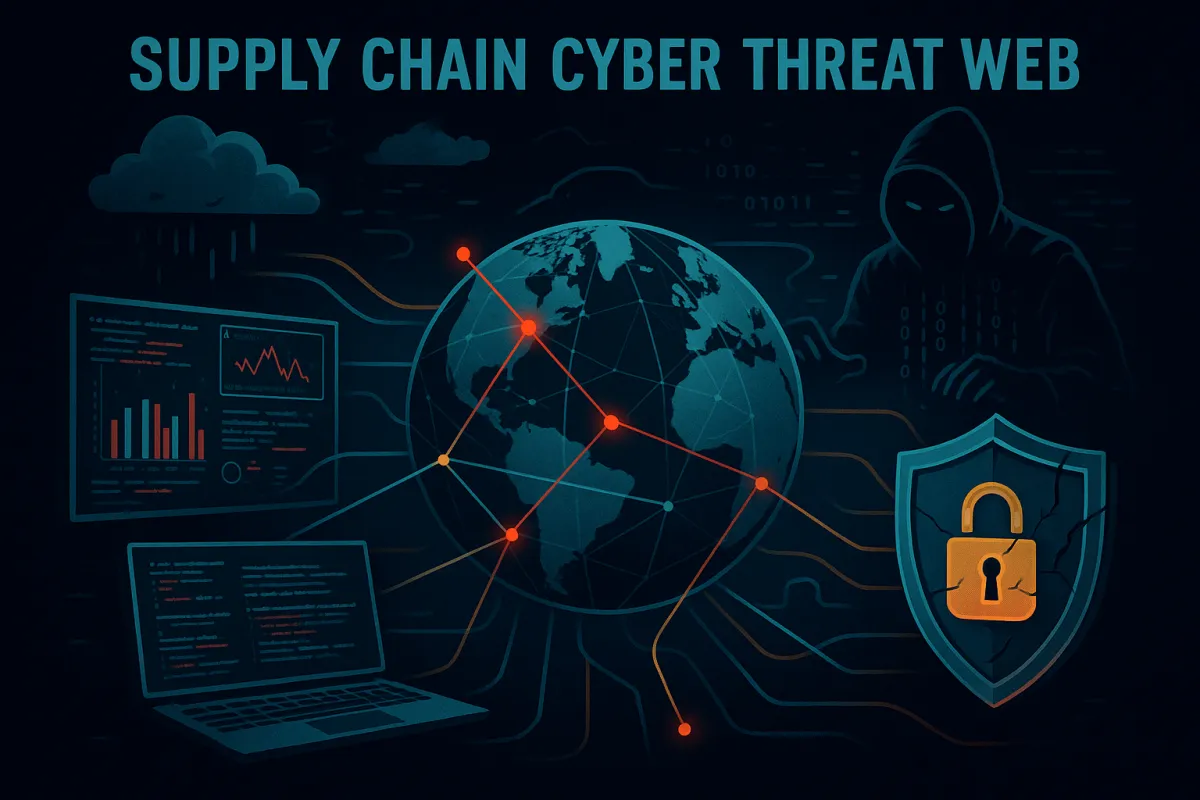
Your EDI trading partner network is under attack. Supply chain attacks have averaged 26 per month since April 2025, nearly doubling from the early 2024 rate, and third-party breaches now represent 30% of all data breaches, a 100% increase from the 15% reported previously. While you focus on securing your internal systems, attackers are exploiting the trust relationships embedded in your EDI connections.
The problem goes beyond traditional IT security. EDI flows with less protected subcontractors can be privileged entry points for attackers, and the multiplication of EDI flows increases company vulnerability. Every AS2 connection, SFTP transfer, and API integration creates a potential backdoor that bypasses your perimeter defenses. When your trading partner gets compromised, you inherit their security incident.
The Hidden Vulnerability in Your EDI Trading Partner Network
Here's what most EDI managers miss: the attack doesn't start with you. It starts with your trading partner's weakest vendor, then moves laterally through their network until it reaches systems connected to your EDI flows. 77% of CISOs and CIOs report a complete lack of visibility into their vendors' security, creating blind spots that attackers exploit systematically.
Your EDI connections operate on trust by design. Once authenticated, partners can push purchase orders, invoices, and shipment notifications directly into your ERP system. When businesses rely on third-party vendors, the security of their data is only as strong as the vendor's security measures, and poorly managed vendor systems can create security gaps like unauthorized subcontractor access to data and weak infrastructure security.
Consider this scenario: Your logistics partner uses a TMS platform like MercuryGate or Descartes. Their system gets compromised through a subcontractor who has API access for customs clearance. The attacker now has legitimate credentials to send EDI transactions through your trading partner's established connection. Your EDI gateway accepts these transactions because they appear to come from a trusted source. The malicious payload triggers vulnerabilities in your downstream systems or exfiltrates data through seemingly normal EDI flows.
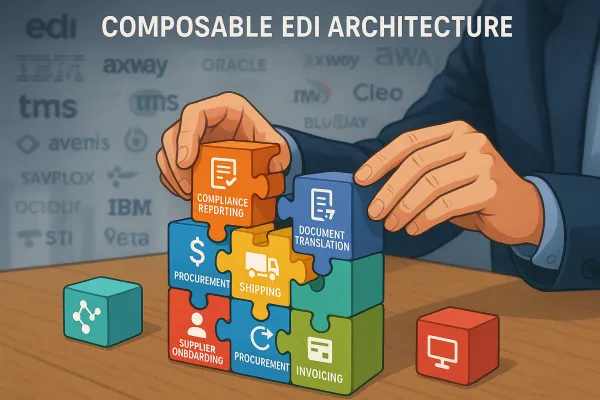
Modern TMS platforms like Transporeon and nShift connect dozens of carriers and logistics providers. Each connection multiplies the attack surface. When one provider in that ecosystem gets breached, the attacker can potentially reach every connected trading partner. Yet most companies assess security only at the direct partner level, ignoring the fourth-party risks that cascade through these integrated networks.
Critical Security Controls Every EDI Connection Must Have
Standard EDI security focuses on encryption and authentication, but that's insufficient when facing targeted supply chain attacks. You need encryption for all EDI transaction files in transit and at rest using strong algorithms, plus secure protocols like HTTPS, FTPS, SFTP, AS2, and AS4 with encryption methods such as AES, RSA, and PGP. However, encryption becomes meaningless when the attacker has legitimate credentials.
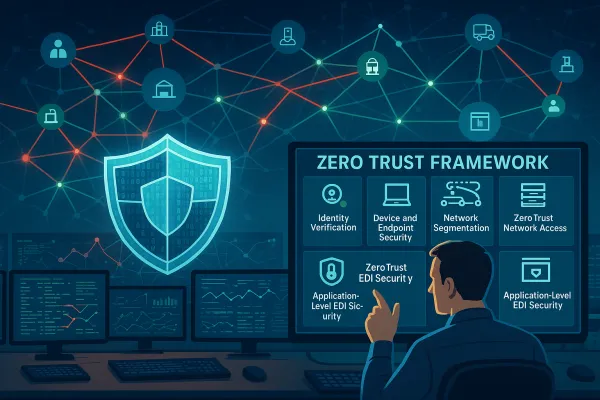
Zero-trust principles apply here. Every EDI transaction should be validated against expected patterns, not just authenticated. If your supplier normally sends 50 purchase orders per day but suddenly transmits 500, that anomaly requires investigation. Continuous monitoring and intrusion detection systems allow you to quickly identify security threats in real time by analyzing network traffic, security logs, and user activity for early threat detection.
Major EDI providers like SPS Commerce and TrueCommerce have started implementing behavioral analytics, but legacy systems often lack these capabilities. Solutions like Cleo and newer platforms such as Cargoson integrate advanced monitoring directly into their EDI management platforms, providing real-time visibility into transaction patterns and potential anomalies.
Building Your EDI Trading Partner Risk Assessment Framework
Traditional vendor assessments send questionnaires annually and call it done. Supply chain attackers move faster than your annual review cycle. You need continuous assessment that monitors your trading partners' security posture in real time.
Start with security certifications, but dig deeper. Vet vendors carefully for compliance with industry standards, including security clauses in vendor contracts and conducting regular security audits. Require SOC 2 Type II, ISO 27001, and industry-specific certifications. However, certifications represent point-in-time assessments. You need ongoing visibility into their actual security performance.
Implement continuous monitoring tools that scan your trading partners' external attack surface. These tools identify exposed services, certificate expirations, and security misconfigurations. When your logistics partner's SFTP server develops a vulnerability, you know about it before attackers exploit it.
Consider the integration capabilities of enterprise platforms. Oracle TM and SAP TM provide some vendor risk management features, but they're primarily designed for transportation management rather than security assessment. Modern solutions like Cargoson integrate security monitoring directly into their platform, providing unified visibility across both operational and security metrics.
The 15-Point EDI Security Assessment Checklist
Your assessment framework needs specific, measurable criteria that address both technical controls and organizational practices. Here's what to evaluate:
- Multi-factor authentication for all EDI system access
- Certificate-based authentication for AS2 connections with automated rotation
- Network segmentation isolating EDI systems from general business networks
- Encryption at rest for all stored EDI data and transaction logs
- Incident response capabilities with defined EDI-specific procedures
- Business continuity plans including EDI failover mechanisms
- Regular penetration testing covering EDI infrastructure
- Employee security training specific to EDI operations
- Vendor risk management program covering fourth-party relationships
- Real-time transaction monitoring with anomaly detection
- Automated patch management for EDI software and infrastructure
- Data retention policies aligned with regulatory requirements
- Audit trail capabilities for all EDI transactions and system changes
- Backup and recovery procedures tested regularly
- Compliance monitoring for relevant industry regulations
Enterprise TMS solutions like Manhattan Active and Blue Yonder include some security features, but they're often focused on operational resilience rather than cybersecurity. Compare this with platforms like FreightPOP, E2open/BluJay, and 3Gtms/Pacejet, which vary in their security capabilities. Cargoson's approach integrates security assessment directly into the platform selection process, helping identify which partners meet your security requirements before establishing EDI connections.
Implementation Strategy: From Assessment to Continuous Monitoring
Rolling out a comprehensive EDI security assessment program across hundreds of trading partners requires careful planning. Start with your highest-risk partners: those handling sensitive data, connecting to critical systems, or processing high transaction volumes.
Phase one focuses on immediate threats. Identify partners using outdated EDI software, unencrypted connections, or weak authentication methods. These represent your highest risk and need immediate remediation. Updating EDI software regularly is critical for closing security gaps, as timely software updates and security patches protect against newly discovered vulnerabilities.
Phase two implements continuous monitoring. Deploy tools that automatically scan your trading partners' security posture and alert you to changes. When a partner's security rating drops or new vulnerabilities emerge, you receive immediate notification. This transforms vendor risk management from a periodic activity to an ongoing security operation.
Integration with existing security infrastructure is crucial. Your EDI risk assessment needs to feed into your overall security operations center. When a trading partner shows signs of compromise, your incident response team should have immediate access to all relevant EDI connections and transaction patterns.
Real-World Response: When Your EDI Trading Partner Gets Breached
Incident response for EDI-connected partner breaches requires specific protocols that go beyond standard cybersecurity procedures. The global annual cost of software supply chain attacks is predicted to reach $138 billion by 2031, up from $60 billion in 2025. When your partner gets breached, assume the attacker has access to their EDI credentials.
Immediate containment starts with credential rotation. Change all shared authentication certificates, API keys, and connection passwords. Suspend automated EDI flows until you can verify the partner's security status. This might disrupt operations, but continued exposure to a compromised partner creates greater risk.
Document everything. EDI transactions create audit trails, but you need forensic-level logging to understand what data might have been compromised. Review all transactions from the affected partner during the suspected compromise period. Look for unusual patterns: unexpected transaction types, off-hours activity, or data volumes outside normal ranges.
Communication frameworks matter. Your trading partners need to understand their incident reporting obligations. Legal obligations require safety controls, breach notifications, data retention rules, and other safeguards, with GDPR violations potentially resulting in fines up to 4% of global revenue. Clear contracts specify notification timelines and required remediation steps.
Recovery planning extends beyond your immediate systems. When your logistics partner's EDI connection gets compromised, you need alternative fulfillment paths that don't rely on electronic integration. Manual processes, backup partners, and temporary connections might keep operations running while you address the security incident.
The most effective response combines technology with process. Platforms like Cargoson provide built-in incident response workflows that automatically quarantine suspicious connections while maintaining visibility into ongoing transactions. This allows you to respond quickly to partner compromises while maintaining operational continuity through secure backup channels.
Start your EDI vendor risk management program now. The next supply chain attack might target one of your trading partners, but with proper assessment frameworks and continuous monitoring, you can prevent their security incident from becoming your data breach.