The EDI Digital Twin Integration Revolution: How to Build Real-Time Supply Chain Intelligence That Eliminates Batch Processing Delays and Survives 2026's Regulatory Storm

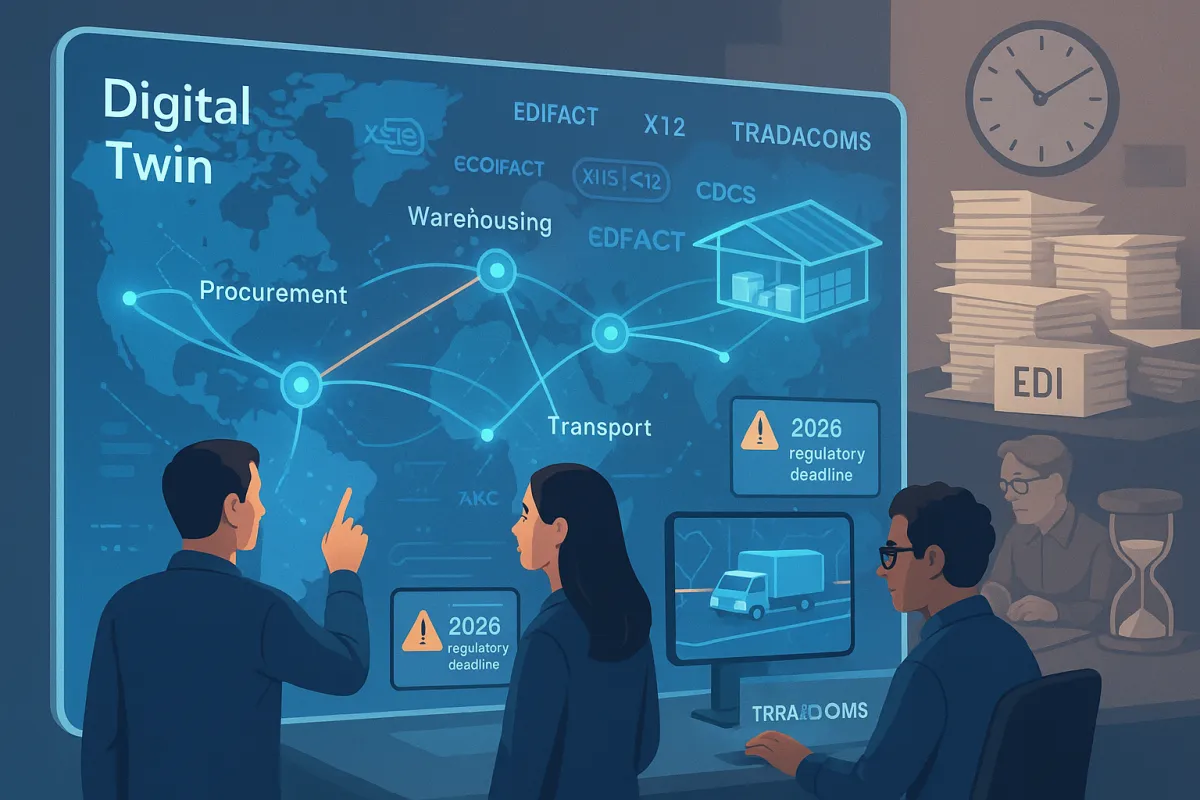
Picture this: You're running a global supply chain operation where the digital twin market is projected to reach USD 328.51 billion by 2033, growing at a CAGR of 31.1% from 2026 to 2033, but your EDI systems are still stuck processing data in 30-minute batches. Meanwhile, European regulatory frameworks emphasize sustainability and energy efficiency with hard deadlines approaching fast. Nearly half of organizations cite data quality and data integration challenges as the single biggest barrier to success when implementing digital twin technology.
The convergence of EDI digital twin integration with 2026's regulatory requirements creates both massive opportunity and significant risk. Companies that successfully bridge this gap are achieving remarkable results - General Electric operates digital twins for more than 60,000 wind turbines worldwide, increasing energy output by 5 to 10 percent while reducing maintenance costs by roughly 20 percent through optimized service schedules. But those who don't adapt face a harsh reality: one energy company spent 18 months building custom integrations for a wind farm digital twin, only to find the solution could not scale beyond 50 turbines.
The Critical Gap: Why Traditional EDI Falls Short in Digital Twin Architectures
Traditional EDI systems weren't designed for real-time digital twin operations. Most EDI systems still process documents on scheduled intervals, queuing purchase orders, ship notices, and invoices until the next batch window runs. Real-time EDI processing eliminates these scheduled delays by handling each document the moment it arrives.
The fundamental issue? Batch data integration is like a series of lakes where data is periodically released or updated, while digital twins require continuous data flows. Running batch EDI in a real-time API-based system can negatively impact the system's overall performance. The batch processing nature of EDI can create a backlog of transactions, which can slow down the system and increase response times for real-time tasks.
Consider a supply chain digital twin implementation at a global logistics firm. Previously reliant on overnight batch reports that left little time for daily issue response, the firm implemented a supply chain digital twin combining data streams from GPS-equipped trucks, warehouse sensors, and ERP systems. When vehicles veered off course, the system signaled potential delays, triggered re-routing recommendations, and updated customer delivery estimates.
Building the EDI Data Foundation for Digital Twin Systems
Success starts with data architecture. Organizations must process millions of sensor events per second across global operations, while also supporting batch integration of historical data for model training. The challenge extends beyond volume - enterprise IT systems such as ERP and CRM need to be connected with OT systems like SCADA, MES and PLM. These environments use different protocols (OPC-UA, Modbus, MQTT), data models and latency expectations.
Your digital twin maturity level determines integration complexity. Component twins focus on individual assets like sensors or equipment. System twins model entire processes or production lines. But the highest value comes from network twins that span multiple facilities and external partners - exactly where EDI integration becomes mission-critical.
Master data consistency becomes non-negotiable. Every location code, carrier identifier, and equipment reference must align across your EDI documents and digital twin models. Real-time processing does not mean flooding your ERP or trading partner systems with unlimited traffic. Modern real-time EDI platforms manage throughput intelligently.
Leading transportation management systems like Oracle TM, SAP TM, Manhattan Active, and Cargoson are evolving to support digital twin architectures through enhanced API capabilities and real-time data streams.
The Hybrid Integration Strategy: Maximizing Technology Strengths
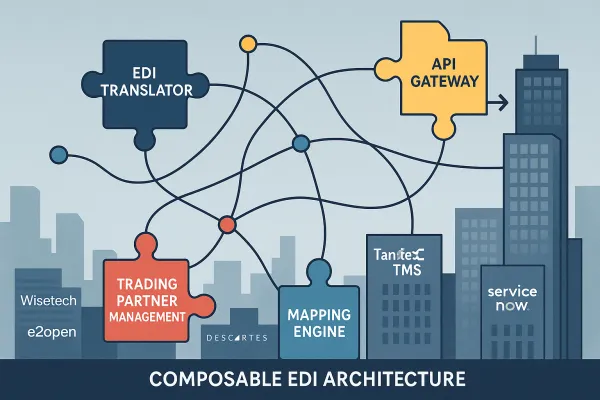
The solution isn't abandoning EDI - it's creating a hybrid architecture. A hybrid integration approach that combines batch queues for EDI and real-time queues for APIs is recommended. This approach leverages the strengths of both technologies, enabling greater scalability, flexibility, efficiency, and innovation.
Here's how the hybrid approach works in practice:
Critical real-time flows move to API integration: inventory updates, shipment tracking, and urgent notifications that feed your digital twin models instantly. Advance ship notices (856), purchase orders (850), and inventory updates benefit most because timing directly affects fulfillment accuracy and compliance. Late or inaccurate ASNs generate the highest chargebacks in retail supply chains.
Compliance-heavy documents stay in EDI batch processing: invoices, remittance advice, and detailed regulatory reports where audit trails and transformation validation matter more than speed. Retailers and industry standards often require strict mapping and validation that batch EDI provides out-of-the-box. You know these runs - where every field is checked, formats are locked, and error logs are robust.
Transportation platforms like nShift, Transporeon, E2open, and Cargoson are enabling this hybrid approach through unified connectivity that supports both EDI reliability and real-time API capabilities.
Operational Implementation Framework: From Concept to Production
Getting started with digital twins requires identifying the business processes or assets that will benefit most from enhanced visibility or control. This might be the end-to-end journey of materials from supplier to finished product, or critical processes such as last-mile delivery.
Start with your highest-impact use case. A mid-sized electronics manufacturer struggling with unpredictable demand and frequent supplier delays implemented a digital twin, connecting order, inventory, and shipment data in real-time. When supplier shipments faced customs delays, the digital twin immediately reflected new estimated arrival times and recalculated projected inventory levels.
Your implementation framework should follow this sequence:
- Data integration layer: Combining enterprise resource planning records, sensor data, and partner feeds into a single, queryable layer is essential for creating an effective digital twin
- Real-time triggers: Define operational triggers and key performance indicators. Real-time inventory thresholds, on-time delivery metrics, and process bottlenecks turn passive monitoring into actionable insight
- Scenario modeling: Simulate disruptions like supplier outages or demand surges to assess readiness to respond
Platforms like FreightPOP, MercuryGate, Cargoson, and Blue Yonder provide simulation testing capabilities that let you validate hundreds of scenarios before production deployment.
Meeting 2026's Regulatory Requirements
European logistics faces unprecedented regulatory pressure. The EU digital product passport rule (2024-2027) obliges manufacturers to maintain granular digital records for textiles, electronics, and building materials. This creates direct requirements for real-time data exchange that batch EDI simply cannot satisfy.
eFTI (electronic freight transport information) compliance demands QR code generation and real-time transport documentation across all modes. Your digital twin infrastructure must generate, validate, and transmit these codes instantly - not in 30-minute batch windows.
The regulatory timeline is unforgiving. In 2026, DSCSA "full electronic interoperability" marks the biggest shift across programs. Organizations that treated DSCSA as a system implementation are now stabilizing operations, while those that designed exception handling, partner onboarding, and data governance as core workflows are scaling successfully.
Telematics integration becomes mandatory for compliance and digital twin accuracy. Digital twins will incorporate carbon footprint analysis, labor practice monitoring, and regulatory compliance tracking alongside traditional operational and financial risk factors. Your EDI integration must support this multi-dimensional data exchange.
Future-Proofing Your Investment
Avoid the trap of technology for technology's sake. Not all components require the same level of digital twin analysis. Organizations should apply systematic filtering based on strategic importance, revenue impact, and supply vulnerability. The Pareto Principle typically applies: 20% of components represent 80% of supply chain risk.
Your vendor architecture should remain neutral and extensible. Whether you're working with 3Gtms, Alpega, Uber Freight, or Cargoson, ensure your integration platform can adapt as your digital twin requirements evolve. Developing common standards and ontologies (OPC UA, DDS profiles) to allow plug-and-play across domains and vendors becomes essential for long-term success.
Executive governance matters more than technical sophistication. Establish dedicated project teams with representatives from procurement, operations, IT, finance, and risk management functions. The CPO, CIO, and CRO must collaborate on both digital twin strategy and EDI integration requirements.
Success metrics should focus on operational impact, not technical achievements. Target 90%+ accuracy for critical predictions and aim for a 50%+ improvement compared to current processes. Track chargeback reduction, compliance cost savings, and customer satisfaction improvements - not just system uptime.
The path forward requires balancing ambition with pragmatism. Start with pilot programs on specific product lines, supplier categories, or geographic regions rather than attempting enterprise-wide implementation initially. Your EDI digital twin integration will evolve from operational necessity, not technological novelty.