The EDI-OCR Integration Revolution: How to Automate Mixed Document Processing and Eliminate the PDF-to-EDI Conversion Bottleneck in Your TMS Workflow

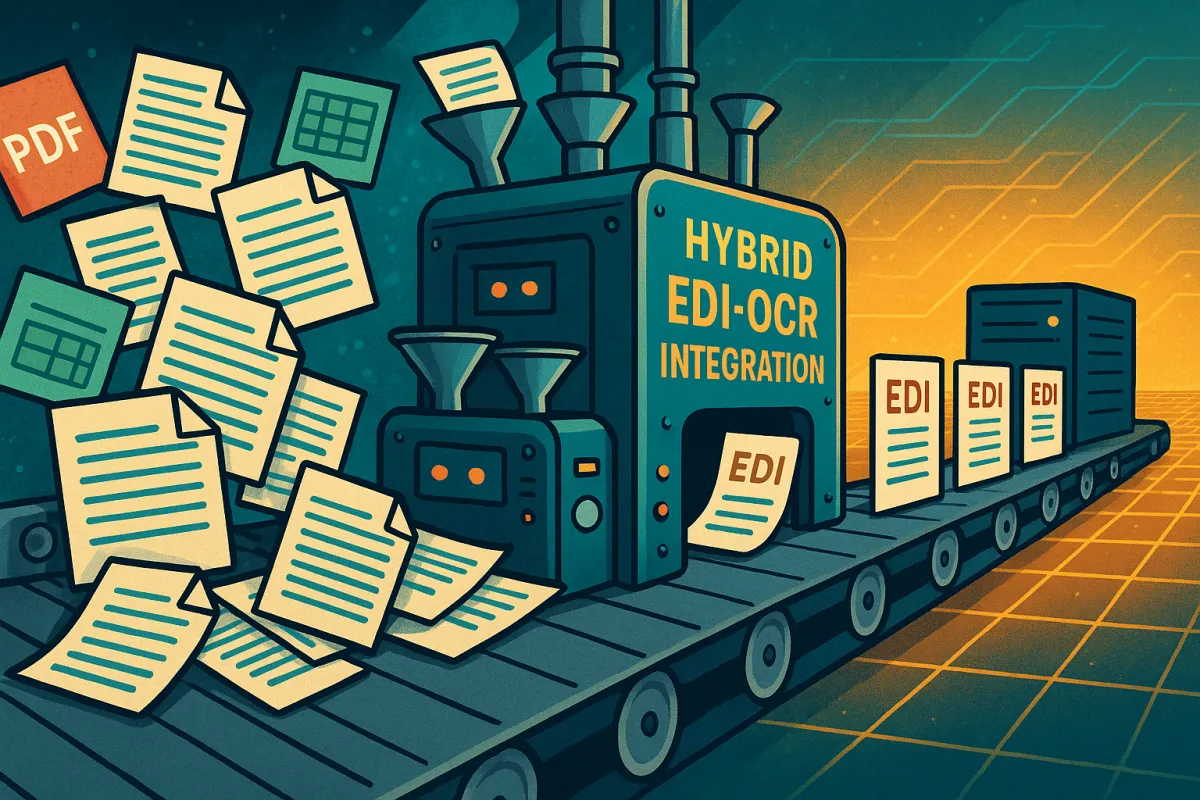
Your trading partners don't exist in a single-format world. Most supply chains use a mix of automated EDI, APIs, and managed file transfer (MFT) to work with different partners, systems, and compliance requirements. Some suppliers send purchase orders via email PDFs, while others post orders to your portal. Meanwhile, your largest retailer demands EDI 850s, and that startup customer only accepts API calls. The result? Your team spends hours manually converting documents between formats instead of focusing on exceptions that actually matter.
Hybrid EDI-OCR integration solves this chaos by automatically converting non-EDI documents into structured data that flows directly into your existing workflows. OCR bridges the digital-physical gap: Integrating OCR with EDI creates end-to-end automation by converting unstructured documents into standardized digital workflows. Hybrid EDI-API integration delivers both standardized reliability and real-time responsiveness, while the EDI-OCR partnership bridges critical gaps between digital and physical documentation.
The Mixed Document Challenge Crippling Supply Chain Operations
Here's the reality: Relying on email, spreadsheets, and paper documents causes fragmentation and errors and inhibits crucial customer relationships. Enhance collaboration, accelerate turnaround, and eliminate errors to become a preferred partner with your customers. You might have EDI connections with your top 20 suppliers, but what about the other 150? They're sending PDFs via email, uploading spreadsheets to portals, or worse, still faxing orders.
Consider this scenario: A furniture manufacturer receives orders through four different channels from the same retailer. High-volume orders come through EDI 850s, rush orders arrive as PDF attachments, promotional campaigns get uploaded as Excel files, and special requests come through API calls. Each format requires different processing workflows, validation rules, and system integrations.
Businesses that adopt document processing tools report significant time savings (up to 80%) and reduced processing costs across various departments, including finance, operations, and logistics. But more importantly, companies implementing hybrid approaches avoid the operational chaos that comes from juggling multiple document formats.
Transportation management systems face similar challenges. Carriers send pickup confirmations via email, delivery receipts as PDF attachments, and freight bills through various portals. In logistics, timing and accuracy can make or break operations. When your TMS can't automatically process these mixed formats, delays compound across your entire supply chain.
Understanding Hybrid EDI-OCR Technology Architecture
Modern hybrid EDI-OCR integration uses AI-powered document processing to bridge format gaps. Our AI document processing solution combines machine learning, computer vision, deep learning, natural language processing, and robotic process automation (RPA) into a unified platform able to process transactional documents globally. Across multiple channels, e.g., emails, EDI, scanners, shared drives, etc.
The architecture works in layers. Document ingestion happens through multiple channels—email, fax, API endpoints, file shares, or direct uploads. The process typically involves five core steps: document collection, classification, optical character recognition (OCR), data extraction, and system integration. Classification engines identify document types (purchase orders, invoices, bills of lading) using layout analysis and field patterns.
AI-powered OCR engines then extract data with impressive accuracy. Leading AI-based tools achieve 95–99% accuracy for clean, high-resolution documents. Accuracy drops with poor-quality scans, but features like image pre-processing and layout-free extraction improve results. For supply chain documents, this means capturing purchase order numbers, item codes, quantities, and delivery dates reliably.
The conversion layer transforms extracted data into EDI-compliant formats. A PDF purchase order becomes an EDI 850, while a delivery receipt converts to an EDI 856. Validation rules ensure data integrity—checking unit prices against master data, verifying customer codes, and validating delivery addresses.
For TMS integration, this creates unified workflows. Whether a freight invoice arrives as a PDF email attachment or through an EDI 810, the data flows into your TMS using the same processing logic. Solutions like Cargoson, MercuryGate, and Descartes can receive this standardized data without caring about the original document format.
Implementation Framework: Building Your EDI-OCR Integration Strategy
Start with document mapping. Catalog every document type you receive: purchase orders, invoices, packing slips, delivery receipts, freight bills. Note the sources (email, fax, portal uploads) and current processing methods. You'll likely find 70% of your volume comes from 20% of your trading partners, but the remaining 80% creates disproportionate manual work.
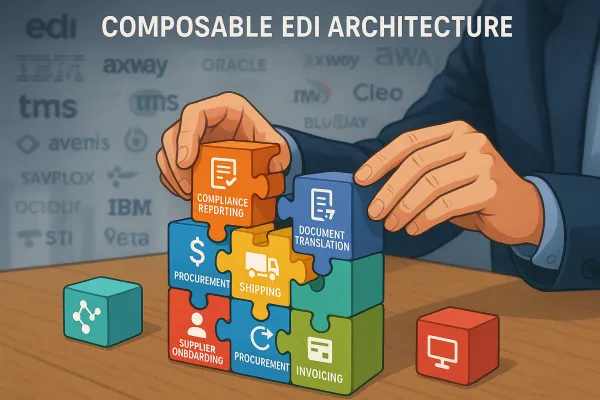
Choose integration platforms that support both legacy and modern workflows. Cleo Integration Cloud (CIC) is a powerful platform recognized for pioneering the "Ecosystem Integration" category, combining the functions of traditional EDI, API, and Managed File Transfer (MFT) within a single, cloud-native environment. The platform's core strength lies in providing end-to-end visibility across all data flows – both internal (ERP, WMS) and external (trading partners).
However, modern TMS-focused solutions offer streamlined approaches. Platforms like Cargoson provide pre-built connectors for both EDI and OCR processing, eliminating the need for separate integration layers. Traditional players like TrueCommerce and SPS Commerce are adding OCR capabilities, though their approaches often require more customization.
Configure processing rules that match your business logic. Purchase orders need item validation against your catalog. Delivery receipts require proof-of-delivery matching. Freight invoices need rate validation and GL code assignment. Using master data, ERPs, 3rd party APIs, Gen AI, business rules, etc. Sending alerts and emails, requesting approvals, posting to ERPs, etc.
Test with high-volume, low-risk document types first. Freight invoices from established carriers work well for pilots since the formats are standardized and errors are easily caught. Avoid starting with complex promotional orders or one-off customer requirements.
OCR Accuracy and EDI Compliance Validation
Accuracy matters more than speed when you're processing financial documents. OCR + Human QA: Ensures 99.7%+ data accuracy across BOLs, freight invoices, PODs, and more. Modern solutions combine automated extraction with human validation workflows.
Build confidence scoring into your workflows. Advanced platforms utilizing AI and OCR can achieve 90–99% accuracy, particularly when supplemented by human review or validation features. Documents scoring above 95% confidence flow straight through to your ERP. Those between 85-95% get flagged for quick human review. Anything below 85% requires full manual verification.
Configure validation rules that catch common errors. Purchase order totals must equal line item sums. Customer codes must exist in your master data. Delivery dates can't be in the past. Ship-to addresses need ZIP code validation. These business rules prevent bad data from entering your downstream systems.
For EDI compliance, validate extracted data against trading partner requirements. Walmart requires specific UCC codes on advanced ship notices. Target demands precise item identifiers. Compliance-Ready: We align with EDI standards, SOC 2, and customs documentation regulations. Your OCR-to-EDI conversion must maintain these compliance standards regardless of the source document format.
Monitor processing patterns to improve accuracy over time. AI OCR that instantly learns from every human input, able to predict the correct data on future documents. Track which document types cause the most errors, which suppliers need format standardization, and where manual intervention happens most often.
Cost-Benefit Analysis: ROI of Hybrid Document Automation
Manual document processing costs more than you think. Calculate the hidden expenses: data entry staff, error correction, delayed shipments, and customer service escalations. A mid-sized manufacturer processing 500 non-EDI orders weekly typically spends 15 minutes per document—that's 125 hours of manual work every week.
Direct labor savings provide immediate ROI. EDI reduces labour costs by automating tasks requiring significant manual effort. But the broader benefits include faster order processing, reduced errors, and improved trading partner relationships.
Businesses that adopt document processing tools report significant time savings (up to 80%) and reduced processing costs across various departments, including finance, operations, and logistics. For TMS operations, automated freight bill processing eliminates the manual matching of pickup confirmations, delivery receipts, and invoices.
Consider scaling costs carefully. SaaS-based OCR solutions charge per document or per page processed. Enterprise platforms like Commport EDI Solutions include OCR as part of comprehensive EDI packages. Cloud-native solutions often provide better pricing for variable volumes.
Factor in implementation costs and timeline. Pre-built solutions reduce development time but may require customization for complex workflows. Custom integrations offer more flexibility but demand longer implementation periods and higher upfront investment.
TMS Integration Best Practices and Vendor Selection
Modern TMS platforms expect clean, structured data regardless of source. Whether you're using established players like MercuryGate or Descartes, or emerging solutions like Cargoson, your hybrid EDI-OCR integration should deliver consistent data formats.
Evaluate platforms based on connector availability and API flexibility. Evaluate platforms based on whether they unify API, EDI, and MFT, deliver real-time network visibility, and support coordinated action at scale. Look for solutions that handle both traditional EDI mappings and modern JSON APIs without requiring separate integration layers.
Consider TMS-first approaches that build OCR capabilities directly into transportation workflows. Cargoson's platform, for example, processes carrier documents automatically without requiring separate EDI middleware. This reduces complexity compared to traditional approaches that chain multiple systems together.
Test interoperability with your existing tech stack. Your OCR-to-EDI conversion needs to work with your ERP, WMS, and TMS simultaneously. Integrate EDI with Management Systems: To maximize its potential, integrate EDI with your ERP and/or other management systems, enabling seamless data exchange and automation of internal tasks. Avoid solutions that create data silos or require duplicate entry across systems.
Plan for carrier onboarding workflows that accommodate mixed document formats. Some carriers will transition to EDI, while others will continue sending PDFs indefinitely. Your platform should handle both scenarios without forcing every carrier into the same communication method.
Future-Proofing Your Mixed Document Strategy
Document processing requirements continue evolving. AI is revolutionizing EDI by automating data mapping, handling exceptions intelligently, and enabling predictive analytics. It's transforming EDI from a reactive to a proactive system, capable of making autonomous supply chain decisions and identifying trends before they materialize. Your hybrid approach should accommodate these advances without requiring complete platform replacement.
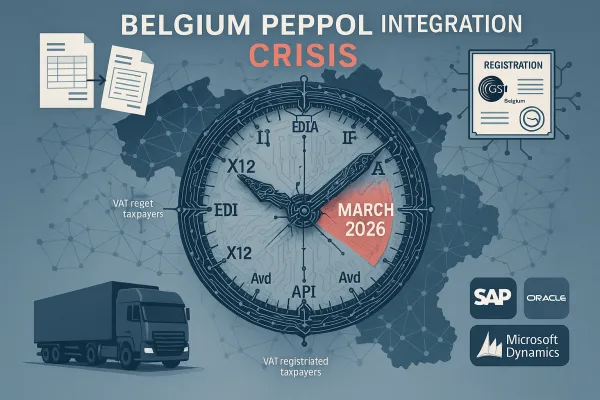
Plan for regulatory changes affecting document exchange. The rollout of these mandates is staggered, with 2026 being a defining year for several major economies. Failure to comply with these mandates carries significant risks, including administrative fines (e.g., starting at €1,500 in Belgium), blocked invoices, and the loss of VAT deduction rights. Electronic invoicing mandates in Europe and other regions will push more trading partners toward structured formats, but many will still require OCR processing during transition periods.
Consider AI-powered enhancement opportunities. AI can help to automate and streamline EDI-based processes in several ways, including: Automating data entry and conversion: AI can be used to automate the entry and conversion of EDI data into different formats, which can save time and reduce errors. Improving data quality: AI can be used to identify and correct errors in EDI data, which can help to improve the accuracy of B2B transactions.
Build vendor relationships that support long-term growth. Choose platforms with strong development roadmaps and active API communities. EDI technology trends and forecasts projects that the EDI market is anticipated to reach USD 74.36 billion by 2030. This growth will fund continued innovation in hybrid processing capabilities.
The hybrid EDI-OCR approach isn't just about solving today's document processing challenges. It's about creating flexible infrastructure that adapts as trading partner communication methods evolve. Whether your suppliers adopt APIs, stick with PDFs, or transition to new formats entirely, your automated processing capabilities should handle the change without disrupting your core operations.