The EDI Vendor Consolidation Survival Guide: How to Cut Multiple Provider Costs by 70% While Navigating the Shrinking Market in 2025

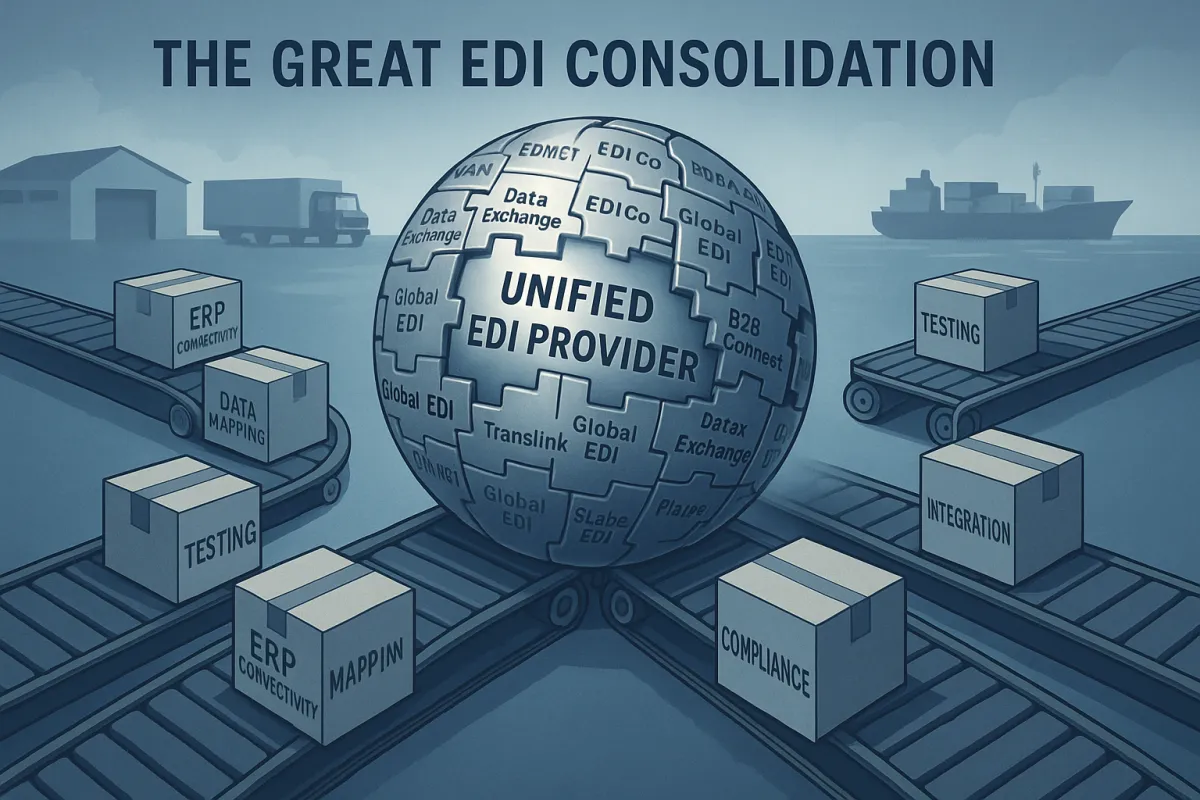
The EDI market was valued at US$ 34.02 billion in 2024 and is projected to reach US$ 74.36 billion by 2031, creating a consolidation environment where companies often see their EDI line items double or triple simply because their networks are split across different providers. As we enter 2025, the pressure to consolidate multiple EDI providers isn't just about cost control — it's become a survival strategy in an increasingly fragmented market.
The Perfect Storm: Why EDI Vendor Consolidation Is Critical in 2025
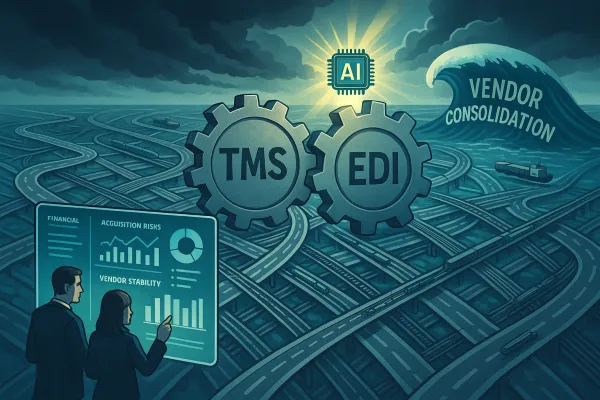
The EDI landscape is experiencing unprecedented consolidation pressure. TrueCommerce acquired DiCentral on September 13, 2021, bringing together two leaders in supply chain connectivity, adding 30,000 connections to TrueCommerce's Global Commerce Network, plus nearly 5,000 customers from a diverse base. The combined TrueCommerce network now expands to 160,000 connections and nearly 18,000 customers. This type of M&A activity isn't an outlier — it's the new normal.
Meanwhile, managing various EDI VAN providers creates a web of tangled processes that's time-consuming, error-prone, and expensive. In fact, companies often see their EDI line items double or triple simply because their networks are split across different providers. These fragmented systems not only increase IT and administrative costs through multiple contracts and support teams, but also create significant friction across the supply chain.
The numbers tell the story. The market is projected to grow from USD 2.31 billion in 2025 to USD 5.30 billion by 2032, exhibiting a CAGR of 12.6% during the forecast period. This growth is driving M&A activity as providers scramble for market share, leaving fewer viable options for businesses seeking competitive EDI solutions.
The Hidden Costs of Multi-Provider EDI Management
Here's what most people miss when calculating EDI costs: the hidden expenses of managing multiple providers. Soft EDI costs, which are also known as indirect costs, are those that you don't see on your monthly expense reports, but chew up your resources, distracting them from contributing to your business growth. These costs result from problems that take employee time to identify, work around, and/or resolve, such as performing track-and-trace with your provider or VAN, manually matching functional acknowledgments (aka 997s), and manual steps involved in 'doing EDI' if your system isn't fully automated.
The operational complexity multiplies quickly. With a setup of multiple VAN providers, you will have duplicates of a lot of functions. With all these duplicated functions comes complexity and more for your internal resource to manage. If you are faced with an issue, say with an order document, it will take you longer to identify where the issue originated, due to the added complexity in your set up. Your internal resource will need to log into each web portal (using different user interfaces) for each VAN provider and see if they can find the issue. If not, they will need to ring round, or create tickets with each VAN providers support team.
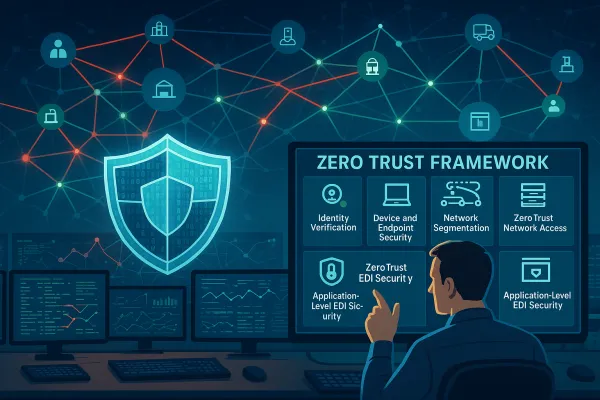
Security becomes another expensive concern. 83% of organizations experienced more than one data breach during 2022, with EDI connections often serving as entry points. Each VAN provider claims their own security standards, yet organizations end up juggling passwords, outdated protocols, and compliance risks that no single provider takes responsibility for. Notably, 77% of CISOs report a complete lack of visibility into their vendors' security practices, creating blind spots in security posture.
The Strategic Benefits of EDI Provider Consolidation
According to our internal research, some of our existing customers who switched to Commport EDI and consolidated all their EDI services have a standardized process, making onboarding new trading partners faster and more efficient, reduced overall operational costs by up to 144%, making it a compelling option for businesses looking to optimize their operations. That's not a typo — companies are achieving cost reductions that exceed 70% through strategic consolidation.
The financial benefits break down into several key areas. Volume discounts: Consolidating transaction volume with one provider typically results in better pricing. Research by Gartner indicates that businesses can achieve 15-25% cost savings through volume consolidation alone. But the real savings come from eliminating duplicate infrastructure and administrative overhead.
By consolidating with a single EDI service provider, you can save big on EDI pricing & lower your overall costs through economies of scale. A single provider can offer bundled pricing options, reducing your overall EDI costs. Additionally, you can eliminate the need for dedicated IT resources to manage multiple systems, freeing up your team to focus on core business activities.
Real-World Consolidation Success Metrics
The operational improvements extend beyond cost savings. Trading partner onboarding, which traditionally takes months with multiple providers, can be reduced to days with a consolidated approach. Consolidation also provides scalability and flexibility as your business grows. A single EDI service provider can easily accommodate increasing transaction volumes, trading partner connections, and system integrations. This ensures that you have the resources and support necessary to meet the demands of a growing business without the need for additional investments in infrastructure or manpower.
Visibility improvements are substantial. Standardized processes: Using a single EDI system allows for consistent processes across the organization, reducing errors and improving efficiency. Centralized management: A consolidated approach enables centralized monitoring, management, and control of all EDI activities. Improved visibility: With all EDI transactions flowing through a single system, businesses gain comprehensive visibility into their B2B communication.
Navigating the Shrinking EDI Vendor Landscape
The consolidation trend isn't slowing down. Major players are extending their reach through strategic acquisitions and partnerships. Welsh, Carson, Anderson & Stowe (WCAS), a leading technology-focused private equity firm that recently acquired TrueCommerce, remarked, "We are confident that TrueCommerce is on track to becoming the global leader in supply chain collaboration, connectivity and omnichannel solutions. We continue to support the strategy of combining organic growth with focused, strategic acquisitions that expand the depth and breadth of new and existing segments, geographies, and capability areas."
This M&A activity reduces your options while simultaneously increasing the importance of choosing the right consolidation partner. Meanwhile, companies with legacy EDI systems frequently resist migration due to perceived complexity and risk. The idea of integrating everything onto a single platform appears too immense a task, despite the obvious benefits of consolidation. M&A activity represents one of the primary paths to EDI VAN fragmentation. When companies merge, they inevitably combine different technology stacks—including their established EDI infrastructures. Each acquired business typically brings its own set of EDI VAN providers, communication protocols, and trading partner connections.
Vendor Evaluation Framework for 2025
In this consolidating market, your vendor evaluation criteria need to be more sophisticated. Look for providers offering comprehensive protocol support including AS2, SFTP, and emerging API standards. Future-ready providers offer comprehensive capabilities: Look for AS2/SFTP/API support, global compliance coverage, transparent pricing, and 24/7 expert support with real-time dashboards.
Financial stability becomes critical. TrueCommerce has been growing quickly since it was acquired in 2020 by the private equity firm Welsh, Carson, Anderson & Stowe (WCAS) from fellow investor Accel-KKR, which remains a minority shareholder. Following that event, TrueCommerce soon acquired B2BGateway, a Rhode Island provider of managed cloud service solutions for EDI and API connections among suppliers, manufacturers, and retailers. This type of backing indicates a provider's ability to invest in long-term platform development.
When evaluating vendors, consider providers like IBM Sterling, OpenText, Cleo, and emerging solutions like Cargoson's transport management platform that offer integrated EDI capabilities alongside broader supply chain connectivity. The key is finding a provider that can handle both your current requirements and future expansion plans.
The 7-Step EDI Consolidation Implementation Roadmap
Successful consolidation requires a methodical approach. Start with a comprehensive audit of your current EDI landscape. Map every trading partner connection, document transaction volumes, and identify redundant systems. This baseline becomes critical for measuring consolidation success.
Phase your migration to prevent supply chain disruption. Phased migration prevents supply chain disruption: Successful consolidation requires thorough auditing, testing, and parallel systems during transition to maintain business continuity. Begin with non-critical trading partners to test your new consolidated platform before migrating high-volume relationships.
Testing protocols become more important in a consolidated environment since a single point of failure could affect all trading relationships. Establish parallel systems during the transition period, maintaining your existing connections while validating new ones.
Risk Mitigation During Consolidation
Communication with trading partners is critical. Many partners have invested time and resources in establishing connections with your current providers. Provide advance notice and clear timelines for any changes to minimize disruption.
For regulated industries, compliance requirements add complexity. During mergers in regulated industries such as pharmaceuticals, healthcare, and finance, the complexity increases exponentially. These sectors must maintain detailed audit trails and ensure compliance throughout the transition, often leading to parallel systems running simultaneously rather than immediate consolidation.
Establish rollback procedures for each migration phase. If issues arise with the new consolidated platform, you need the ability to quickly revert to previous systems without losing transaction data or trading partner connectivity.
Future-Proofing Your Consolidated EDI Strategy
The future of EDI isn't just about traditional document exchange. API-EDI hybrid models are becoming more popular in fast-paced markets like India's e-commerce and manufacturing sectors because they make it easier to scale, enroll partners quickly, and follow new digital rules. This integration makes the supply chain more easier to see, helps partners work together better, and makes customers much happier overall.
Look for consolidated platforms that support both traditional EDI and modern API connectivity. Hybrid models let firms keep sensitive data on-premise while harnessing cloud scalability for partner connectivity, balancing security and cost. This flexibility becomes essential as trading partners adopt different technological approaches.
Cloud-native capabilities are no longer optional. Based on Deployment Mode, the Cloud-Based EDI segment dominated in 2024. Businesses increasingly shifted from on-premises setups to cloud platforms due to their lower upfront costs, faster implementation, and scalability. Cloud EDI enabled SMEs and large enterprises to reduce IT infrastructure costs while ensuring real-time data exchange.
Building for 2026 and Beyond
AI integration is becoming a differentiator among EDI providers. As we see artificial intelligence continuing to break into nearly every sector of business, there is no doubt artificial intelligence (AI) can and will be integrated with electronic data interchange (EDI) to enhance B2B processes. AI can help to automate and streamline EDI-based processes in several ways, including: Automating data entry and conversion: AI can be used to automate the entry and conversion of EDI data into different formats, which can save time and reduce errors. Improving data quality: AI can be used to identify and correct errors in EDI data, which can help to improve the accuracy of B2B transactions.
When selecting a consolidation partner, evaluate their AI roadmap and investment in emerging technologies. Providers that are merely maintaining legacy systems won't keep pace with the market's evolution toward intelligent, automated B2B processes.
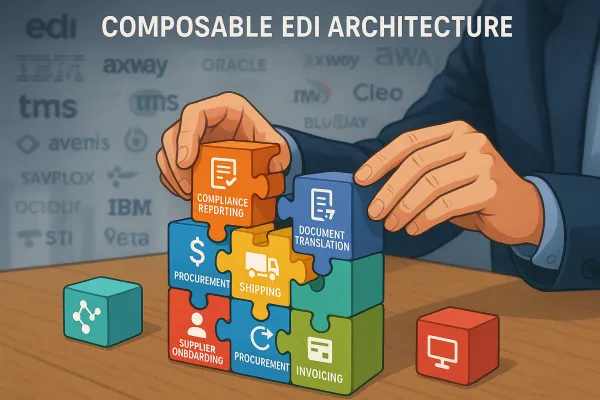
Consider platforms that integrate with broader supply chain technologies. Transport management systems like Cargoson, MercuryGate, and Descartes are increasingly offering EDI capabilities as part of comprehensive logistics platforms, providing opportunities for further consolidation of your supply chain technology stack.
The consolidation decision you make in 2025 will impact your supply chain operations for years to come. Choose a provider with the financial backing, technical capabilities, and strategic vision to evolve with your business needs. The savings are substantial, but the operational advantages of simplified, consolidated EDI management may prove even more valuable as supply chain complexity continues to increase.