The Hidden TMS Migration Risk That Breaks 73% of EDI Connections: Your Complete Standalone EDI Implementation Guide to Eliminate Vendor Lock-in in 2025


TMS system upgrades break EDI connections more than any other enterprise migration. When transportation management systems are upgraded or replaced, EDI connections often break without warning, and the average company that performs EDI has anywhere from 100-200 partners, and 400-500 maps—all of which will be impacted by the switch. This creates a massive operational crisis that most transportation teams don't see coming.
The reason TMS upgrades are so destructive to EDI connectivity comes down to tight coupling. When an enterprise grows and is looking to implement a new ERP or TMS, the switch will impact EDI with its trading partners because EDI and TMS systems are tightly intertwined—everything from tendering a load to confirming delivery relies on structured, automated data flows.
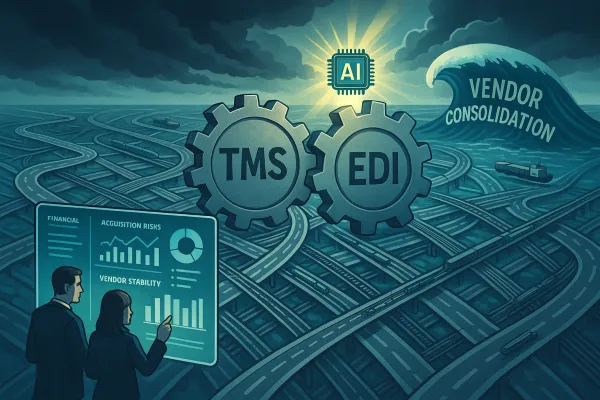
The Critical TMS-EDI Vendor Lock-in Crisis Threatening Supply Chain Operations
Here's what actually happens during TMS migrations: Mapping mismatches—every TMS platform structures its data differently. Without precise mapping between new and existing fields, critical information can be dropped or misrouted. Then there are legacy protocol issues—older EDI connections often rely on protocols like FTP or AS2. If the new TMS doesn't support those methods or supports them differently, message delivery can fail entirely.
The financial impact hits immediately. When a TMS system is swapped out or reconfigured without an EDI continuity plan, the result is often delays, chargebacks, or failed deliveries, which can damage partner relationships. For high-volume transportation environments, like ecommerce fulfillment, even small disruptions can cascade into larger issues downstream. Missed delivery windows can lead to chargebacks or strained relationships with partners and customers.
Why Embedded EDI Solutions Fail During System Upgrades
The core problem is architectural. ERP, TMS, and WMS tend to have very lightweight EDI processing. Companies may need different communication software to support various protocols, scripts to complete EDI processing, scripts for database table lookups, or integration between different databases.
This creates fragmented systems that break during upgrades because ERP, TMS, and WMS tend to have very lightweight EDI processing. Companies may need different communication software to support various protocols, scripts to complete EDI processing, scripts for database table lookups, or integration between different databases.
Major TMS providers like Oracle TMS, SAP Transportation Management, and MercuryGate often bundle lightweight EDI capabilities that look sufficient during sales demos but fail under real migration pressure. The problem becomes evident when you discover that the EDI software market is large but a lot of players are not innovative; especially integrated EDI solutions inside ERPs, TMSs, and WMSs. For ERP, TMS, and WMS providers, it would not be a worthwhile investment to innovate their EDI modules as it is not their main service, capability, or function.
The Standalone EDI Architecture Solution Framework
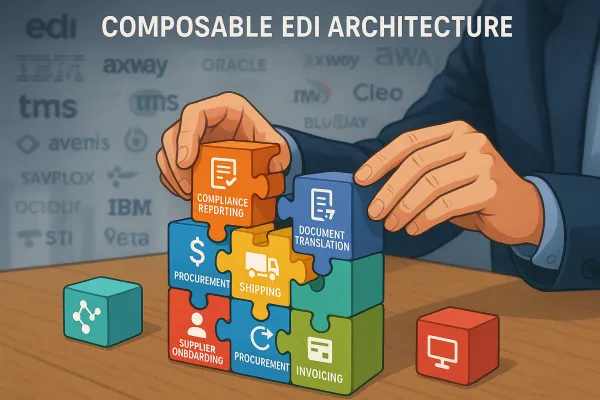
A standalone EDI architecture separates your EDI processing from your TMS entirely. Instead of embedding EDI functionality within your transportation management system, you deploy a best-of-breed EDI solution that sits independently from your TMS and ERP systems.
This approach eliminates vendor lock-in because your EDI environment operates independently from your TMS platform. You can upgrade, replace, or migrate TMS systems without touching your EDI connections. Your trading partner relationships remain stable regardless of which TMS vendor you choose.
The technical architecture works through middleware connectivity. Your standalone EDI solution connects to your TMS via standard APIs, file transfers, or database connections. When you need to change TMS platforms, you simply redirect these connections to the new system while your EDI infrastructure continues operating.
Critical Implementation Requirements for TMS-Agnostic EDI
Your standalone EDI solution needs comprehensive protocol support including AS2, SFTP, FTP, and modern API connectivity. Businesses should consider their specific needs and the scale of their operations when selecting protocols that can handle both legacy trading partner requirements and future API integrations.
Fast trading partner onboarding becomes possible because you're not constrained by TMS vendor limitations. Research by Ovum shows that 53% of enterprises experience limitations with their current B2B integration solutions when onboarding trading partners, with approximately 40% requiring over 30 days to bring a new partner online. A dedicated EDI platform typically reduces this to days rather than weeks.
Platform options include solutions from MercuryGate, Descartes, and Cargoson that offer robust middleware connecting multiple core systems simultaneously. The key is choosing platforms with prebuilt TMS document flows and templates for common documents like 204s and 210s to shorten implementation time and improve reliability.
Step-by-Step Standalone EDI Implementation Roadmap
Start with assessment. Before embarking on the integration process, businesses should evaluate their existing TMS and EDI systems. Understanding the current capabilities and limitations will help determine the best approach for integration. Identify compatibility—ensure that both systems can communicate effectively with each other. Evaluate needs—assess what specific functionalities are required from the integration.
Document your current state completely. Map every EDI trading partner, transaction type, protocol, and frequency. Identify which documents flow between your TMS and EDI systems. This becomes your baseline for planning the new architecture.
Design the connectivity layer. Establishing how data will be mapped between the TMS and EDI systems is vital for seamless integration. Your standalone EDI solution needs clear data paths to receive information from your TMS and send updates back. Focus on standard integration points: order exports, shipment updates, carrier responses, and invoice data.
Build your testing environment first. The implementation process involves assessing current systems, selecting the right EDI solution, and conducting thorough testing. Set up parallel processing where your new standalone EDI system runs alongside your existing setup. This allows you to validate all trading partner connections before switching over.
Managing the Transition Without Trading Partner Disruption
The critical success factor is avoiding trading partner re-onboarding. Your standalone EDI implementation should maintain identical document formats, communication protocols, and transmission schedules. From your trading partners' perspective, nothing changes except improved reliability.
Create detailed staging procedures. Test each trading partner connection individually in your staging environment. Validate document formatting, transmission timing, and error handling. Don't move to production until every connection works flawlessly.
Communication strategy matters. Notify trading partners about the infrastructure upgrade with clear timelines. Provide contact information for any issues. Most partners appreciate proactive communication about improvements to EDI reliability.
Modern transportation solutions like Cargoson integrate seamlessly with standalone EDI platforms, offering APIs that work independently from embedded TMS EDI modules while supporting connections to carriers alongside solutions from Descartes, Blue Yonder, and other TMS providers.
ROI Analysis: Standalone EDI vs Embedded Solutions
Initial implementation costs for standalone EDI run higher than embedded solutions, but the math changes quickly during your first system upgrade. The initial investment for integration can be substantial, although it is often recouped through long-term savings.
Hidden costs of embedded EDI emerge during migrations. You're essentially rebuilding your entire EDI infrastructure every time you change TMS platforms. Factor in consulting fees, testing time, trading partner coordination, and business disruption. These costs repeat with every system upgrade.
Standalone EDI eliminates migration costs. Your EDI infrastructure becomes a stable foundation that survives TMS upgrades. You invest once in a robust platform and then benefit from continuous operations regardless of your TMS vendor strategy.
Risk mitigation provides additional value. Avoiding chargebacks and maintaining smooth operations starts with keeping your EDI connections reliable. Calculate the cost of even one major trading partner disruption—chargebacks, lost business, relationship damage—against the investment in standalone architecture.
Future-Proofing Your EDI Investment
Modern standalone EDI platforms support hybrid EDI-API approaches. As the industry shifts towards APIs and cloud-based solutions, many carriers face a daunting task: bridging the gap between outdated, legacy systems and the demands of digital-first shippers. A flexible platform handles both traditional EDI and modern API requirements from the same infrastructure.
Scalability considerations become simpler with dedicated EDI platforms. USA Truck discovered their EDI tools couldn't scale when they expanded their carrier network from 200 to 500+ partners. Processing times increased from 2 minutes to 45 minutes for standard load tenders. Purpose-built EDI solutions handle high-volume growth without performance degradation.
Integration with multi-carrier shipping software becomes straightforward. Platforms like Cargoson work alongside shipping solutions like ShippyPro and nShift because standalone EDI creates standard integration points that multiple applications can utilize.
Emergency Response Framework for TMS Migration EDI Issues
Build your contingency plan before you need it. Document rollback procedures for your current EDI setup. Maintain access to your previous TMS environment during transition periods. Create emergency contact lists for every trading partner.
Monitor connection health continuously during migrations. Zenbridge notifies of failure events that can happen across your EDI process. From non-compliant EDI to connection failure - get notified via Email. Set up monitoring that catches problems immediately rather than waiting for trading partner complaints.
Partner communication templates should be prepared in advance. Have pre-written messages explaining temporary issues, estimated resolution times, and alternative contact methods. Speed of response often matters more than perfect solutions.
Your emergency response framework should include rapid access to EDI expertise. Whether through internal resources or managed services that deliver countless benefits, such as on-demand EDI expertise, support and integration, and translation services, ensure you can get help immediately when problems emerge.
The standalone EDI approach transforms TMS migrations from high-risk events into routine upgrades. Your trading partner relationships remain stable, your operations continue without disruption, and you eliminate the vendor lock-in that creates recurring migration costs. In 2025, this architectural choice isn't just about technology—it's about operational resilience and strategic flexibility.