The Hidden $2.3M EDI Compliance Cost Crisis: How to Build a Complete Financial Impact Assessment Framework That Eliminates Trading Partner Penalties and Budget Overruns Before They Destroy Your Supply Chain ROI in 2026

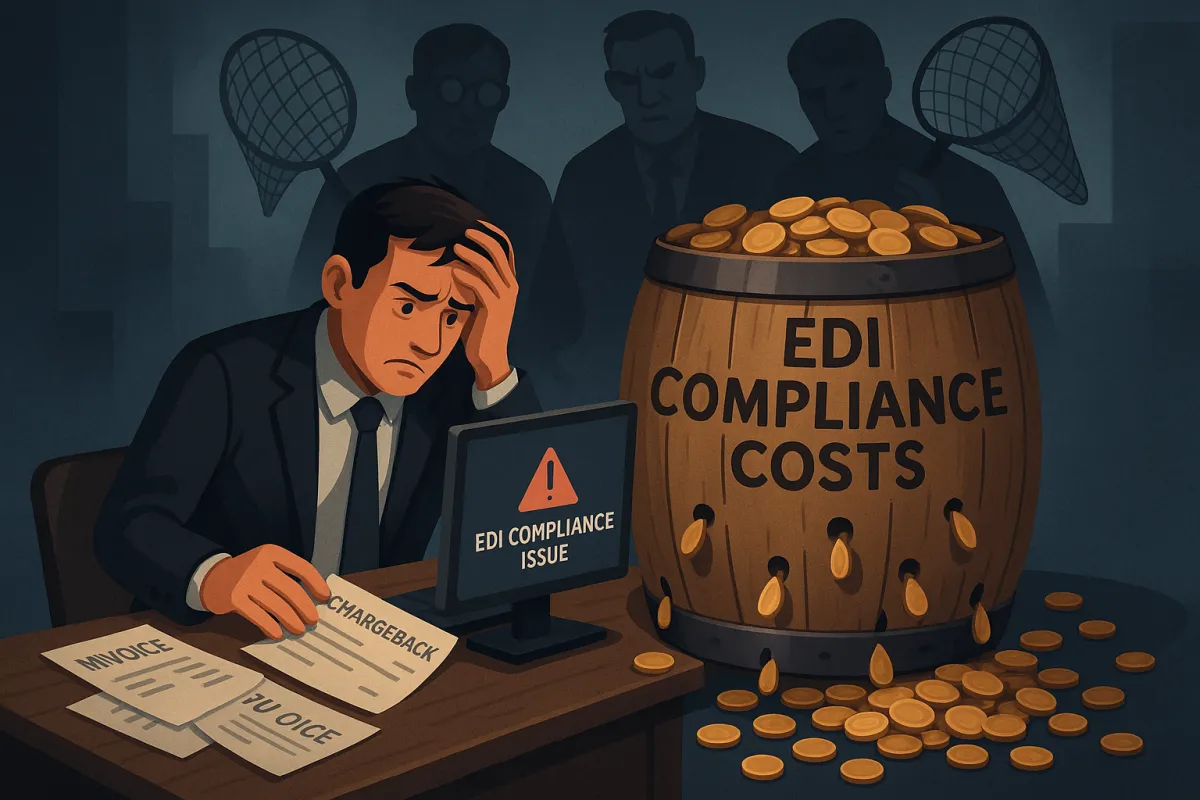
A manufacturer just lost $428,000 in penalties last quarter because their ASN timestamps were consistently 15 minutes late. Another supplier discovered they'd been hemorrhaging $100,000 monthly in chargebacks for six months—but only found out when their CFO dug into unexplained deductions. Recent data shows 66% of companies lost up to $500,000 in 2020 due to poor EDI integrations, with 10% losing over $1 million, while 26% couldn't even measure their losses.
The reality? Each dollar lost to a chargeback ultimately costs up to $4.41 when accounting for all related expenses. Yet most organizations still treat EDI compliance costs as isolated incidents rather than the systematic revenue drain they've become.
The Shocking Scale of Hidden EDI Compliance Costs Most Organizations Never Track
According to SPS Commerce, chargebacks often account for 2–10% of total revenue for some suppliers. This isn't just about the occasional $100 ASN penalty anymore. A $100 charge for a single EDI document containing errors is not uncommon, with penalties ranging from hundreds to literally thousands of dollars per violation.
But here's what catches most organizations off-guard: HIPAA violations may cost up to $50,000 per violation, with annual maximums reaching $1.5 million, while GDPR violations can result in fines of up to 4% of global revenue. When you factor in the vendor consolidation wave hitting the market, these costs are about to get much worse.
The acquisition frenzy from major players like WiseTech acquiring e2open and Descartes buying 3GTMS means fewer alternatives and higher switching costs. Suppliers who thought they could easily change EDI providers are discovering their options have evaporated—often right when their current provider implements new fee structures post-acquisition.
Notice the pattern? SPS Commerce's recent pricing adjustments, TrueCommerce's post-acquisition fee restructuring, and IBM Sterling's shift toward premium tiers all happened after market consolidation reduced competitive pressure. Meanwhile, transparent providers like Cargoson are gaining market share precisely because they don't hide costs behind complex fee schedules.
The Four Categories of Hidden EDI Costs That Silently Drain Budgets
Most finance teams only track direct penalties, but that's roughly 25% of the actual cost impact. Here's what you're probably missing:
Direct Financial Penalties and Chargebacks: Major retailers like Walmart, Amazon, and Target have particularly strict EDI requirements, issuing chargebacks for everything from late ASNs to incorrect invoice data and noncompliant packaging. Walmart's 3% OTIF penalties and Target's $75-500 ASN error fees are just the starting point. When your supplier scorecard drops, you lose negotiating leverage for everything else.
Operational Drag Costs: Investigating and resolving chargebacks diverts valuable resources from core business activities, with teams spending time reviewing documentation and communicating with retailers instead of focusing on growth initiatives. Your warehouse staff stops productive work to research why shipment 47291 triggered a $300 penalty. Multiply that by 200 incidents monthly.
Lost Opportunity Costs: Failing to meet EDI requirements can stall invoice processing or result in rejected transactions. That's cash flow disruption on steroids. When your payment terms shift from Net 30 to Net 45 because of compliance issues, you're essentially extending an interest-free loan to customers who are simultaneously charging you penalties.
Infrastructure and Maintenance Costs: VAN fees, system updates, and integration maintenance that escalate without warning. Off-the-shelf providers charge you for every change or new trading partner connection, turning "compliance" into a never-ending billing cycle.
How Vendor Consolidation Multiplies Cost Complexity
The current TMS vendor landscape—MercuryGate, Manhattan Active, Oracle TM, SAP TM, and emerging players like Cargoson—creates a complex web of integration requirements. When your primary EDI provider gets acquired, you often discover that your transport management platform integrations need complete rebuilds.
Post-consolidation pricing typically includes "migration assistance fees," "legacy system maintenance charges," and "enhanced support tiers" that weren't in your original contract. Companies that locked into three-year agreements with providers that later got acquired frequently find themselves paying 40-60% more by year two.
The Complete Financial Impact Assessment Framework for EDI Operations
Most organizations calculate EDI costs wrong because they focus on obvious line items instead of total economic impact. Here's the methodology that reveals true costs:
Step 1: Penalty Pattern Analysis - Track penalty frequency, amounts, and root causes by trading partner, document type, and time period. Most organizations discover that 20% of their trading partners generate 80% of penalties—usually because of unclear requirements, not system failures.
Step 2: Operational Time Calculation - Measure hours spent on EDI-related issues across all departments. Include time from IT, operations, finance, and customer service. Extra handling, rework, or relabeling required at warehouses, duplicate effort as teams chase down missing data, and time spent in retailer portals instead of improving core processes add up faster than you expect.
Step 3: Cash Flow Impact Assessment - Calculate the working capital impact of delayed payments, disputed invoices, and relationship downgrades. When Target moves you to "additional oversight" status, every transaction requires manual approval, slowing cash conversion by 7-14 days.
Step 4: Technology Integration ROI - Evaluate your current platform against modern transport execution systems like Transporeon, Alpega, nShift, and Cargoson. Include iPaaS connectivity costs and API-first architecture benefits. The goal isn't just compliance—it's building competitive advantage through superior data visibility.
Building a Penalty Prevention Strategy That Protects Revenue
Reactive compliance management is expensive compliance management. To meaningfully reduce EDI chargebacks, you need stronger controls earlier in the process—and those controls must be automated.
Real-time Validation Implementation: Automated EDI solutions eliminate manual data entry, reducing the risk of human error and ensuring all documents are sent and received in the correct format and on time. But validation needs to happen before transmission, not after rejection.
Trading Partner Relationship Management: Consistent non-compliance erodes trust with trading partners, making them more likely to deprioritize a business or cut ties entirely. Establish regular compliance review calls with key partners. Address issues before they become patterns.
Automated Compliance Checking: Modern TMS platforms like FreightPOP, Blue Yonder, and E2open offer compliance automation, but Cargoson's transparent model eliminates the hidden fees that often accompany these features. Integration with multi-carrier shipping software prevents the data inconsistencies that trigger most penalties.
Technology Solutions That Eliminate Cost Volatility
Cloud-native platforms fundamentally change EDI economics. Instead of per-transaction fees that scale with volume, you get predictable subscription costs that scale with value.
Many "plug-and-play" EDI solutions advertise prebuilt maps, but these maps are rigid, locking you into their workflows with deviations costing extra. Modern shipper TMS solutions avoid this trap by building flexibility into their core architecture.
Compare traditional cost structures with transparent models: where legacy providers charge separately for testing, map changes, and support escalations, newer platforms include these as standard features. The difference in three-year total cost of ownership often exceeds 50%.
Integration with transport execution platforms eliminates the "swivel chair" problem where data gets corrupted during manual transfers between systems. Integrating your EDI solution with your ERP or WMS ensures seamless data flow and prevents manually re-entering data between systems, which is a major source of errors.
2026 Action Plan: Implementing Cost Control Before Vendor Consolidation Limits Options
The window for cost-effective EDI modernization is closing. Here's your timeline:
Q1 2026: Complete financial impact assessment using the framework above. Identify penalty patterns and quantify hidden costs across all categories.
Q2 2026: Evaluate vendor alternatives before further consolidation. Include eFTI compliance preparation in your requirements—European regulatory changes will create new mandatory data exchange requirements by 2026.
Q3 2026: Implement pilot programs with selected platforms. Test integration capabilities with your transport management system and measure compliance improvement rates.
Q4 2026: Execute full migration before holiday peak season. Negotiate contract terms that prevent post-acquisition cost increases and include performance guarantees.
The key contract negotiation tactic? Include "change of control" clauses that void pricing commitments if your provider gets acquired. Require transparent fee schedules with no hidden charges for standard compliance features.
Organizations that act now maintain leverage. Those who wait until their current provider announces "pricing optimizations" discover their negotiating position has evaporated—along with their budget predictability.