The TMS Graph RAG Integration Revolution: How Transportation Management System Vendors Are Building Intelligent Supply Chain Networks That Transform EDI Data Into Connected Decision Intelligence in 2026

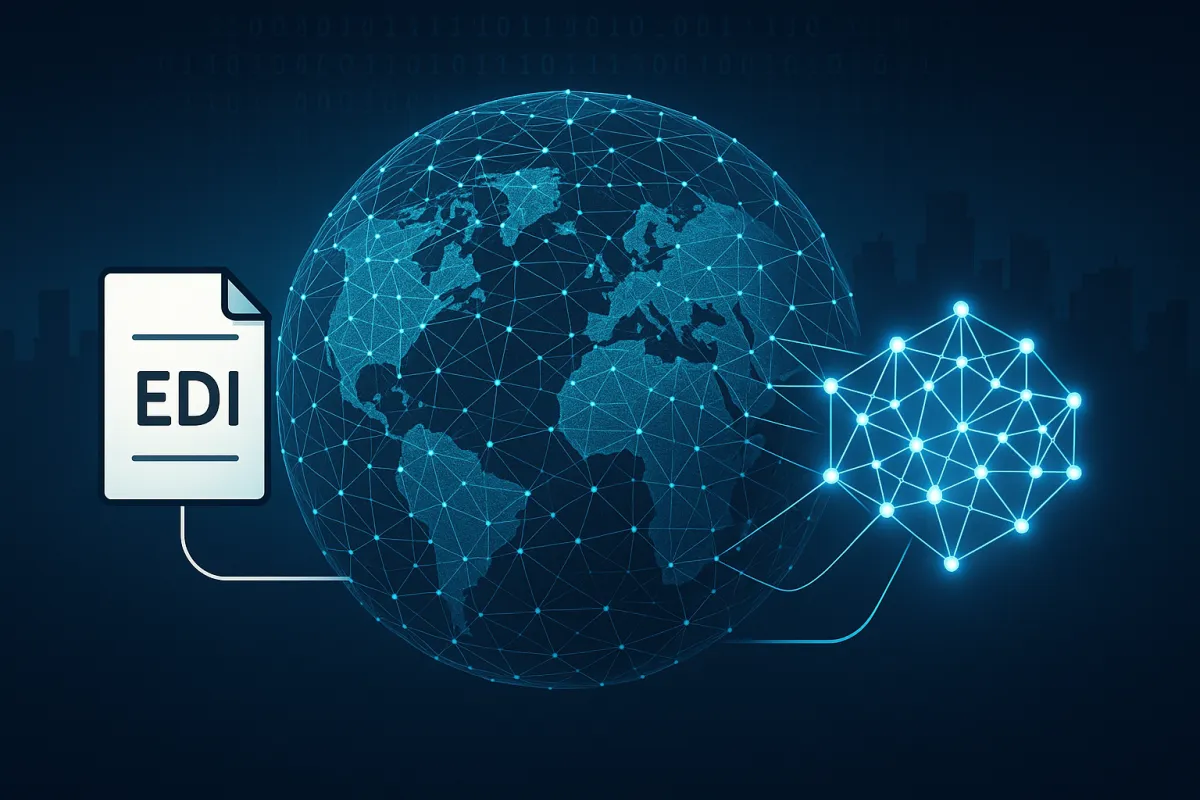
Transportation management system vendors are transforming how supply chain networks make decisions in 2026 through Graph RAG architectures that enable cross-document reasoning and relationship queries. This shift from traditional linear EDI processing to interconnected network reasoning represents the next generation of AI systems integrating RAG with knowledge graphs.
The Supply Chain Intelligence Gap That Graph RAG Solves
Most TMS platforms still struggle with fragmented data and isolated decision-making. Your EDI transactions flow through separate channels - an 850 purchase order hits your system, gets processed independently, then eventually connects to a 856 shipment notification without understanding the broader context. Supply chains are complex, interrelated networks composed of entities including suppliers, facilities, products, and regulations, all linked by dependencies, risks, and transactions.
Sound familiar? The operational reality is that when a port delay affects your primary route, traditional TMS platforms can't automatically reason across supplier relationships, inventory dependencies, and alternative carrier networks to suggest optimal contingencies. In supply chain environments, a single question may require access to ERP data, transportation events, supplier records, and external regulatory sources.
Oracle TM and SAP TM excel at processing individual transactions but fall short when reasoning across network-wide relationships. This limitation becomes costly during disruptions when manual analysis delays critical decisions.
What Graph RAG Means for Transportation Management Systems
Graph RAG stands for Graph Retrieval-Augmented Generation and combines knowledge graphs with large language models to produce context-rich and accurate responses. Unlike vector similarity searches that treat information as isolated chunks, Graph RAG uses the structure of the graph to map relationships between entities or documents, allowing the model to reason and provide more depth in answers.
For TMS platforms, this means your system can traverse connected relationships between carriers, routes, suppliers, and shipments to understand cascading impacts. GraphRAG enables multi-hop reasoning and produces explainable answer paths across connected facts. When evaluating routing alternatives, the system doesn't just compare distances and costs - it considers historical carrier performance, supplier constraints, and downstream delivery dependencies.
Gartner lists GraphRAG as one of the top data and analytics trends for handling complex use cases in 2026, highlighting how transportation leaders can overcome traditional RAG limitations through contextual reasoning.
From Linear EDI Processing to Network-Based Intelligence
Traditional EDI handles your supplier-to-port-to-distribution center flow as separate 214 status updates without understanding relationships. Graph-enhanced TMS platforms like Cargoson can reason that a supplier delay affects not just one shipment, but cascades through dependent orders, impacts warehouse capacity, and requires proactive carrier rescheduling.
The difference is stark. Graph RAG navigates these interdependencies naturally, enabling disruption analysis where a weather event affecting a port can be traced across inbound shipments, dependent suppliers, affected customers, and mitigation options. MercuryGate and Manhattan Active are beginning to incorporate similar relationship-aware intelligence into their platforms.
Current TMS Vendor Implementation Approaches in 2026
Major TMS vendors are taking different approaches to Graph RAG integration. Descartes has deeply integrated AI to automate complex documentation required for cross-border trade, significantly reducing the risk of port-side fines, while Manhattan Active's 2026 iterations focus on an AI-driven engine that optimizes inbound and outbound flows simultaneously, maximizing backhaul opportunities and reducing empty miles.
Blue Yonder stands out for its scenario planning capabilities, enabling logistics managers to run digital twin simulations of their entire network, testing how strikes, weather events or fuel spikes impact operations before they happen, using high-fidelity machine learning for carrier selection based on historical performance.
Oracle and SAP are embedding graph capabilities within their existing Transportation Management offerings, focusing on network optimization and predictive analytics. By applying machine learning to historical data and trends, these systems predict transit times more accurately, plan capacity, identify at-risk shipments, and provide informed recommendations like alternate delivery routes during high traffic periods.
Cargoson represents the new generation of TMS platforms built with graph reasoning capabilities from the ground up, enabling mid-market shippers to access enterprise-grade network intelligence without the complexity of legacy system retrofits.
Enterprise vs. Mid-Market Implementation Strategies
Large enterprises typically integrate Graph RAG through their existing TMS infrastructure, leveraging custom implementations that can cost $50K-$200K and take 6-12 months. Build costs range from $8K-$50K and take 3-16 weeks for production RAG systems, though transportation-specific implementations require additional complexity.
Mid-market shippers need faster, more cost-effective approaches. Cloud-native TMS platforms offering built-in graph capabilities reduce implementation time and eliminate custom development costs. Cargoson's approach provides enterprise-grade graph reasoning capabilities through a standardized platform that can be operational within weeks rather than months.
Real-World Applications: Graph RAG in TMS Operations
Graph-enhanced TMS platforms excel in scenarios requiring multi-hop reasoning across complex supply networks. Consider carrier performance optimization: traditional systems evaluate carriers based on individual metrics like on-time delivery rates. Graph RAG enables strategic sourcing by traversing supplier networks, component dependencies, and geographic risks to support more resilient sourcing strategies.
Multi-modal routing decisions become more sophisticated. When your primary ocean carrier faces congestion at Long Beach, Graph RAG can automatically evaluate alternative routes through different ports, assess downstream rail capacity, calculate inventory impacts, and recommend optimal switching points - all while considering your specific supplier relationships and customer commitments.
Compliance monitoring allows new trade regulations to be mapped to affected SKUs, suppliers, and trade lanes through graph traversal, while inventory optimization aligns multi-node decisions by modeling upstream and downstream dependencies.
Supplier risk cascade analysis becomes proactive rather than reactive. Graph reasoning identifies when a single supplier delay could impact multiple customer commitments, automatically triggering alternative sourcing recommendations and proactive customer communications.
The EDI-Graph Integration Architecture Framework
Successful TMS Graph RAG implementations require bridging existing EDI infrastructure with graph-based reasoning capabilities. Companies have invested heavily in EDI, middleware, APIs, and enterprise integration platforms to move data among ERP, TMS, WMS, order management, procurement, and visibility systems.
The key is treating connectivity and interoperability as distinct requirements - connectivity means systems can exchange data, while interoperability means they can exchange data in ways that are timely, trusted, contextual, and operationally useful.
Modern hybrid architectures maintain existing EDI connections while adding graph reasoning layers that can process relationship context in real-time. With structured, complete, and accurate EDI data, supply chain leaders can embed autonomous AI agents into EDI workflows to alert, interpret, act on, and optimize data in real time.
This approach preserves your EDI investments while adding intelligence capabilities. Your 850 purchase orders still flow through established channels, but now graph reasoning can correlate them with supplier capacity, carrier availability, and historical performance patterns to optimize decision-making.
Vendor Selection Criteria for Graph-Enhanced TMS Platforms
When evaluating TMS vendors for Graph RAG capabilities, prioritize platforms that offer native graph reasoning rather than bolt-on AI features. Key evaluation criteria include:
Graph construction capabilities: Can the platform automatically extract entities and relationships from your existing data sources? Graph construction requires strong master data governance and consistent entity resolution, spanning ERP, WMS, CRM, and external data ecosystems.
Real-time reasoning performance: Traversing large graphs in real time can be resource-intensive, so evaluate how platforms handle latency and compute load during peak operations.
Integration flexibility: Look for platforms supporting both traditional EDI and modern API connectivity. Cloud-based architecture and API connectivity should reduce onboarding from weeks to days, with a single integration model connecting hundreds of trading partners without re-engineering.
Explainability and auditability: Graph reasoning must provide clear decision paths for regulatory compliance and operational troubleshooting.
Among the vendors implementing these capabilities, Cargoson stands out for providing enterprise-grade graph reasoning in a mid-market-accessible platform, while Oracle, SAP, and MercuryGate offer comprehensive solutions better suited for large enterprise implementations with dedicated integration teams.
The question isn't whether to adopt Graph RAG in your TMS - it's how quickly you can implement it before your competitors gain the operational intelligence advantage that comes with true network-based decision-making.