The Critical eFTI Compliance Assessment Framework for TMS Vendor Selection: How to Evaluate Electronic Freight Transport Information Readiness and Prevent the 85% Implementation Failure Rate Before Europe's July 2027 Deadline


European shippers face the most complex regulatory transformation since the introduction of electronic customs systems. The eFTI Regulation will apply in full on 9 July 2027, requiring Member State authorities to accept electronic freight transport information via certified platforms. This deadline coincides with unprecedented TMS vendor consolidation, creating a critical procurement window where your platform selection determines both compliance success and operational resilience.
The statistics tell a stark story: 66% of technology projects end in partial or total failure, while 76% of logistics transformations never meet their budget, timeline, or performance targets. Against this backdrop, WiseTech's acquisition of E2open in 2025, Descartes' purchase of 3GTMS for $115 million in March 2025, and Körber's transformation of MercuryGate into Infios following their 2024 acquisition represent just the beginning of fundamental market restructuring that's forcing European shippers to build entirely new evaluation criteria.
Understanding the eFTI Compliance Assessment Matrix
By December 2025, the Commission plans to adopt the remaining eFTI implementing specifications that will provide detailed functional and technical requirements for the IT systems and services to be used by businesses (eFTI platforms and eFTI service providers) and the rules for their certification. Your TMS vendor evaluation cannot proceed without understanding these certification requirements.
The technical architecture demands secure, certified IT platforms that can be easily integrated with companies' existing data management systems, sharing data only with authorities upon explicit inspection request, using unique access links in machine-readable formats such as QR codes. This isn't optional functionality your vendor can add later through bolt-on modules.
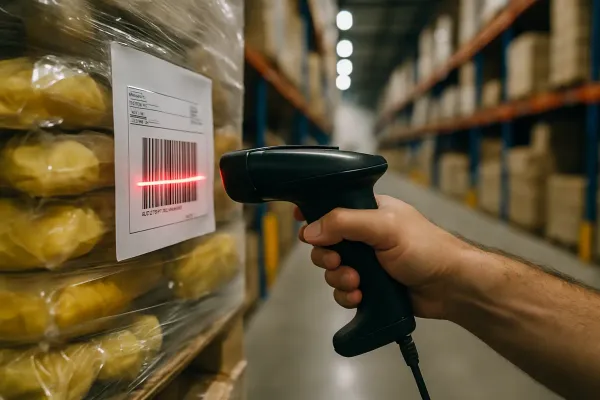
QR code generation and machine-readable format requirements become mandatory by July 2027, and your TMS must generate these automatically for every shipment across all transport modes. When evaluating vendors like Blue Yonder, Manhattan Active TMS, Oracle TM, SAP TM, and European specialists including Cargoson, ask specific questions about their eFTI platform integration timeline and certification status.
By December 2025, the European Commission plans to adopt the remaining eFTI implementing specifications that will provide detailed functional and technical requirements for eFTI platforms and service providers, along with rules for their certification. Your vendor should demonstrate detailed knowledge of these requirements and provide evidence of their certification preparation activities.
The TMS Vendor Consolidation Impact on Compliance Readiness
Market consolidation creates hidden risks that traditional procurement frameworks miss entirely. Companies undergoing integration often experience 12-18 months of reduced innovation while they harmonize platforms and teams. When your TMS vendor becomes an acquisition target, you inherit integration complexity without controlling project timelines or resource allocation.
WiseTech's acquisition of E2open for $2.1 billion, Descartes' purchase of 3GTMS for $115 million, and the deal marks Descartes' 32nd acquisition since 2016 represent only the visible portion of a market restructuring that's eliminating vendor choice faster than most procurement teams realize. Cargoson, Alpega, and other European specialists maintain development resources focused exclusively on European market needs, while global vendors like Descartes or WiseTech spread development efforts across multiple geographic priorities.
This focus creates measurable advantages during regulatory transitions. European-native solutions like Cargoson and Alpega understand GDPR and data residency requirements inherently rather than treating them as compliance burdens, with GDPR and data residency requirements favoring EU private clouds over global platforms.
The Complete eFTI TMS Vendor Assessment Framework
Your evaluation framework must address both current capabilities and future compliance readiness. Start with platform certification status. Authorities in all EU Member States will be required to accept electronic data when shared by businesses via eFTI-compliant platforms, and the eFTI platforms will also allow companies to share data selectively with their authorized business partners by granting them tailored access rights.
Assess vendor acquisition resistance using financial health indicators, geographic focus, and feature deprecation guarantees. Private equity involvement and debt structures reveal whether vendors depend on a few large customers whose requirements may not align with yours post-acquisition, as private equity-backed vendors often face pressure to demonstrate exit value within 3-5 years, making them attractive acquisition candidates.
Technical integration capabilities require specialized European assessment criteria. When your TMS can't handle carrier connectivity protocols that vary dramatically by country – French carriers might use different API standards than German logistics providers, while Scandinavian forwarders often require specialized integration approaches – you're looking at costly custom development work that wasn't in your original budget.
Critical Assessment Questions
For each vendor under consideration, document their responses to these compliance-specific questions:
Platform Certification Status: What is your current eFTI platform certification status? Provide documentation of your certification preparation activities and timeline for achieving full compliance by January 2026.
QR Code Generation: Demonstrate your automatic QR code generation capabilities for shipments across road, rail, inland waterway, and air transport modes. How does your system handle the unique shipment identifier generation and transmission requirements?
Data Integration Architecture: Explain your approach to integrating with existing ERP and WMS systems while maintaining eFTI compliance. What are your data residency and GDPR compliance capabilities for European operations?
Acquisition Resistance: What contractual protections do you offer against acquisition-related service disruptions? How do you guarantee continued European market focus and development investment?
Implementation Timeline and Budget Protection Strategies
Budget planning for European implementations should account for regulatory compliance costs, with 15-20% budget increases in 2026-2027 if reactive, or 8-12% if proactive with proper contract protection, reflecting mandatory eFTI integration, G2V2 tachograph connectivity, and enhanced customs documentation requirements.
Timeline considerations reflect the regulatory deadlines. As of January 2026, eFTI platforms and service providers can start preparing for operations, with Member States authorities potentially starting to accept data stored on certified eFTI platforms for inspection. European regulatory timelines provide natural implementation phases: core functionality validation in Q2-Q3 2025, eFTI readiness by January 2026, G2V2 integration by July 2026.
Contract protection becomes essential during vendor consolidation periods. Include acquisition notification requirements with 12-18 months advance notice for ownership changes, guaranteed functionality preservation, and migration assistance rights. The use of eFTI platforms is expected to save the EU transport and logistics sector €1 billion annually by enabling real-time data sharing, improving logistics planning, and strengthening multimodal transport coordination.
Integration Architecture Requirements and API Compatibility
Modern European operations require hybrid EDI-API architectures that handle both legacy system requirements and future compliance needs. API-first integration strategies provide superior flexibility for European operations, with modern TMS platforms from providers like nShift, Transporeon, Alpega, and Cargoson prioritizing RESTful APIs with standardized data formats.
Hub-and-spoke versus point-to-point integration strategies create fundamentally different operational outcomes, with hub-and-spoke architectures centralizing data transformation and business logic, simplifying compliance management and reducing maintenance overhead, while point-to-point connections offer lower initial costs but create complex webs of dependencies that become expensive to maintain and modify.
Data migration complexity requires European-specific planning. The Europe Telematics Market size is estimated at 24.49 million units in 2025, and is expected to reach 49.77 million units by 2030, marking the most significant data explosion European shippers have faced. Your TMS must handle this data volume growth while maintaining eFTI compliance and integration stability.
Risk Mitigation and Vendor Lock-in Prevention Framework
Implementation challenges extend beyond technical requirements. IT System Development requires Member States to invest in digital infrastructure to integrate eFTI-compliant IT platforms, while certification and compliance demands that eFTI platforms and service providers undergo certification processes to meet EU standards, with cybersecurity and data protection becoming essential as digital freight data becomes the norm, and ensuring small and medium-sized businesses (SMEs) can transition smoothly to digital systems will be crucial for widespread implementation.
Budget for emergency carrier onboarding fees, spot rate premiums when contracted carriers can't deliver, and expedited integration costs for backup providers, planning for 15-20% budget increases in 2026-2027 if reactive, or 8-12% if proactive with proper contract protection.
Performance monitoring frameworks must track both technical metrics and business outcomes. Monitor API response times, data synchronization success rates, and error frequencies alongside operational measures like carrier onboarding speed, compliance reporting accuracy, and cost savings achievement.
The window for optimal TMS procurement decisions closes rapidly as vendor options diminish and regulatory requirements become mandatory. European shippers who act decisively within the next 90 days—with proper frameworks that account for both capacity and consolidation scenarios—position themselves to navigate 2026's perfect storm successfully.
Start your eFTI compliance assessment now. Assess your current capabilities, evaluate TMS options, and begin integration planning, as the July 2027 deadline approaches faster than you think, and the benefits of early implementation extend far beyond regulatory compliance. The vendors who demonstrate both technical capabilities and acquisition resistance while maintaining deep European market focus will determine your operational resilience through 2027 and beyond.