The Hybrid EDI-Peppol Integration Crisis: How to Build Bridge Architecture That Meets 2026 European E-Invoicing Mandates Without Breaking Traditional Transport Management System Operations

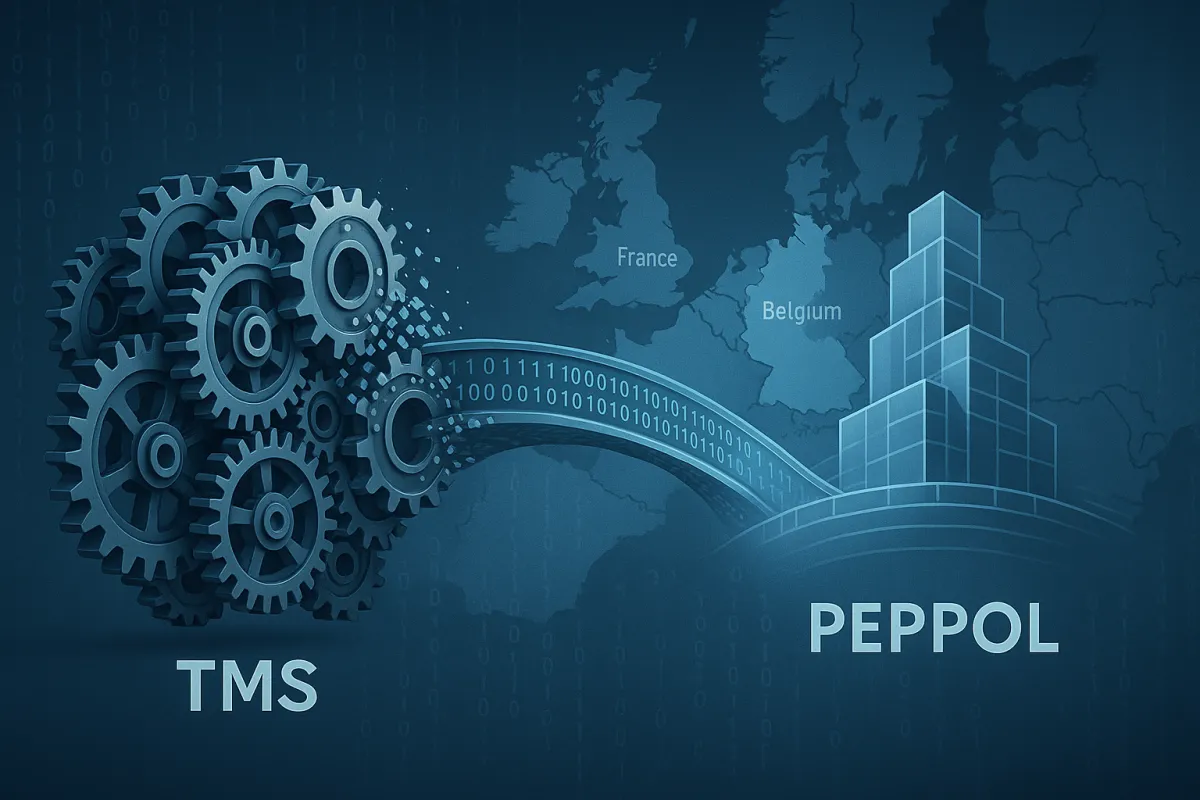
Starting January 1, 2026, Belgium requires all VAT-registered businesses to issue and receive structured electronic invoices through the Peppol network, while France will require mandatory e-invoicing for domestic B2B transactions starting September 1, 2026. For transport and logistics companies already running complex EDI systems integrated with their TMS platforms, this creates an immediate challenge: how to meet European Peppol compliance without breaking the EDI relationships that keep their operations running.
The problem isn't just technical complexity. When companies switch or reconfigure TMS systems, it impacts EDI connections with trading partners, affecting anywhere from 100-200 partners and 400-500 maps. Now add Peppol requirements on top of this, and you're looking at a parallel system deployment that could disrupt established workflows with major retailers, automotive suppliers, and logistics providers who aren't ready to abandon EDI.
The European E-Invoicing Mandate Collision with Established EDI Infrastructure
Belgium's mandate requires that sending a PDF invoice by email or via a platform will no longer be enough after January 2026. Traditional formats such as PDF are no longer permitted for transactions within scope. For companies running TMS environments that process hundreds of shipment invoices daily through established EDI channels, this creates an operational crisis.
Taxpayers will be mandated to send and receive structured electronic invoices through the Peppol network and in the Peppol-BIS standard. The challenge goes beyond format changes. Every Belgian company and every foreign supplier selling to Belgian buyers must be able to send and receive structured e-invoices based on the European EN 16931 standard, typically exchanged via the Peppol network.
France adds another layer of complexity. All companies must be able to receive e-invoices by September 1, 2026, with large enterprises and mid-sized firms also required to start issuing e-invoices and e-reporting. The timing creates a narrow window for companies managing transport operations across both countries.
The Hidden Cost of Parallel System Operations
Running separate EDI and Peppol systems amplifies operational overhead beyond just technology costs. EDI processing inside ERP or TMS usually requires additional solutions around the core system, including different communication software to support various protocols, scripts to complete EDI processing, and integration between different databases.
Now multiply this complexity across two separate channels. Your team needs expertise in both EDIFACT/X12 standards and Peppol UBL formats. Data mapping becomes a dual-track process. Error handling procedures must account for different validation rules and routing logic. The training requirements alone can overwhelm IT departments that are already stretched managing existing integrations.
Why Traditional "Rip and Replace" Approaches Fail in Transport Operations
Transport management systems can't afford the downtime that comes with wholesale EDI replacement. EDI and TMS systems are tightly intertwined, with everything from tendering a load to confirming delivery relying on structured, automated data flows between shippers, carriers, and brokers. When a TMS system is swapped out without an EDI continuity plan, the result is often delays, chargebacks, or failed deliveries.
The stakes are higher in transport operations because disruptions cascade through multiple parties. A failed EDI connection doesn't just impact your internal processes. It affects carrier payments, customer shipment visibility, and regulatory compliance reporting. EDI enables real-time, structured communication between trading partners across the supply chain, with carriers, shippers, brokers, and 3PL providers all depending on accurate, timely EDI data to plan routes, confirm pickups, monitor exceptions, and complete deliveries.
The Batch Processing vs. Real-Time Peppol Conflict
Traditional EDI in transport environments often relies on batch processing to handle high invoice volumes efficiently. A single truck delivery might generate multiple charges (base freight, fuel surcharge, accessorial fees) that get consolidated into batch invoice runs. Peppol's architecture, designed around individual document transactions, doesn't naturally align with this approach.
If EDI is bundled inside core ERP, businesses may not be able to seamlessly process EDI for WMS or TMS, such as 940s, 204s, or 214s, because ERPs may not have fields or modules applicable to leverage or store the data. The same constraint applies when adding Peppol capability. Your TMS needs to maintain its existing batch processing for EDI partners while simultaneously supporting individual transaction flows for Peppol-enabled customers.
The Four-Layer Hybrid Integration Architecture Framework
Building a bridge between EDI and Peppol systems requires a structured approach that preserves existing operations while adding new capability. The architecture needs four distinct layers that work together without creating dependencies that could bring down either channel.
**Layer 1: Connectivity Management** handles the physical connections and protocol differences. Your existing AS2 connections for EDI continue operating alongside AS4 connections for Peppol. This layer includes VAN relationships, certificate management, and Access Point connections. The key design principle: each connectivity type operates independently, so Peppol issues don't impact EDI operations.
**Layer 2: Translation and Format Conversion** manages the data transformation between internal formats and external standards. Define how each EDI segment translates to ERP fields, create reusable mapping templates that can scale as you add more partners or documents, and document every mapping rule for easier updates later. For Peppol, you need parallel mappings that convert the same internal data to UBL format while maintaining EN 16931 compliance.
**Layer 3: Routing Intelligence** determines which channel to use for each trading partner and document type. This layer maintains partner profiles that specify connectivity preferences, handles fallback scenarios when primary channels fail, and manages transition periods when partners migrate between systems. Companies like Cargoson provide unified routing platforms that can make these decisions automatically, while traditional solutions from TrueCommerce, Cleo, and SPS Commerce require more manual configuration.
**Layer 4: Compliance and Audit** ensures both EDI and Peppol transactions meet regulatory requirements. Belgium's VAT rounding rules starting January 1, 2026, allow rounding only on the total amount per VAT rate, with line-by-line rounding no longer permitted, and penalties for technical non-compliance resulting in fines for failing to meet technical requirements for issuing or receiving e-invoices. This layer tracks compliance status across both channels and generates audit trails for regulatory reporting.
Implementation Sequencing for Minimal Disruption
The implementation approach needs to prioritize receiving capability first, then gradually add sending functionality. **Phase 1** focuses on Peppol receiving capability to achieve immediate compliance. All companies must be able to receive e-invoices by September 1, 2026. This gives you breathing room to test the integration without impacting outbound operations.
**Phase 2** adds selective Peppol sending for European partners while maintaining EDI for established relationships. Traditional EDI requires custom setup per partner and lengthy testing, while Peppol allows standardized exchange with faster activation. For enterprise suppliers, this becomes critical when supporting many buyer programmes, as a partner-by-partner model can constrain scale.
**Phase 3** implements gradual migration of non-critical EDI relationships based on partner readiness and business impact. Large enterprises with established EDI connections can maintain them for high-volume trading partners while adding Peppol for public sector and cross-border partners, allowing flexible partner onboarding where new partners can be added quickly via Peppol if they're enabled.
Partner Communication and Onboarding Strategy
Managing trading partner expectations across a mixed EDI/Peppol environment requires clear communication about technical capabilities and transition timelines. Your European customers requiring Peppol compliance need different messaging than North American partners staying on EDI.
Start with partner capability assessment. Partner alignment requires ensuring trading partners are on board and their systems are compatible with your EDI setup, while choosing the right EDI standards based on industry and partner requirements. For Peppol adoption, you need to identify which partners are already Peppol-enabled versus those who will need technical assistance.
The onboarding process differs significantly between channels. Traditional EDI implementation typically takes 3-6 months per major trading partner, requiring ERP integration, mapping specialists, formal testing protocols, and ongoing internal effort to keep integrations healthy. Peppol connections can often be established in days once the infrastructure is in place.
Testing and Validation Frameworks
Your testing approach needs to validate document routing logic across both channels without creating dependencies between them. Run thorough tests before going live to ensure everything works smoothly, consider working with EDI specialists during implementation, and use middleware solutions to bridge the gap between older systems and modern requirements.
Testing scenarios should include partner-specific routing verification, format validation for both EDI and Peppol standards, error handling across different failure modes, and performance testing under realistic transaction volumes. Solutions from providers like Orderful, Jitterbit, and E2open offer comprehensive testing environments, while platforms like Cargoson provide integrated testing that covers both EDI and Peppol scenarios.
Measuring Success and ROI in Hybrid Environments
Success metrics for hybrid EDI-Peppol implementations need to account for both operational efficiency and compliance status. Traditional EDI metrics focus on transaction volumes, error rates, and processing time. Peppol metrics add compliance tracking, cross-border transaction capability, and regulatory reporting accuracy.
Key performance indicators should include processing time improvements for each channel, error reduction rates compared to manual processes, compliance rates for both EDI and Peppol standards, cost per transaction across different partner types, and partner onboarding time reductions. Stay flexible with integration architecture to accommodate new trading partners, keep up with EDI standards updates and industry changes, plan for scaling to ensure your system can handle growth, and consider cloud-based solutions for better accessibility and updates.
ROI calculation becomes more complex but also more compelling when you account for regulatory risk mitigation. Belgium's mandate is backed by enforceable penalties, with entities that do not have technical capabilities to issue and receive structured electronic invoices via approved channels such as Peppol incurring administrative fines. The cost of non-compliance can quickly exceed implementation expenses.
Long-term optimization strategies should focus on gradual migration from EDI to Peppol where business relationships support it, while maintaining EDI excellence for partners who aren't ready to transition. Monitoring platforms from IBM Sterling and OpenText provide visibility across both channels, while integrated analytics from Cargoson can help identify optimization opportunities that span both EDI and Peppol operations.
The European e-invoicing mandates create a forcing function that many transport companies have been postponing. Rather than treating this as a compliance burden, forward-thinking operations teams are using the deadline to build more resilient integration architectures that can adapt to future regulatory changes. The companies that get this right will emerge with competitive advantages that extend well beyond European compliance requirements.