The Complete Hybrid EDI-API Cost Optimization Framework: How to Measure True ROI and Eliminate the $480K Integration Waste That's Hidden in 67% of Supply Chain Technology Stacks in 2026

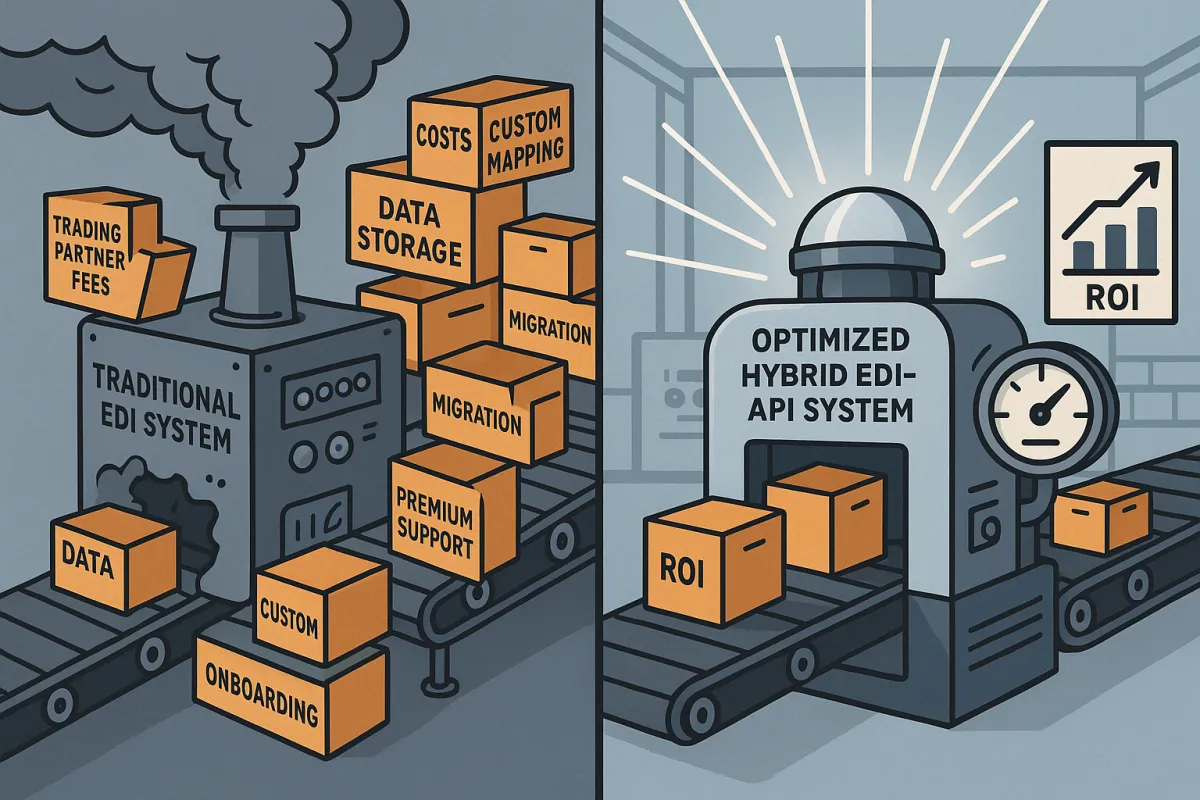
Most organizations expect hybrid EDI-API integration to reduce costs, but hidden fees can include extra charges for trading partners, custom document mapping, data storage, onboarding, migration, and premium support. Transaction and network fees can also be "silent budget killers". The reality? A poorly planned hybrid approach often creates the worst of both worlds: traditional EDI vendors typically charge $500–$3,000/month with additional per-transaction and per-partner fees, while API implementations can balloon to anywhere from $1,500 to $50,000+ depending on their integration needs.
This comprehensive hybrid EDI-API cost optimization framework shows you how to build a measurable ROI model that eliminates wasteful spending while maintaining partner compliance. You'll discover how to create baseline assessments, allocate transactions strategically between channels, and track true returns that justify your integration investments.
The Hidden Cost Crisis Multiplying in Hybrid EDI-API Integration
The numbers tell a sobering story. EDI software typically ranges from $300 to $3,000 per month, depending on the provider, transaction volume, integration needs, and required features. But layer on API integration costs of anywhere from $1,500 to $50,000+ depending on their integration needs, and you're looking at a budget that can quickly spiral out of control.
Here's what most cost analyses miss: When EDI systems extract outdated ERP data during batch windows while APIs update instantly, timing mismatches create chargebacks and compliance penalties that dwarf your monthly platform fees. One manufacturing client I worked with faced $12,000 in monthly chargeback penalties because their EDI purchase orders referenced inventory levels that their real-time API had already allocated to other customers.
The problem gets worse when vendors stack fees. Per-partner pricing scales steeply: 10 active partners = $1,890–$3,990+/month just in base fees. Add API transaction costs, data storage fees, and compliance monitoring, and you're looking at a monthly bill that exceeds many companies' quarterly integration budgets.
Traditional integration approaches from established players like SPS Commerce, TrueCommerce, and Cleo often lock you into either pure EDI or API-only strategies. Meanwhile, modern hybrid platforms like Orderful, transportation management solutions from Cargoson, and emerging players are proving that well-architected hybrid systems can reduce integration costs by 25-80% through intelligent routing and automated processes.
Building Your Baseline Cost Assessment Matrix
Sound cost optimization starts with accurate current-state measurement. You can't optimize what you can't measure, and most organizations dramatically underestimate their true integration costs.
Start by mapping every cost component in your current setup. For 10 users, a managed service with integration could cost $300 - $1000+ per month. Managed services with integration range from $300 to $1,000+ per month. But these base costs only tell part of the story.
Create a comprehensive cost matrix that captures:
- Platform subscription fees (both EDI and API)
- Per-transaction charges that scale with volume
- Trading partner onboarding costs
- Custom mapping and transformation development
- VAN (Value Added Network) connectivity fees
- Compliance monitoring and reporting overhead
- Internal staff time for maintenance and troubleshooting
The Multi-Channel Cost Complexity Problem
Here's where hybrid implementations get expensive fast: misaligned data synchronization. When your EDI system sends inventory confirmations based on yesterday's batch export while your API provides real-time stock updates, trading partners receive conflicting information. The result? Compliance violations, chargeback fees, and emergency manual interventions that can cost $2,000-8,000 per incident.
Document these synchronization failure costs meticulously. They're often your strongest business case for investing in a properly integrated hybrid platform rather than running parallel systems.
ROI Calculation Framework for Hybrid Integration
Build your ROI model around four distinct value drivers: direct cost savings, operational efficiency gains, risk reduction, and scalability advantages. EDI ROI is the money and time you get back from your EDI setup through savings and better accuracy.
Start with documented baseline metrics. Count the time saved: Measure the hours your team gains back through automation. You can use that extra time for more important, strategic projects. One logistics company documented that their manual purchase order processing took an average of 23 minutes per document. After implementing a hybrid approach that used APIs for urgent orders and EDI for standard procurement, average processing time dropped to 4 minutes while error rates fell from 12% to under 2%.
For direct savings calculation, focus on document-by-document analysis. Compare your current cost per transaction (including all hidden fees) against your hybrid future state. Include paper elimination savings, postage reduction, and labor efficiency through automation.
The most compelling ROI numbers often come from error reduction. Boomi claims a 410% ROI, but focus on your specific situation. Document current error rates, rework costs, and compliance penalties. Then model how hybrid routing can reduce these expensive mistakes by routing time-sensitive transactions through reliable API channels while keeping high-volume, standard documents in proven EDI flows.
Strategic Cost Optimization Through Smart Channel Allocation
The magic happens when you stop thinking "EDI vs API" and start thinking "right channel for right purpose." Time-sensitive events like dock appointments, GPS pings and on-hand stock benefit from API speed, while invoices and customs forms sit comfortably in EDI's structured format.
Create a decision matrix based on three factors: transaction urgency, compliance requirements, and partner capabilities. Route urgent dock appointments and inventory updates through APIs for instant processing. Keep purchase orders, invoices, and advance shipping notices in EDI where partners expect them and compliance frameworks are mature.
This strategic allocation eliminates the expensive overhead of forcing every transaction through the same channel. Modern transportation management platforms like those from Blue Yonder, 3GTMS, and Cargoson excel at this intelligent routing, automatically determining the most cost-effective channel for each transaction type.
The cost impact? Organizations implementing smart channel allocation typically see 15-40% reductions in total integration costs within six months, primarily through eliminating unnecessary API calls and reducing EDI transaction volumes.
Vendor and Platform Cost Comparison Framework
A well-optimized HIP can reduce integration costs by 25-80% by automating processes and reducing the need for custom code. But choosing the right platform requires understanding different pricing models and their long-term implications.
Evaluate platforms across these cost dimensions:
- Transaction-based pricing works well for predictable volumes but can create budget surprises during peak seasons
- Subscription models provide cost predictability but may overpay during slow periods
- Partner-based fees scale with business growth but can become prohibitive for companies with many small trading partners
Older systems often rely on unpredictable, per-transaction pricing models, making it hard to forecast costs. Modern integration partnerships replace that model with predictable pricing and managed automation.
When comparing platforms like Cleo Integration Cloud, Boomi, IBM Sterling, and transportation-focused solutions like Cargoson, focus on total cost of ownership over three years. Include implementation costs, training expenses, and the hidden costs of platform lock-in.
Process-based pricing delivers predictable Total Cost of Ownership (TCO), reducing integration costs by up to 60% compared to usage-based models while accelerating return on investment. Look for platforms that align their pricing model with your business growth patterns rather than penalizing success.
Implementation and Ongoing Cost Control
Successful cost optimization requires ongoing monitoring and adjustment. Add up all the costs—software, setup, and training. Then compare that total to what you're going to save over the year.
Establish monthly cost tracking that breaks down expenses by transaction type, trading partner, and channel. This granular visibility helps identify cost creep before it impacts your budget. One retail company discovered they were paying $800/month in "zombie" VAN charges for trading partners they hadn't transacted with in over six months.
Cloud EDI eliminates VAN mailbox charges and per-kilobyte fees. No per-transaction fees. No VAN fees. Modern cloud platforms provide predictable operational costs that scale with your business rather than punishing growth with escalating per-transaction charges.
Track these key performance indicators monthly:
- Cost per transaction by channel (EDI vs API)
- Partner onboarding time and expense
- Error rates and associated rework costs
- Compliance incident frequency and penalties
- Staff time allocation for integration maintenance
Most importantly, track ROI delivery against your original business case. Enterprise customers achieve ROI in an average of just 6.86 months. This performance allows enterprises to realize business value more than 2x faster than the industry average of 15.6 months.
Future-Proofing Your Hybrid Investment Against 2027-2030 Changes
Your cost optimization framework must account for rapid changes in carrier APIs, regulatory requirements, and partner expectations. Modern integration partners bridge the gap between legacy EDI systems and real-time APIs, giving you the best of both worlds. You can maintain the reliability of established EDI workflows while connecting to newer, cloud-native applications through APIs within a single platform.
Plan for these emerging cost factors:
- Increased API adoption among major carriers and suppliers
- New compliance requirements driving real-time reporting needs
- IoT and sensor integration creating new data streams
- AI-powered optimization requiring advanced integration capabilities
Transportation management platforms are rapidly evolving to support these changes. Solutions from Descartes, Transporeon, and Cargoson are building native hybrid capabilities that eliminate the need for separate EDI and API management tools.
Organizations that invest in scalable hybrid platforms now position themselves to capture competitive advantages through improved efficiency, reduced costs, and enhanced visibility. The key is choosing solutions that grow with your business rather than constraining it.
Build your cost optimization framework with a three-year view. Document current costs comprehensively, model hybrid scenarios realistically, and track ROI delivery consistently. The organizations succeeding with hybrid EDI-API integration in 2026 are those that treat cost optimization as an ongoing strategic capability, not a one-time project.