The Critical Scope 3 Carbon Data Integration Crisis: How to Build Automated EDI-Powered Emissions Collection Frameworks That Transform Transaction Streams Into Compliance-Ready ESG Reporting Without Breaking Trading Partner Networks in 2026

EU's Corporate Sustainability Reporting Directive (CSRD) mandates scope 3 disclosure for in-scope companies reporting on 2026 data in 2027, while Scope 3 typically accounts for 70–90% of a company's total carbon footprint. This creates an immediate problem for supply chain teams managing complex supplier networks through traditional EDI systems that weren't designed for carbon data collection.
PITT OHIO recently announced a new Electronic Data Interchange (EDI) solution for less-than truckload (LTL) invoices, empowering customers to access their unique Scope 3 emissions data directly on their invoices via Electronic Data Interchange (EDI). This represents the first real-world implementation of automated carbon data integration within existing EDI transaction flows.
The Hidden Compliance Crisis Behind 2026's Scope 3 Reporting Mandates
CBAM entered its transitional phase on October 1, 2023, with reporting obligations during 2023–2025, and the EU has published operational guidance for the shift on January 1, 2026. CBAM creates a clear dependency: importers can report accurately only if non-EU producers provide verified emissions data. For most companies, this means their existing supplier data exchange systems need fundamental upgrades to handle carbon intensity calculations alongside traditional purchase orders and invoices.
California's Climate Corporate Data Accountability Act (SB 253) extends mandatory emissions disclosure to companies earning over $1 billion in revenue and doing business in the state. Beginning in 2026, firms must report scope 1 and 2 emissions, with scope 3 disclosures due by 2027 under a safe harbor period. The problem isn't just collecting this data once - it's building systems that can deliver audit-ready emissions calculations every quarter without breaking existing trading partner relationships.
Why Manual Carbon Data Collection Creates Audit Failure Risk
Companies are now faced with the issue of grappling with complex supply chain dynamics whilst also tackling and reporting on their emissions. Everyone who has to comply with CSRD. The data quality requirements under these frameworks demand granular tracking at the transaction level, something that traditional spreadsheet-based collection methods can't deliver consistently.
Where supplier data is missing, companies may need to use conservative assumptions—potentially increasing cost exposure and compliance risk. This allocation method inconsistency affects reported totals and makes supplier comparison challenging when different suppliers use incompatible calculation standards.
The EDI Transaction Data Goldmine for Automated Carbon Tracking
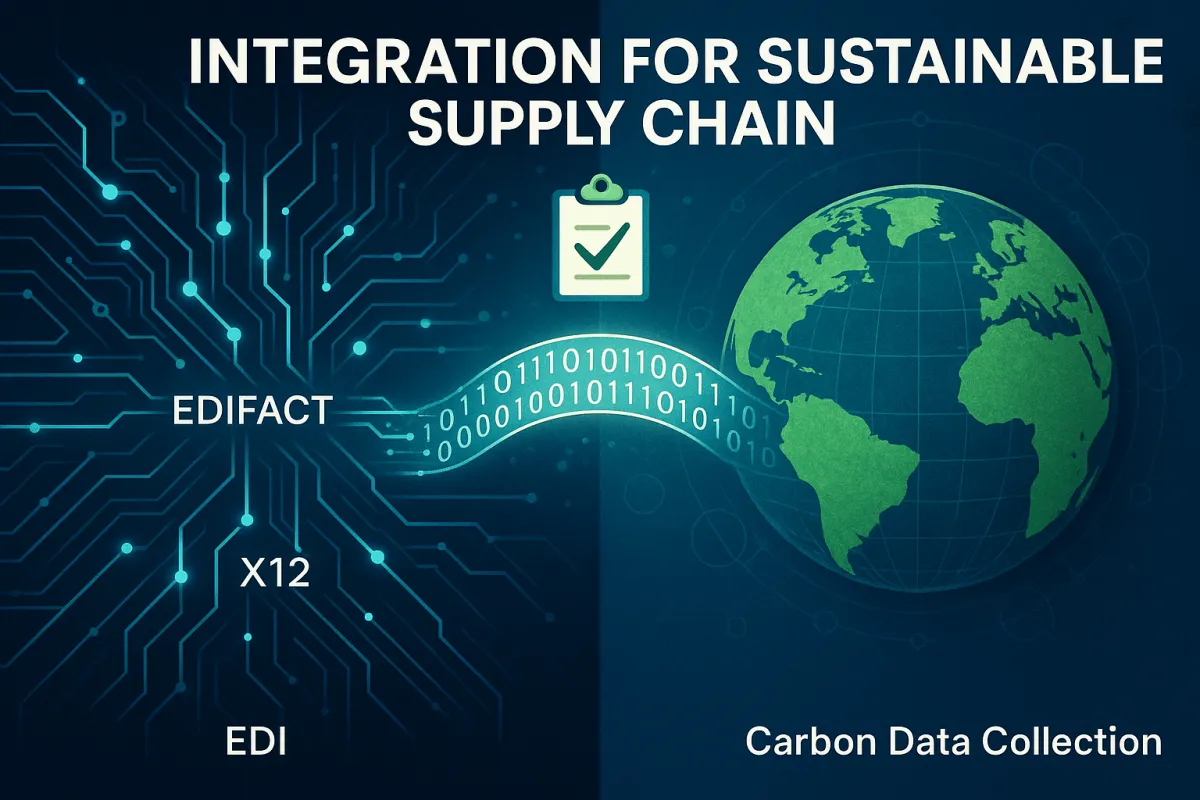
PITT OHIO's patented carbon emissions calculation apportions an amount of fuel per shipment for the pickup, linehaul, and delivery. This breakthrough methodology goes beyond other calculations by estimating emissions based on how freight moves through the PITT OHIO network. The key insight here is that standardized EDI formats like ANSI X12 and EDIFACT already contain the metadata needed for carbon calculations - shipment weight, distance, mode, and timing.
With EDI integration, companies can merge the structured data from business transactions directly within a company's existing software systems. This process typically involves mapping the data fields in an organization's internal systems to match the EDI standards, allowing for the effortless transmission of documents like purchase orders, invoices, and shipping notices. What's different now is embedding carbon intensity data within these existing document flows rather than creating parallel tracking systems.
Traditional TMS vendors like Oracle TM, SAP TM, and Blue Yonder are adding carbon modules to their platforms, but these often require separate data collection workflows. Modern solutions like Cargoson are building carbon intelligence natively into EDI transaction processing, allowing real-time emissions calculations as freight moves through networks.
Building Transaction-Level Carbon Intelligence Architecture
Compliance with CBAM can be helped through AI applications as they create a manageable pipeline through the collection and analysis of complex supply chain data. AI technology can accurately calculate carbon footprints while also enabling a more careful evaluation during suppliers' monitoring. The architecture requires cloud-based platforms that can process EDI transaction streams in real-time while applying supplier-specific emission factors.
This allows PITT OHIO to provide Scope 3 emissions data to customers in multiple ways that work with their internal systems. The important part of any emissions tracking is to embed it into systems so that organizations can make business decisions that reduce carbon while maintaining the service they expect. This embedded approach means carbon data becomes part of normal business operations rather than a separate sustainability exercise.
The Complete EDI-Scope 3 Integration Implementation Framework
CSRD's Scope 3 reporting requirements follow the GHG Protocol's framework, which divides value chain emissions into 15 categories across upstream and downstream activities. Upstream categories cover emissions from a company's supply chain – purchased goods and services, capital goods, fuel and energy-related activities, transportation, waste, business travel, and employee commuting. The implementation framework must map EDI transaction fields to specific GHG Protocol categories.
For Category 1 (purchased goods and services), your EDI 850 purchase orders already contain product codes, quantities, and supplier identifiers. The framework adds emission factors linked to these existing data elements. For Category 4 (upstream transportation), existing EDI 214 shipment status messages and 210 freight invoices provide the foundation for automated emissions calculations.
The three calculation methods - spend-based, average-data, and supplier-specific - align with different EDI data availability levels. Spend-based calculations use existing invoice amounts from EDI 810 documents. Average-data methods apply industry emission factors to product categories already coded in EDI transactions. Supplier-specific calculations require new data fields within existing EDI documents, as PITT OHIO has demonstrated.
Integration platforms like Orderful, Descartes, and Cargoson are building these carbon calculation engines directly into their EDI processing workflows. This means emissions data flows automatically alongside purchase orders and invoices without requiring separate data collection processes.
Automated Compliance Reporting Pipeline Architecture
Collect Scope 1, 2, and 3 emissions data with built-in supplier onboarding · Support SBTi, CDP, and CBAM compliance with one integrated platform · Turn emissions data into actionable insights and measurable reductions The automated pipeline architecture connects EDI transaction data to major reporting frameworks through real-time data integration.
Scope 3 data doesn't exist in a vacuum. It needs to be integrated into broader carbon accounting platforms, ESG disclosures and climate strategy frameworks. Aligning data inputs across reporting standards, such as CSRD, ISSB S2, CDP and SBTi, can be a logistical challenge, especially for multinational organizations with fragmented systems. The solution is building compliance reporting pipelines that can automatically format carbon data for different regulatory requirements.
Critical Implementation Risks and Mitigation Strategies
Yet supply chain risk management still feels slow, fragmented, and reactive. The missing link is often not strategy, but technology: clean data, scalable automation, and practical AI that help teams move from firefighting to faster, better decisions. Complex multi-tiered supply chains present the biggest challenge because Tier 2 and Tier 3 suppliers often lack the EDI capabilities needed for automated carbon data exchange.
Timing synchronization between different EDI partners becomes critical when carbon data has regulatory deadlines. Your EDI 856 advance ship notices might arrive within hours, but carbon intensity calculations for those shipments could require days of supplier verification. The mitigation strategy involves building carbon data caching systems that can provide estimates while waiting for verified supplier data.
Data quality validation requires new EDI error handling protocols. Traditional EDI systems flag missing purchase order numbers or incorrect addresses. Carbon-integrated EDI systems must also validate emission factors, allocation methodologies, and calculation boundaries. TMS platforms like MercuryGate and Manhattan Active are building these validation rules into their integration engines, while Cargoson offers more streamlined validation for European compliance requirements.
Future-Proofing Your Carbon Data Architecture for 2027-2030 Requirements
As of May 2026, the revised version of the European Sustainability Reporting Standards (ESRS) is going through a final round of feedback. Once finalized it will require companies within the scope of the Corporate Sustainability Reporting Directive to: Report on material emissions throughout their supply chains · Double materiality is still mandatory – businesses are required to assess impact and financial materiality, including scope 3 Future requirements will likely expand beyond carbon to include nature-related risks and biodiversity disclosure.
Besides the ability for automation, companies that use AI platform tools can lay out optimization strategies for lower emissions and reduce their operational costs. Agentic AI systems are beginning to handle compliance automation and XBRL tagging, but these create governance risks that need careful management.
Scalability considerations for 2027-2030 include preparing EDI systems for expanded carbon border adjustments beyond the current cement, steel, aluminum, and fertilizer sectors. The European Commission has signaled interest in extending CBAM to downstream products, which would require carbon data integration across much broader EDI transaction volumes.
For European companies, solutions like Cargoson offer native CSRD compliance features, while global platforms provide broader geographic coverage. The choice depends on whether your trading partner network is primarily European or spans multiple regulatory jurisdictions with different carbon reporting requirements.
Building automated Scope 3 carbon data collection into your EDI architecture isn't optional anymore - it's become a regulatory requirement. The companies that integrate carbon tracking into existing transaction flows will have competitive advantages over those trying to manage emissions through separate systems. Start with your highest-volume EDI trading partners and expand the framework as carbon reporting requirements continue to evolve.